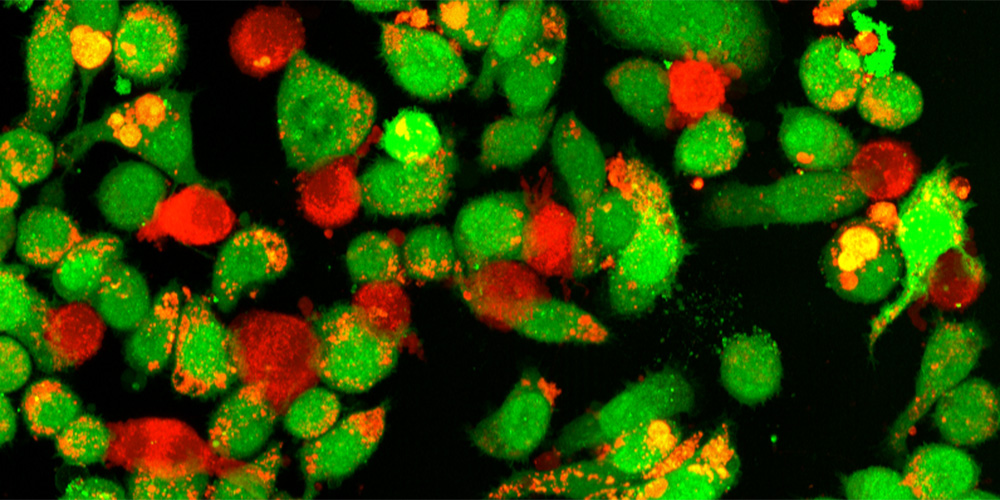
Researchers from Cambridge and Basel have developed small molecules that could make cancer immunotherapies more effective. They work in two ways: They prompt macrophages to engulf cancer cells and alter the surrounding tissue, reducing its ability to suppress immune attacks on the tumor.
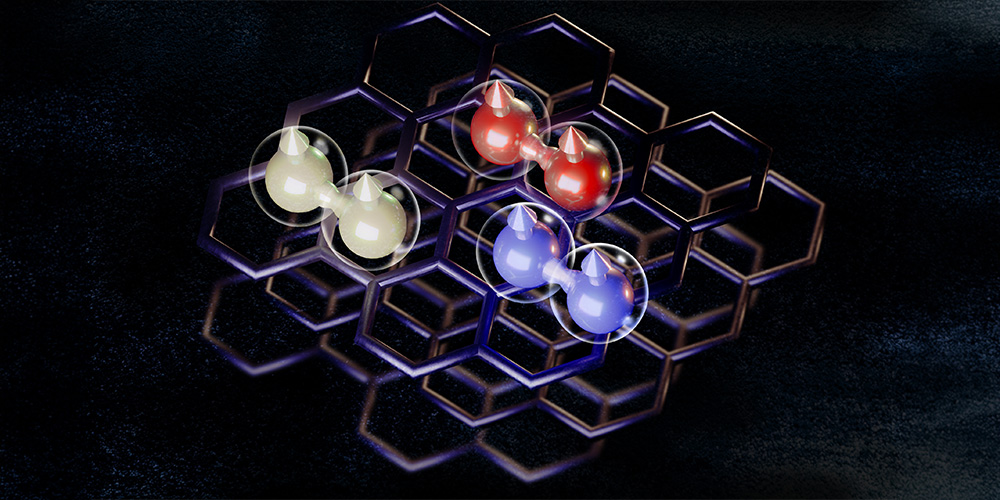
The ultra-thin material graphene can surprisingly host several superconducting states. This has been demonstrated by researchers at the University of Basel together with colleagues from the Massachusetts Institute of Technology. Some of these states are even stabilized by magnetic fields, rather than being destroyed by them, as is usually the case.

The Institute of Nursing Science at the University of Basel has carried out a large-scale study to take the pulse of home care provision in Switzerland. The conclusion: the organizations are delivering good work – but policy decisions need to be made if they are to continue to provide their services in the future.
Cancer immunotherapy is a successful form of treatment in oncology, but it doesn't work for every patient. One problem may be the lack of a specific type of immune cell in the tumor, researchers in the Department of Biomedicine at the University of Basel have found. The researchers were able to partially replace the cell's function using a signaling molecule. This may make it possible to overcome resistance to cancer immunotherapy.

As early as the Neolithic period, pests posed a threat to agricultural yields, as shown by the remains of mice and insects found in prehistoric wells by a Basel-led archaeological research team. However, there are also indications that people knew how to defend against these pests – for example, by switching to less vulnerable kinds of grain.

Viruses such as HIV or the pathogen that causes hepatitis C can overwhelm the immune system. One approach to developing vaccines for these chronic infections has until now been aimed exclusively at what are known as the memory B cells, a specific type of immune cells. Researchers at the University of Basel now report that these cells need the help of other memory cells to effectively defend the body against chronic viruses. This is an important finding in vaccine design.
For the first time, University of Basel researchers have equipped an ultrathin semiconductor with superconducting contacts. These extremely thin materials with novel electronic and optical properties could pave the way for previously unimagined applications. Combined with superconductors, they are expected to give rise to new quantum phenomena and find use in quantum technology.

If you can’t buy cigarettes, you won’t start smoking – such is the thinking behind the ban on selling cigarettes to young people. A new Basel study for Switzerland has revealed, however, that while the ban does not make smoking more attractive, neither does it act as a significant deterrent.

Spatial reasoning ability in small children reflects how well they will perform in mathematics later. Researchers from the University of Basel recently came to this conclusion, making the case for better cultivation of spatial reasoning.