40 years after the Schweizerhalle fire: What environmental challenges do we face today, Patricia Holm?
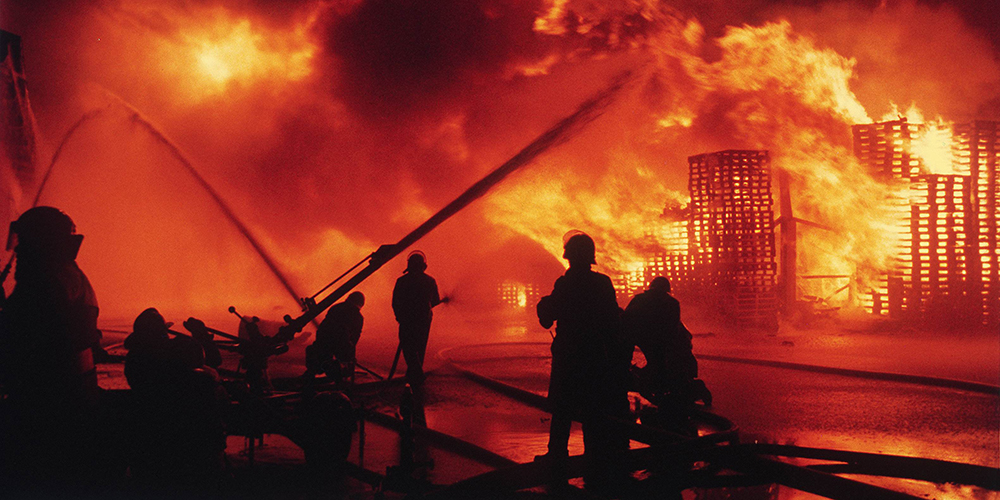
Forty years ago, the Schweizerhalle fire caused a massive fish die-off in the Rhine and shaped environmental protection efforts far beyond Switzerland. Professor Emerita Patricia Holm recalls the disaster and explains today's environmental threats.
30 October 2026 | Catherine Weyer
On November 1, 1986, shortly after midnight, a fire broke out in one of Sandoz’s warehouses in Schweizerhalle. The warehouse contained numerous chemicals and dyes, but at the time of the fire, no one knew exactly which substances were stored there or in what quantities. During firefighting efforts, water contaminated with these chemicals, along with their combustion and reaction products, flowed directly into the Rhine.
Patricia Holm, what is the first thing that comes to mind when you think of the Schweizerhalle disaster?
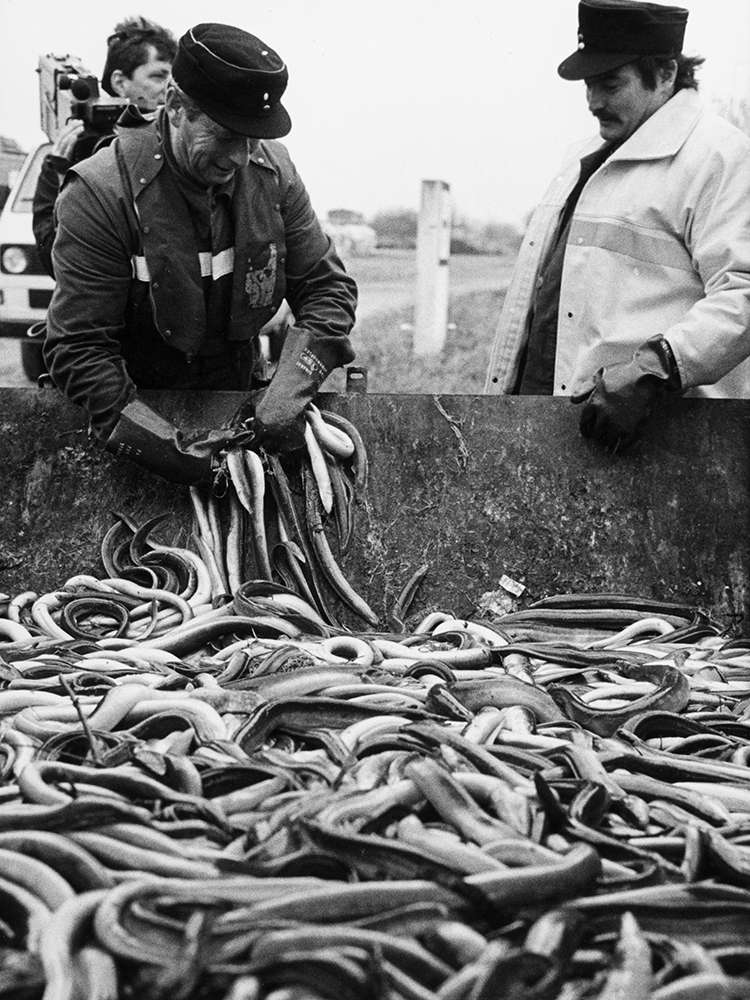
I immediately think of all the dead fish, especially the eels floating everywhere in the Rhine.
How did you experience the disaster?
At the time, I was a doctoral student at the Institute of Zoology at Heidelberg University. My dissertation focused on how different environmental factors affect fish. We had conducted many experiments in which we exposed fish to various substances, including chemicals. When I heard about the fire at Sandoz on the morning news, I immediately realized that this was a real-world experiment. I went straight to Mannheim to see the situation in the Rhine for myself.
What was the situation like in Mannheim?
The fire had broken out shortly after midnight. By the time I heard about it that morning, most of the fish in Mannheim were already dead. For us researchers, it was especially important to find animals still alive for our investigations. We wanted to examine their cellular structures immediately after exposure, before decomposition began. And we actually managed to pull five live eels out of the Rhine with our bare hands.
How did you feel at that moment?
It was an extreme situation, and I was in shock. I was operating on autopilot, figuring out how to get to Mannheim as quickly as possible, who else to call, and what experiments we needed to run.
What did your investigations reveal?
We found damage in every organ we examined. The next step was to interpret those findings. Eels are generally considered hardy fish, but in this case, they were the most severely affected. The big question was: Why had all the eels died along the Rhine, all the way to its mouth?
One of the biggest challenges was that we initially had no clear picture of which chemicals had entered the Rhine. We only obtained this information gradually. We selected certain substances and conducted experiments to determine whether they could cause the damage we had observed. Eventually, we found that disulfoton, an organophosphate insecticide, was primarily responsible for the fish die-off.
Schweizerhalle is considered a turning point in Swiss environmental policy. What changed?
The International Commission for the Protection of the Rhine (ICPR), established in 1950, had been largely inactive before the disaster. That changed after the fire. The countries bordering the Rhine established a monitoring network that provided real-time measurements to keep all the countries involved informed.
Schweizerhalle also led to changes at the University of Basel, where the Human–Society–Environment (MGU) program was established. What was the goal?
The program directly resulted from the fire. The canton of Basel-Landschaft contributed CHF 10 million to establish the Human–Society–Environment Foundation. Its purpose was to develop academic research and teaching programs to generate scientific knowledge and raise awareness of environmental challenges.
What began as an interdisciplinary program expanded from 2003 onward and, together with colleagues from the social sciences and economics, developed into the master’s degree program in Sustainable Development. We also conducted extensive research.
Looking back, what have been the program’s most important achievements?
The most important achievement is interdisciplinary collaboration. Many environmental challenges require perspectives from different disciplines. Scientific findings alone are not enough. We also need to understand why people change their behavior, or why they don’t. If people think these issues have nothing to do with them, or if they have other concerns, we won’t make progress.
What challenges remain?
If we focus on water quality and water protection, our knowledge of chronic pollution remains incomplete. This includes complex chemical mixtures and their long-term effects. We need long-term studies that examine the impact of these chemical cocktails. Other challenges include rising water temperatures due to climate change and the spread of non-native species. These are precisely the areas where we need to work across disciplines and develop practical solutions.
Has Switzerland learned from the Schweizerhalle environmental disaster?
The Major Accidents Ordinance introduced significant improvements. Today, detailed records show which substances are stored in which warehouses and in what quantities. That was a crucial step toward better monitoring. Another example is the Rhine monitoring station near Weil am Rhein, which continuously provides us with measurement data.
Are there lessons we still haven’t taken to heart?
We still need to act more on gradual, less visible forms of environmental pollution. This includes low pollutant concentrations, intermediate products formed as chemicals break down in the environment, and their effects on particularly sensitive species. This remains a major challenge.
Forty years ago, an industrial accident caused the disaster. What do you see as the greatest environmental threats today?
One major threat comes from chemicals we still know little about, or from those that do not break down under normal environmental conditions. We also need to consider how they degrade, their intermediate products, and what happens when they interact with other chemicals.
Another major issue is microplastics, which I have studied intensively over the past 14 years. Plastic in the environment gradually breaks down into smaller and smaller particles that can spread particularly easily, including through the air. Nanoplastic particles are especially problematic. They are found in the environment, in animals and plants, and in humans. They can cross cellular barriers and enter cells.
The consequences of the now global spread of microplastics and nanoplastics, reaching even remote ecosystems such as Antarctica as well as the atmosphere, require much more research and the development of practical solutions.
Do you think a disaster like Schweizerhalle could still happen today?
Such an event is less likely in Switzerland today because regulations are in place and enforced. However, technical failures and human error can never be completely ruled out, even here.
Prof. Dr. em. Patricia Holm was Professor of Ecology in the Department of Environmental Sciences until 2025 and headed the Human–Society–Environment research group. She represented Switzerland as an expert and delegate on UNEP’s scientific advisory committee on marine litter and microplastics. Her research focused on microplastics and invasive species.