
Climate change weakens the purification function of lakes
Lakes play a vital filtering role in the ecosystem: they remove excess nitrogen from the water. An international research team led by the University of Basel and Eawag has now shown that climate change could weaken this natural purification process. This would have consequences extending all the way to coastal marine ecosystems.
25 May 2026 | Catherine Weyer
When we think of lakes, fish and frogs often come to mind, along with birds on the shore or places to swim. But lakes also play a central role in the global nitrogen cycle. Microorganisms convert nitrogen compounds such as nitrate or ammonia into dinitrogen gas (N2), which is released to the atmosphere and effectively removed from the biosphere. This nitrogen removal process is called denitrification.
About 20 percent of natural nitrogen removal in inland waters is attributable to such processes. A new study led by the University of Basel and Eawag shows that this purification function is highly sensitive to warming caused by climate change. The results were published in "Nature Microbiology".
Filters are particularly active in winter
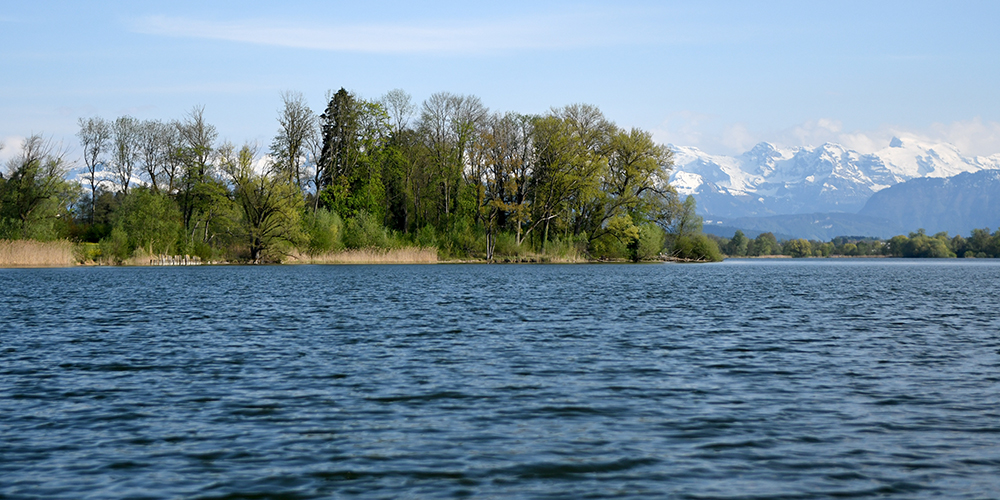
For their research, the scientists collected samples from Lake Baldegger in the Lucerne Lake District. The 5.3-square-kilometer lake is typical of many lakes in our latitudes, where the water completely mixes once a year.
The researchers showed that denitrification activity is closely linked to this seasonal mixing. In winter, the three water layers in Lake Baldegg mix completely: the warm, oxygen-rich surface water, the transition zone, and the cold, oxygen-poor deep water.
Nitrogen ultimately accumulates in the sea
During this phase, denitrification is nearly 50 percent more active than during summer stratification. This is precisely where a potential danger of climate change lies: “The ability of lakes to remove nitrogen from the water is highly dependent on the season. And this is being altered by climate change,” explains lead author Cameron Callbeck. In a severe warming scenario, the winter mixing phase could shorten by about 27 days. Nitrogen removal in the lake would decrease accordingly. “However, we don’t yet know why denitrification occurs particularly in winter,” says the environmental scientist.
Lakes play a crucial filtering role in the global nitrogen cycle. If they do not retain and break down nitrogen, it flows into the ocean via rivers. The consequences can be severe: algal blooms in coastal regions, so-called “dead zones” with oxygen depletion, and stress on sensitive ecosystems. “The study shows that even relatively small shifts in the seasonal mixing rhythm of lakes can measurably affect nitrogen cycling at the lake scale and, in aggregate, the global nitrogen cycle,” says Prof. Dr. Moritz Lehmann, the study’s last author.
A combination of sediment samples and lake balance
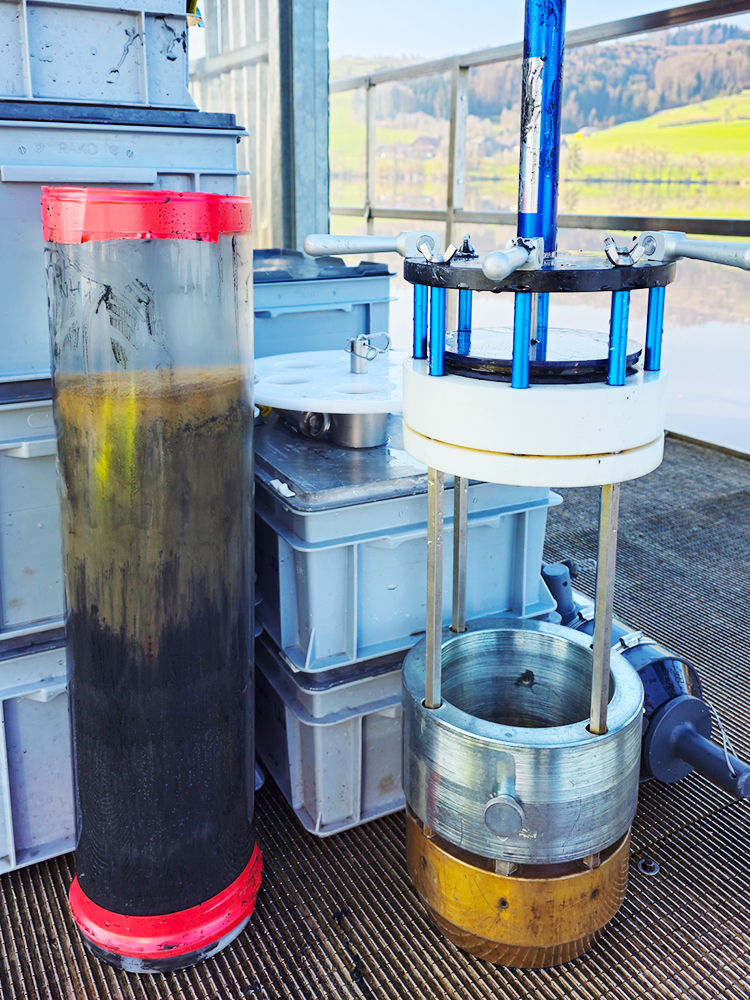
To measure denitrification in the lake, the researchers used two methods. First, they spiked sediment samples with nitrogen molecules containing the rare isotope 15N. This isotope allowed them to use special measurement techniques to determine how much of the labeled nitrogen was converted into nitrogen gas: a measure of denitrification activity.
Second, they created a model for the entire Lake Baldegger to estimate how much nitrogen the lake breaks down in total. “The isotope measurements and the calculated total balance matched between the observations and the model. This allowed us to make reliable predictions of lake nitrogen removal, and revealed that the winter period is indeed a hotspot of denitrification,” said Callbeck.
Winter activity is fuelled by a microbial partnership
The researchers also discovered a kind of microbial teamwork in the sediment. Certain bacteria break down chitin there, a robust molecule derived from the shells of zooplankton or dead algae, among other sources, which accumulates on the lake bottom. This breakdown produces compounds that serve as an energy source for other microorganisms. These, in turn, drive denitrification, converting nitrate into dinitrogen gas. Chitin degradation thus provides, in a sense, the fuel for the process through which the lake removes excess nitrogen from the water.
In the next step, the researchers plan to investigate whether the observed processes also affect the production of climate-damaging nitrous oxide in lakes. This is linked to denitrification and other key nitrogen transformation processes in lakes.
Original publication
Cameron M. Callbeck, Alessandra Mazzoli, Tim J. Paulus, Claudia Frey, Helmut Bürgmann, Carsten J. Schubert, Moritz F. Lehmann
Phenology of lake denitrification and its sensitivity to warming
Nature Microbiology (2026), doi: 10.1038/s41564-026-02349-9
Further information
Prof. Dr. Moritz Lehmann, University of Basel, Department of Environmental Sciences, E-Mail: moritz.lehmann@unibas.ch