In Focus: Lavinia Pflugfelder explores images of deities at the intersection of religion and pop culture
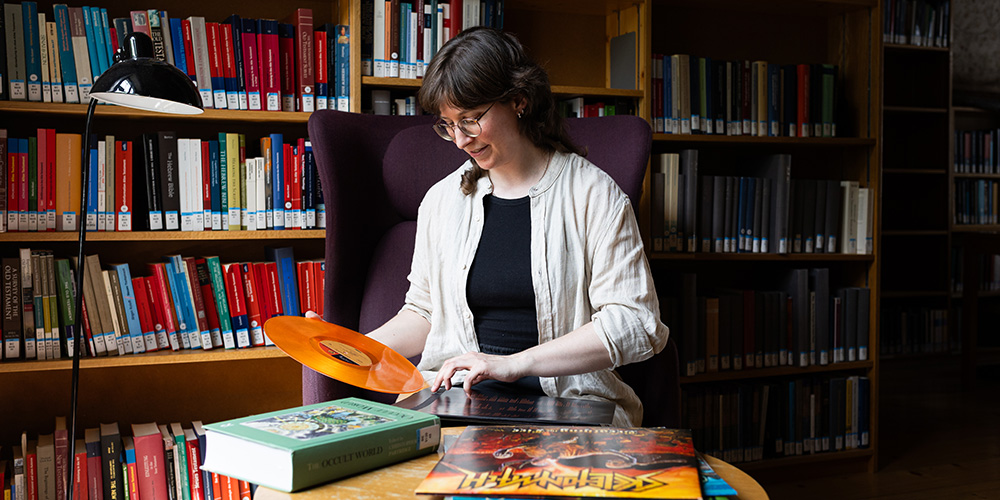
How do religious themes change when they are repeatedly retold and reimagined? Lavinia Pflugfelder examines this question using the example of the male deity in the modern witchcraft religion Wicca. She is also interested in religious imagery within the metal scene and in horror films.
23 July 2026 | Noëmi Kern
At the start of July, the big day finally arrived: Lavinia Pflugfelder defended her dissertation in Science of Religion at the University of Basel. It was an intense but also an exciting time: “I kept coming across new things that interested me, and it wasn’t always easy to stay on track. But in the end, it all worked out,” says the 37-year-old.
During her doctorate, she explored how conceptions and representations of the male deity have evolved within the modern witchcraft religion Wicca. Wicca is a new religious movement that combines a connection to nature, rituals and the worship of a goddess and a god. “While the female deity and her depictions have already been studied extensively, the figure of the male god has received less attention to date. I have been exploring this gap,” says Pflugfelder.
Using texts and images, she investigated the characteristics, body images and narratives associated with the figure of the Wiccan god and the settings in which he is depicted. Some elements have been retained since the emergence of the Wiccan movement in the first half of the 20th century, while others have been discarded or reinterpreted.
This process also highlights a dynamic exchange between science and religion, where older scholarly theories about pre-Christian cults were adopted by Wicca and became integral parts of a new religious tradition. “By linking the new with supposedly old traditions and thereby legitimizing them, ideas about what religion is and where it comes from also change,” notes Pflugfelder.
Metal music and myths
Beyond her dissertation, Pflugfelder is interested in the question of how religious motifs are taken up and reinterpreted in pop culture. For her, this is particularly evident in the metal scene – a topic she had already explored in her master’s thesis, in which she examined the connection between Satanism and black metal.
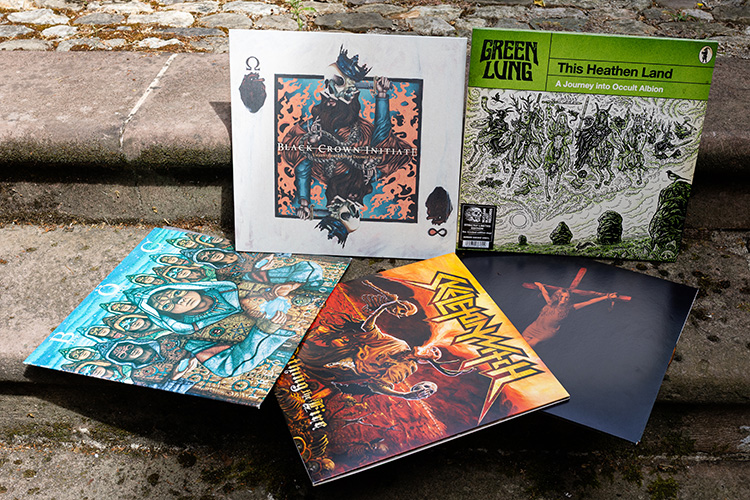
She unpacks a handful of records. The mostly colorful covers depict skulls, a group of people in hooded robes and a woman on a cross. Many symbols from astrology, Egyptology and esotericism can also be spotted. The records come from the occult rock, black metal and death metal genres. “In these sub-genres of the metal scene, a tradition of reference has emerged that engages with religion particularly through imagery; some bands also explore myths in their lyrics,” explains Lavinia Pflugfelder. This is an example of how religious ideas and pop culture intersect and interact. “This gives rise to fascinating dynamics,” says the scholar religious studies scholar.
Between research and leisure
Lavinia Pflugfelder chose this field because of its wide range of topics. Her interest in history comes into its own here, as does her love of language and stories. For example, she attended classes in Egyptology and linguistics and took a minor in German studies. She has always been fascinated by ideas and concepts, as well as their portrayal in literature and other media.
Her love of music was, in a sense, instilled in her from birth too. Music was part of everyday life at her parents’ home in the wine-making village of Malans in the canton of Grisons. Lavinia Pflugfelder has been listening to the band Metallica since she was young. Later, she became interested in other genres of metal, and she still attends concerts regularly to this day. She also listens to music across a range of styles, from Motown to cumbia. “I have very broad musical tastes,” she says.
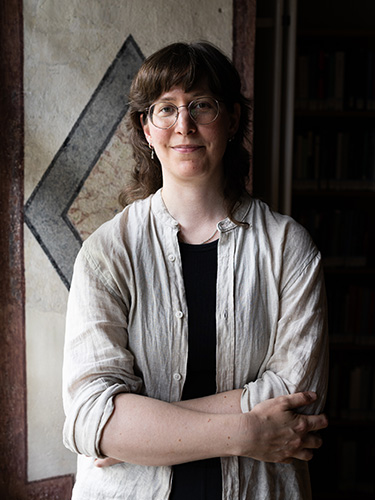
When asked about the close link between her research focus and her hobby, she comments: “I don’t draw a clear line between my research and my personal life.” But when she is at a concert, she watches the show without having a research question in the back of her mind. “I just let it wash over me and enjoy the moment.”
Plunging into the world of film
Even after completing her dissertation, she still hasn’t had enough of university life. She feels at home in an academic environment; she enjoys both research and teaching in equal measure. Since 2020, she has been teaching the introductory course in Science of Religion and advising students in her department. In Basel, she is able to continue her research and teaching work, as she still holds an assistant position with a teaching assignment. She also serves as the Basel representative on the board of the Schweizerische Gesellschaft für Religionswissenschaft (Swiss Society for Religious Studies). The society develops promotional materials for the subject of Religious Studies, supports early-career researchers and funds publications and conferences.
Next, Pflugfelder intends to delve deeper into film studies and film analysis, and to teach her students the relevant methods. “There’s a lot I’d like to know more about. I’m never interested in drawing a line under something.”
In Focus: the University of Basel summer series
The In Focus series showcases young researchers who play an important role in advancing the university’s international reputation. Over the course of several weeks, we will profile academics from various fields – a small representative sample of the more than 3,000 doctoral students and postdoctoral researchers at the University of Basel.