Faster assessment of suspected heart attacks
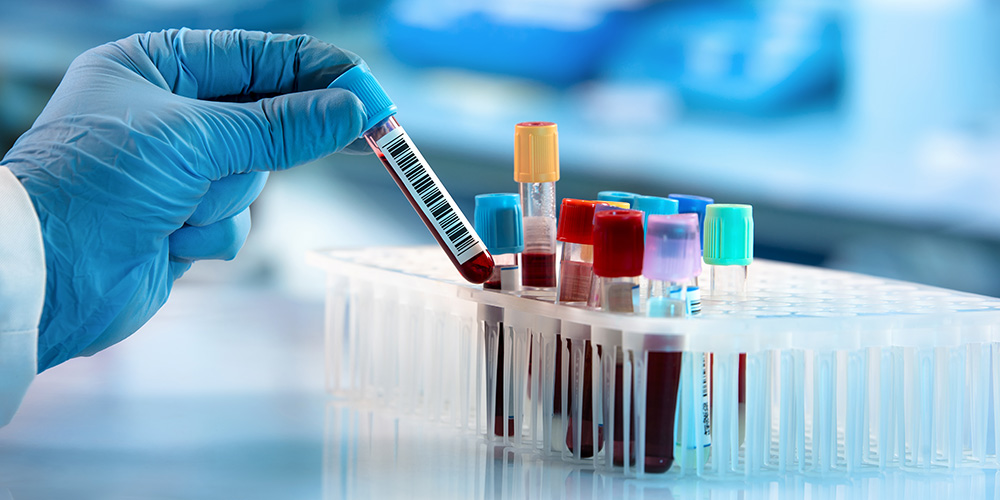
Is it a heart attack, or is something else causing the chest pain? Two studies led by researchers in Basel show how blood tests taken at shorter intervals can help doctors find out faster.
16 November 2026
People who arrive at the emergency department with chest pain want answers as quickly as possible. A prompt diagnosis is also crucial for doctors: If a patient is having a heart attack, treatment must begin quickly. If the pain has another cause, further tests may be needed.
Blood tests provide an important clue. When the heart muscle is damaged, it releases a protein called troponin into the bloodstream. A sensitive test can detect even small amounts. Often, however, a single measurement is not enough. A second blood sample shows whether the level has changed.
The two blood samples are usually taken three hours apart. A newer approach shortens this interval to one hour. Researchers at University Hospital Basel and the University of Basel investigated how safe this approach is in routine hospital care and whether it reduces the time patients spend in the emergency department. Their findings were published in two papers in The Lancet.
“We were able to show that a heart attack can often be reliably ruled out or confirmed within a short time,” says Professor Christian Müller, director of the Cardiovascular Research Institute Basel (CRIB). “This gives doctors greater confidence when making important decisions and provides patients with answers sooner.”
Earlier testing is possible
The first study involved 19 hospitals in ten countries. They switched to the shorter testing interval at different, randomly assigned times. In total, the research team analyzed more than 67,000 cases.
The researchers examined several outcomes, including how often patients died or had another heart attack within the following 30 days. This occurred in about one in 100 patients with either approach. The results suggest that taking the second blood sample earlier does not substantially compromise the safety of the assessment.
However, taking the second blood sample earlier did not help patients leave the emergency department sooner. With either approach, the median stay was just over five hours: half of the patients stayed longer, while the other half left sooner.
Blood tests are only part of the assessment
The second paper supports this finding. The team pooled data from five studies, including the first Basel study. The analysis covered more than 110,000 cases. On average, earlier testing did not shorten the time patients spent in the emergency department. Nor was there clear evidence that it increased the proportion of patients discharged directly home.
Deaths and new heart attacks were also rare with both approaches in this combined analysis. However, the results do not yet allow a firm conclusion about whether one approach is safer than the other. The studies differ too much, and the estimates are too imprecise.
The researchers suggest several possible reasons why an earlier blood test alone does not reduce waiting times. Some patients need further tests. Others are waiting for a specialist’s assessment or an available hospital bed. Helping patients leave the emergency department sooner therefore also requires the other steps in their care to be well coordinated.
“These publications show that research from Basel can help advance emergency medicine worldwide,” says Professor Felix Mahfoud, chief of cardiology and co-director of the University Heart Center Basel. “Our goal is to translate research findings into patient care as quickly as possible.”
This news is based on a press release by the University Hospital Basel (in German).
Original publications
Jasper Boeddinghaus, Paolo Bima et al.
Safety and efficacy of the 0/1 h pathway for myocardial infarction in the emergency department: an international, pragmatic, stepped-wedge, cluster-randomised, controlled trial.
The Lancet (2026), doi: 10.1016/S0140-6736(26)01654-5
Jasper Boeddinghaus, Michael Kunz, Pedro Lopez-Ayala et al.
Performance of 0/1 h versus 0/3 h pathways in patients with suspected myocardial infarction: a systematic review and individual participant data meta-analysis of randomised controlled trials.
The Lancet (2026), doi: 10.1016/S0140-6736(26)01767-8