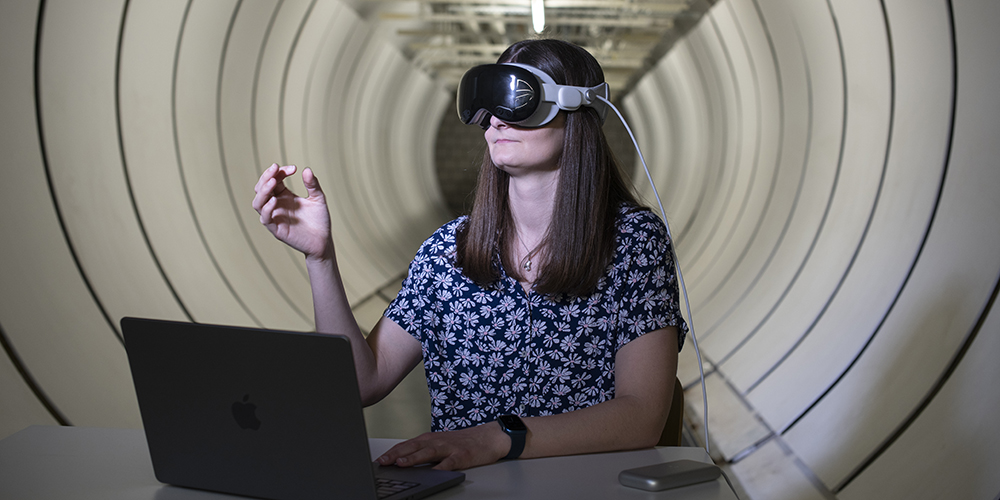
As a doctoral student in computer science, Rahel Arnold is working on better integrating multimedia content and augmented reality. Meanwhile, her work-life balance rests on eight wheels.
By the end of the century, water temperatures in Swiss rivers will rise by up to 3.5 degrees if no action to protect the climate is taken. The rivers in the Alps are particularly affected. This is the conclusion reached by researchers from Eawag and the University of Basel.

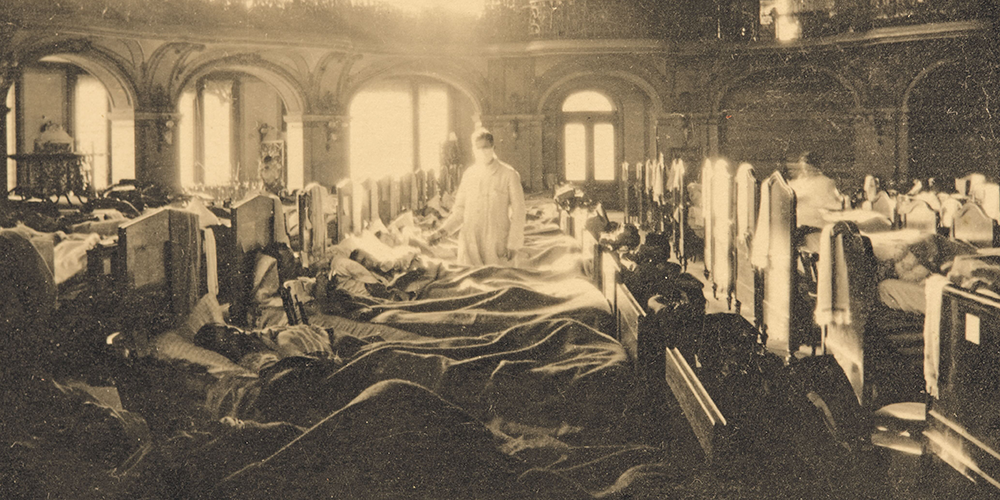
Researchers from the universities of Basel and Zurich have used a historical specimen from University of Zurich's Medical Collection to decode the genome of the virus responsible for the 1918 to 1920 influenza pandemic in Switzerland. The genetic material of the virus reveals that it had already developed key adaptations to humans at the outset of what became the deadliest influenza pandemic in history.
Researchers at the University of Basel have developed mechanical models that can predict how effectively the different layers of a deep neural network transform data. Their results improve our understanding of these complex systems and suggest better strategies for training neural networks.
Her interest in history and other people led her to study theology; it also plays a role in her dissertation. Anita Dirnberger focuses on a passage from the Hebrew Bible that challenges her time and again. She balances her everyday life in research and teaching by working with her hands.
A recent study involving researchers from the University of Basel reveals that slowing down the intracellular transport of RNA-based drugs can significantly enhance their effectiveness. These promising therapeutics are currently used to treat rare genetic diseases.
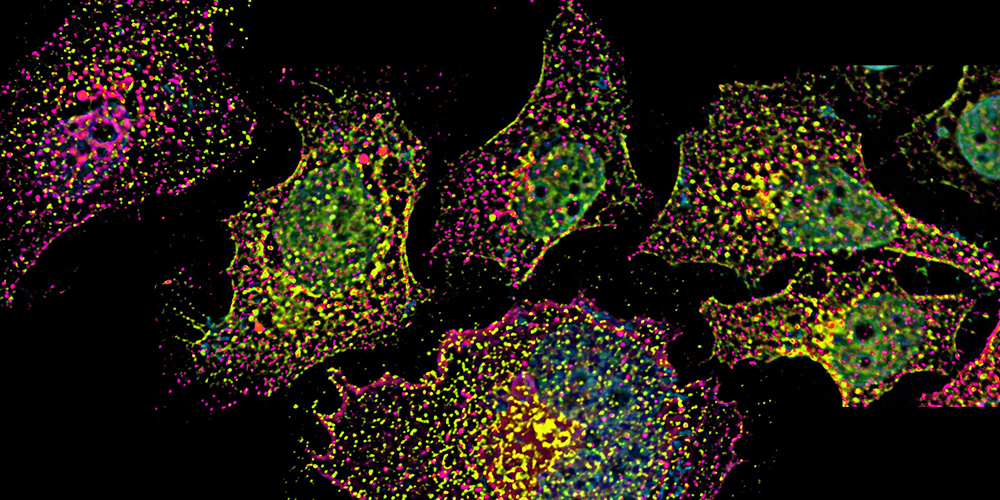
The University Council has appointed Professor Hassina Baraki Clinical Professor of cardiac surgery. At the same time, she will become the chief physician for cardiac surgery at the University Hospital Basel. Professor Ilija Bogunovic will be the new associate professor for AI and foundation models.
Christian R. Ulbrich is using a monitor to observe the progress of digital transformation in different countries. In the first version, he compares four European states. His conclusion? Faster is not necessarily better. And Switzerland’s decentralized course is a smart strategy.

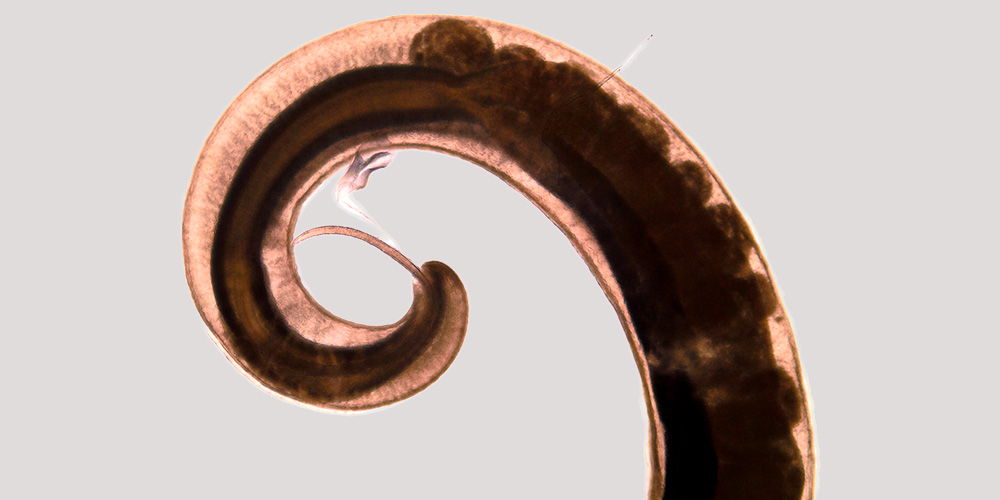
Researchers from the Swiss Tropical and Public Health Institute (Swiss TPH) and partners have discovered a new parasitic worm species named Trichuris incognita in Côte d’Ivoire. The discovery is now formally recognized through the official handover of preserved specimens to the Natural History Museum in Basel, in accordance with international scientific naming protocols.