

Banning social media for young people, Professor Gradl-Dietsch?
Text: Gertraud Gradl-Dietsch, psychiatristA ban aims to protect young people from the risks of social media, but what would they also be losing out on? Perspectives from child and adolescent psychiatry.
Key takeaways
- Social media can increase psychological stress in young people, particularly those who are vulnerable.
- A blanket ban may overlook the social benefits of online platforms.
- Parental guidance, media literacy and platform responsibility are essential to protecting young users.
In terms of child and adolescent psychiatry, concerns about the impact of social media on children and young people are justified. Social comparison, cyberbullying, unrealistic body ideals, sleep deprivation, or content relating to self-harm, suicidal tendencies or eating disorders can intensify psychological stress, particularly in vulnerable young people. That being said, it would be short-sighted to regard social media fundamentally as a cause of mental illness. Rather, its impact depends on the developmental phase, individual circumstances, and the different content and mechanisms involved.
A generalized ban isn’t therefore a particularly convincing approach. Social media are part and parcel of young people’s everyday lives, a space where they forge relationships, seek information and share interests.
Experts in child and adolescent psychiatry believe that the quality of support is more important than the idea of a blanket ban. Above all, this is about identifying pressures at an early stage and protecting vulnerable young people. Particularly in the case of younger children, parents have a special responsibility. This includes imposing age-appropriate limits, showing an interest in their children’s digital world, and maintaining a dialog with them about it. At the same time, young people’s need for privacy also has to be respected.
Increasing autonomy could help young people develop their media literacy. This is about more than just the sensible management of screen time. Young people should also learn that their feed is not a neutral reflection of society and why so much attention is placed on emotionalizing, extreme or highly body-centric content.
Responsibility cannot, however, be placed solely on young people and their parents. Platforms shape the digital environment and consequently the risks associated with it. Recommendation algorithms are particularly problematic, producing increasingly homogeneous feeds from individual interactions and repeatedly confronting young people with potentially harmful content. Expert associations are calling for technology not to lead young people directly to content on topics such as self-harm, suicidal tendencies or eating disorders and for platform features to be better adapted to the developmental stage of young users.
Whether young people are allowed to use social media is therefore less critical than the conditions in which they do so. These users need to be protected but equally given the opportunity to develop a competent and increasingly independent approach to the digital world. This requires parents and caregivers to set boundaries while also keeping communication open — and platforms to live up to their responsibilities toward young people and their digital environment.
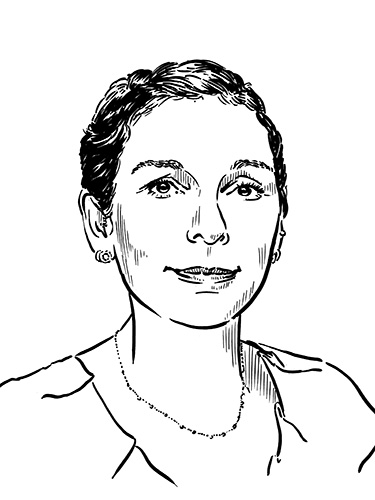
Gertraud Gradl-Dietsch is Professor of Child and Adolescent Psychiatry. Her research explores the neurobiological mechanisms of anorexia. She also focuses on sports psychiatry and treatment expectations for depressive disorders.
More articles in this issue of UNI NOVA (November 2026).