

A taste of luxury: How sugar became a status symbol.
Text: Noëmi KernIn Baroque Europe, sugar sculptures were more than extravagant desserts: They displayed wealth, conveyed political messages and celebrated power. Media historian Markus Krajewski explores how these edible artworks turned sugar into a status symbol.
Key takeaways
- At Baroque banquets, elaborate sugar sculptures displayed the host’s wealth and power.
- These edible artworks conveyed political and religious messages that guests deciphered together before eating them.
- As sugar became cheaper and more widely available, it lost its luxury status, and porcelain replaced it in courtly displays.
Wedding cakes are true works of art. Ideally, they have multiple tiers, marzipan and icing decorations, and figurines of the happy couple placed on top. Some guests might gaze in wonder and amazement, while others might feel slightly uncomfortable if they’re already full up from wedding food and drinks.
Sugar has long been at the heart of festive occasions. In the 11th century, the caliphs commissioned sugar sculptures for their feasts. In the 17th and early 18th centuries, sugar was a luxury good transported to Europe along vast trade routes.
Baroque subtleties: Symbols of wealth and power
Its value, and the sugary works of art (known as “subtleties”) created by distinguished pâtissiers, underlined the prosperity of those who commissioned them and served them to their guests. The more expensive and extravagant they were, the more prestige they garnered.
The luminaries who gathered around these 18th-century tables for lavish feasts may have reacted to subtleties just like modern wedding guests. These artistic, edible sculptures of sugar, marzipan, honey and nuts were served between courses and designed to astonish. “They were an interlude between the succession of dishes and something of a contrast to the hearty, meat-based meals. They also provided new visual and mental stimulation,” says Markus Krajewski.
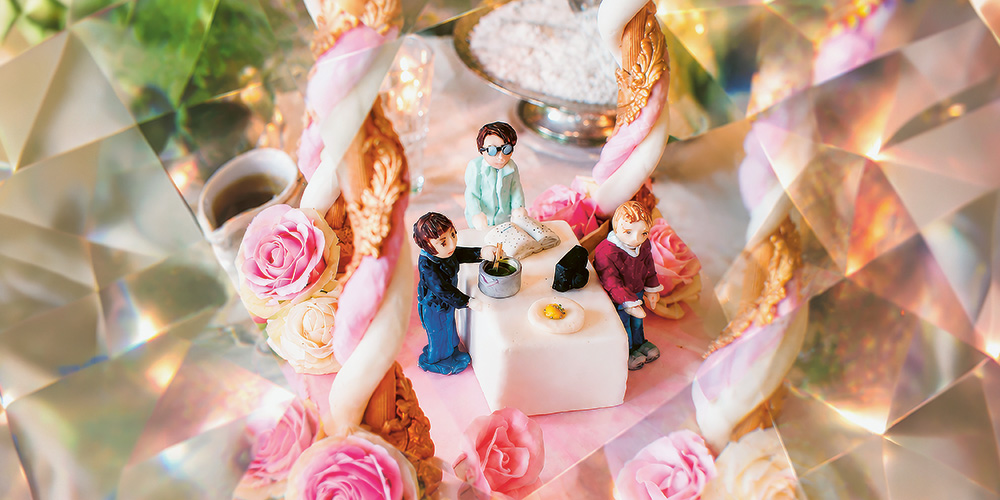
A media historian, he investigated these sweet artworks and what they signified during a project about cooking as a cultural technique. Together with a chef and a photographer, he created a Baroque-style feast at Villa Wenkenhof in Riehen, near Basel. “Above all else, it was a feast for the eyes,” he recalls.
As he studied these historic banquet tables, he came across subtleties, a subject on which there are few sources. One item that has been preserved is a copperplate from 1717 depicting a banquet in Regensburg in September 1717 to celebrate Prince Eugene’s victory over the Ottomans in Belgrade. Seven subtleties were presented at this feast, lavish scenes exploring the military success and power of Emperor Karl VI in sugar, almonds and pistachios.
The political and religious messages in sugar sculptures
“Subtleties were mainly designed to impress, to spark conversation and to demonstrate the host’s wealth and power,” says Krajewski. They weren’t just there for decoration or as a pretty dessert; they held political and religious messages. It was up to those at the table to identify the people and crests depicted and decipher their message — and so the guests would come into conversation. In this way, subtleties also provided a source of entertainment.
Once the sculptures had been intellectually dissected, they would be physically dismantled — cut up and eaten by the people at the table. The interpreting, dismantling and eating of the subtleties were inextricably linked. “The guests literally devour the small figurine of the emperor — the image and symbols of the ruler’s might — while at the same time swallowing and thereby affirming his claim to power,” Krajewski explains.
Subtleties also reflected the concept of transience, which was pervasive in the Baroque era: The artful sugar sculptures were always destined to be eaten, bringing to life the link between splendor and decay. It was only fitting that these elaborate works of art be made from sugar, marzipan and butter, as the heat from the candlesticks could easily cause them to warp.
How sugar went from luxury to everyday ingredient
Over the course of the 17th century, colonial sugar cane cultivation in South America and the Caribbean made sugar more readily available and thus less expensive. By the mid-18th century, it was so cheap that it lost its status as a luxury good. “In a sense, it became a proletarian good and a mass product,” says Krajewski. Porcelain then became the material of choice for courtly representations.
“Over the past 400 years, our view of sugar has changed completely,” Krajewski finds. Sugar is commonplace today and so are discussions on how to limit the overconsumption of sweetened foods.
From Baroque sugar art to «Is it cake?»
Even now, we have an almost limitless imagination for presenting confectionaries. Krajewski sees the fusion of taste, craftsmanship and illusion first and foremost in modern patisseries and fine dining. “They too play with the audience’s expectations and can therefore absolutely be compared to the dynamics at a Baroque banquet table.”
Often, the only way to tell what the subtleties were made from was to look closer or take a bite. “The guests would puzzle over whether a parrot’s beak was made of pistachios or marzipan, or whether an imperial eagle was caramel or colored sugar.”
Today, viewers of video formats like “Is it cake?” guess whether a hamburger consists of a bun and patty or possibly sponge mixture and buttercream. Whether watching those videos or looking at a wedding cake, modern audiences are far more impressed by what we can make with sugar than the use of sugar itself.
Original publication: "Kulturtechnik Kochen", Schwabe Verlag 2024.
Markus Krajewski is Professor of Media History and Theory. His research focuses on cultural techniques and media/cultural processes, including cooking.
More articles in this issue of UNI NOVA (November 2026).