

How compost protects plants.
Text: Angelika JacobsCompost can protect plants against diseases such as fungal infection when mixed into potting soil or sprayed on the leaves as a watery extract. Researchers at the University of Basel are working with the Research Institute of Organic Agriculture (FiBL) to identify the microbes in the compost that provide this protection. These could be used to make new biological agents to protect plants.
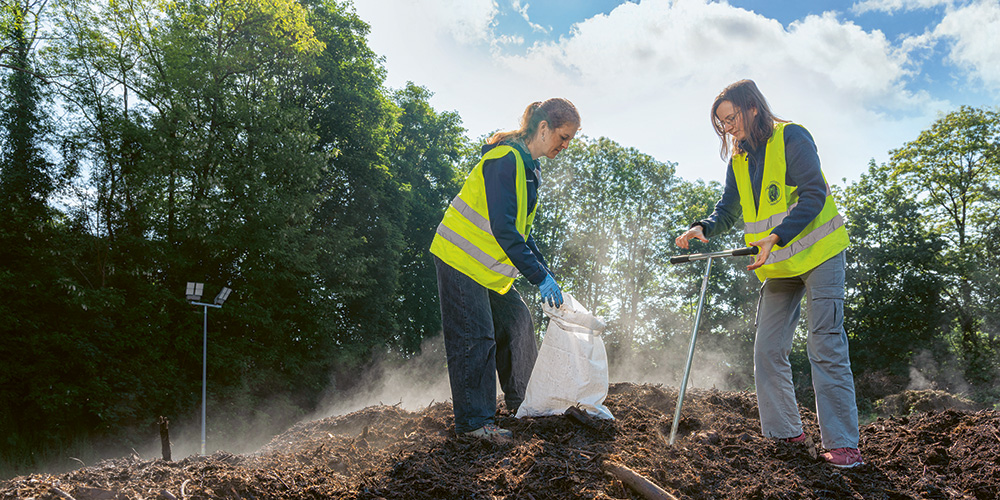
At various composting sites in German-speaking Switzerland — such as the one pictured here in Riehen, near Basel — Pascale Flury (left) and her doctoral student Fiona Fitchett take samples from inside huge heaps of compost.
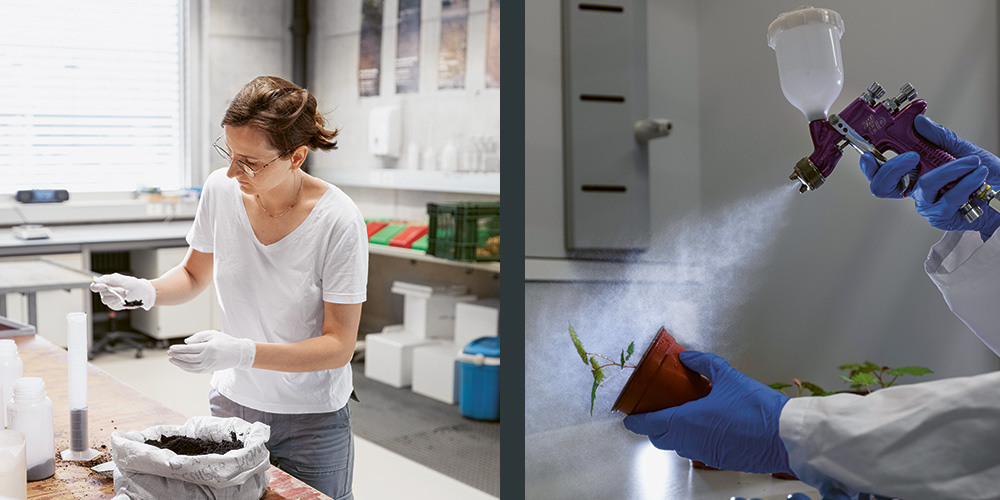
Left: At the Research Institute of Organic Agriculture (FiBL) in Frick, Fiona Fitchett extracts microbes from the compost samples. She uses them to prepare a watery extract for tests against leaf diseases.
Right: When experimenting with grapevines, she sprays some of the plants with the compost extracts and leaves others untouched. Two days later, she sprays all of the vines with a pathogen that causes leaf diseases.
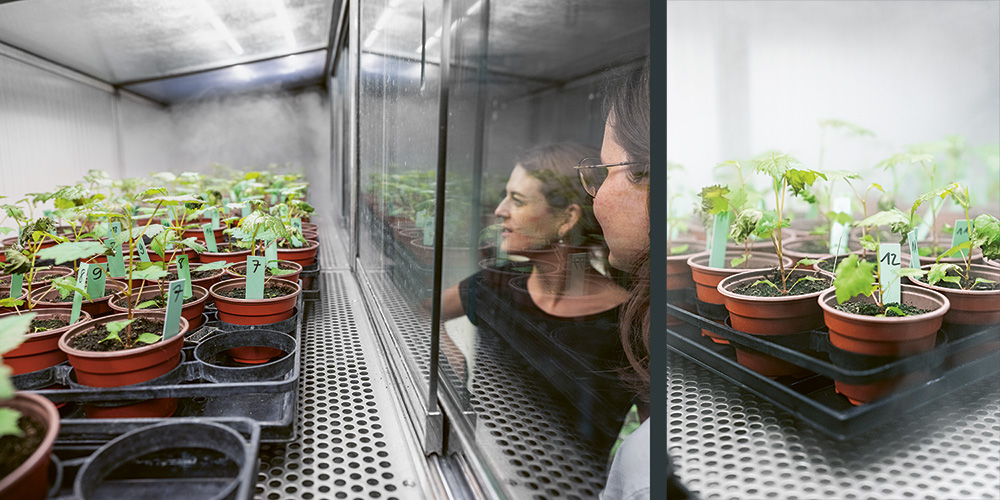
The plants are then placed in an incubator. High humidity makes it easier for the pathogen to infect the plants.
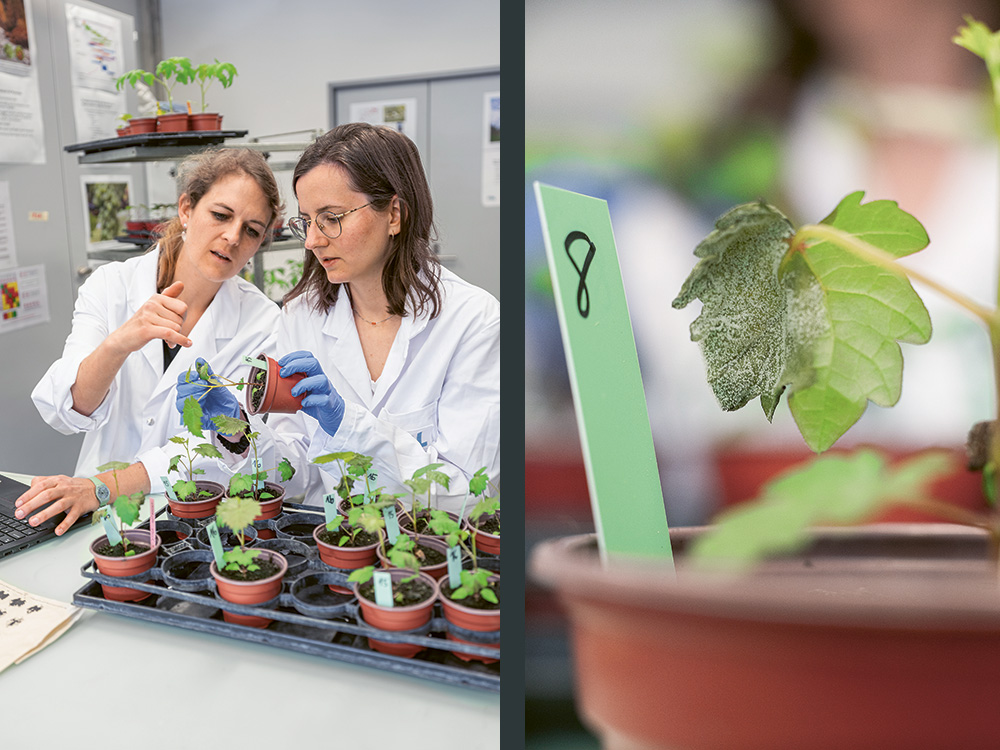
One week later, Flury and Fitchett compare the vines that were sprayed with compost extracts and those that weren’t. The gray-brown surface indicates just how diseased the leaves have become (on the right). The researchers identify which compost extracts offer the plants the best protection.

Meanwhile, Pascale Flury’s other colleagues are investigating which compost microbes protect against root diseases. This team has already discovered which of the compost samples protected the plants the best. With the aid of gene sequencing, the biologists have identified the microbes in these samples.
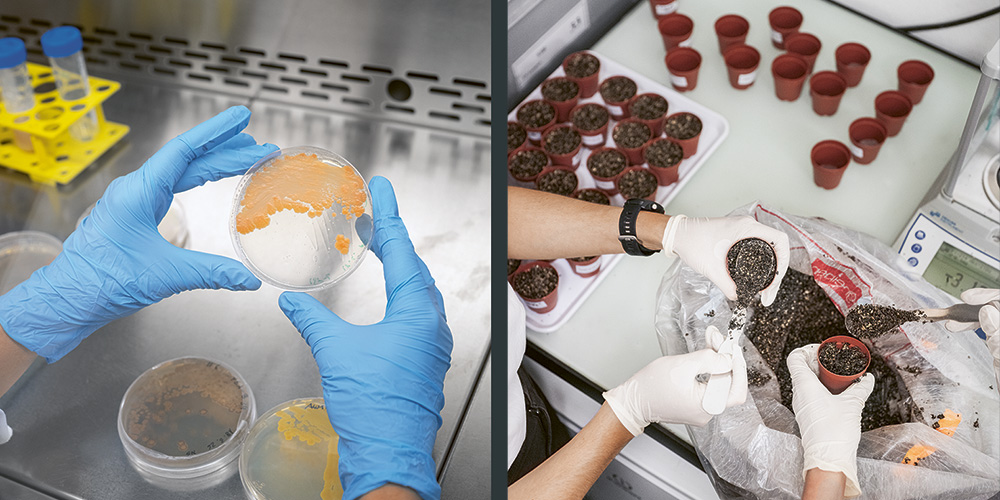
Left: The researchers have isolated around 300 promising bacteria and have propagated them in the lab. They dissolve the bacteria from the culture medium in liquid to test them for their plant protection potential, either individually or in particular combinations.
Right: To prove efficacy, the researchers sow cress in soil containing a root pathogen. Individual compost bacteria or bacterial mixtures are also added to some of the pots.
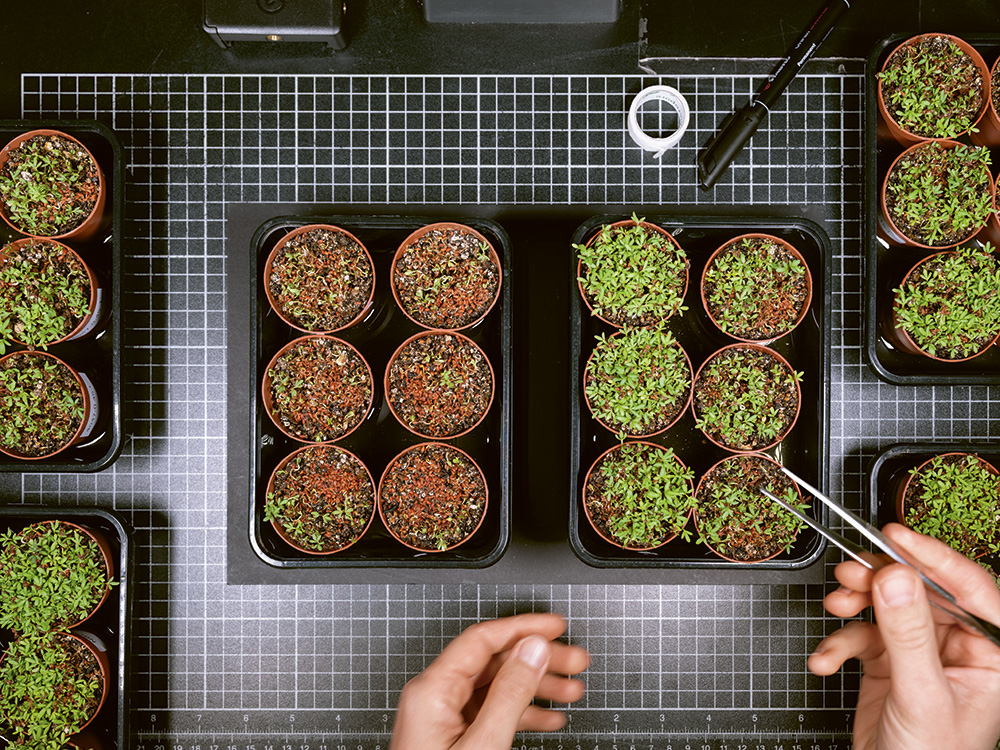
After a week, the cress without compost bacteria (left) is growing significantly worse than the cress with bacteria (right). The researchers are working closely with Robin Teufel’s team at the Department of Pharmaceutical Sciences to find out which substances the microbes use to curb the pathogens.
The results could provide inspiration for biological plant protection agents or serve as the basis for test kits to determine compost quality.
Pascale Flury is a phytopathologist and research associate at the Department of Environmental Sciences. Here she investigates how beneficial soil bacteria can protect crops against pathogens.
Fiona Fitchett is conducting doctoral research on the compost microbes that protect plants against leaf diseases and the substances that provide this protection.
More articles in this issue of UNI NOVA (November 2026).