Fine particles from aircraft exhaust become more harmful over time
Researchers at the University of Basel have investigated how fine particles in exhaust emissions from aircraft and marine engines change in the atmosphere. Their findings show that aircraft emissions in particular become more toxic over time.
15 October 2026 | Christine Möller
Fine particulate matter consists of tiny particles with diameters in the nanometer range. They are produced, for example, by fuel combustion, remain suspended in the air and can penetrate deep into the respiratory tract. There, they can trigger what is known as oxidative stress – a process that promotes inflammation and, in the long term, can lead to serious health problems such as respiratory or cardiovascular diseases. Scientists refer to this harmful property of the particles as their oxidative potential.
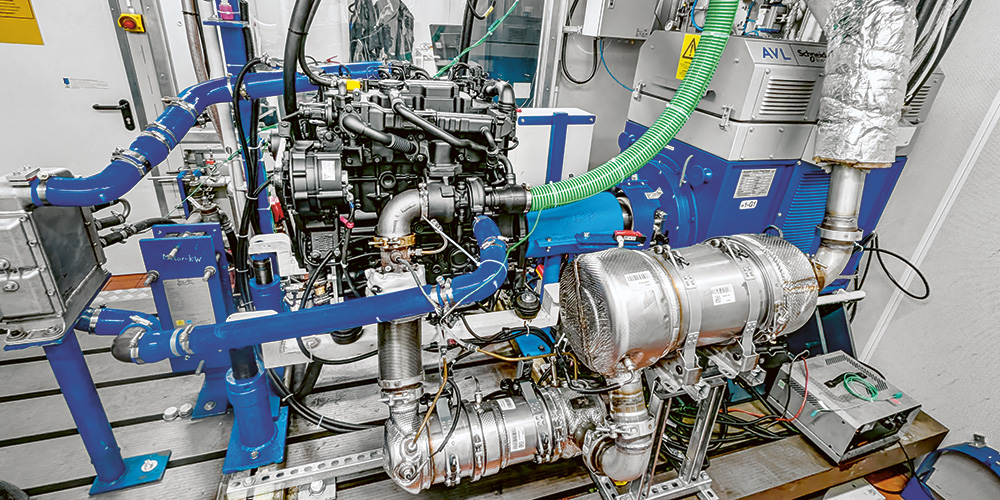
However, fine particles usually remain in the atmosphere for hours or even several days before people inhale them. Little is known about how the harmful properties of these particles change over time. A research team led by Professor Markus Kalberer therefore investigated how the oxidative potential, and thus the toxicity, of fine particles emitted by a small aircraft jet engine and a marine diesel engine develops over time.
Aircraft emissions become more toxic
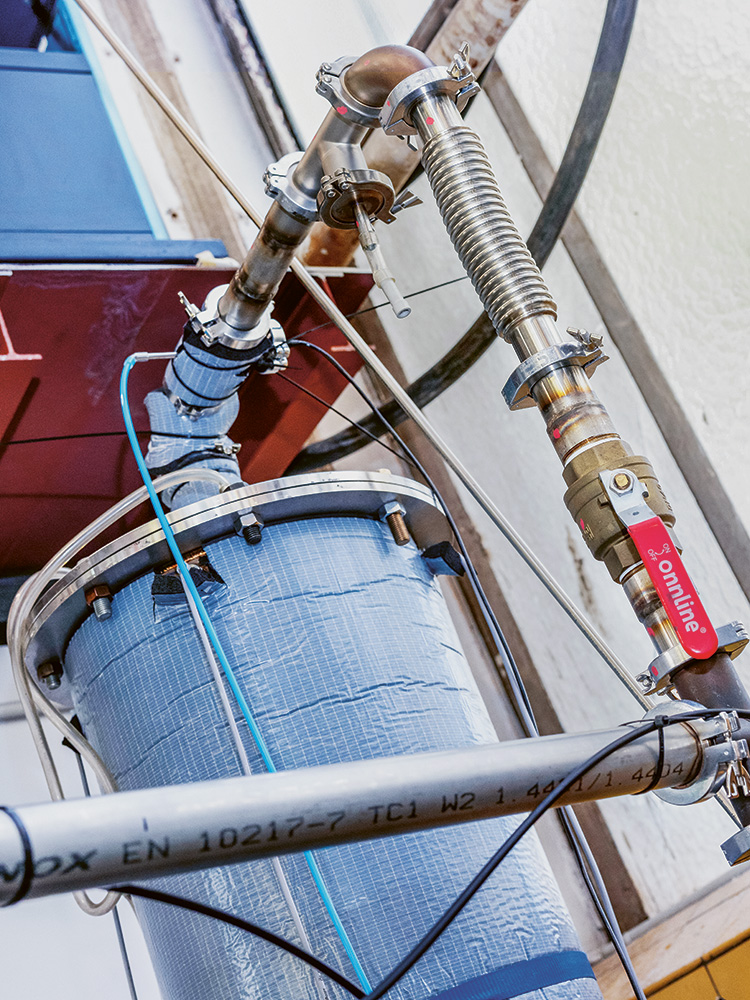
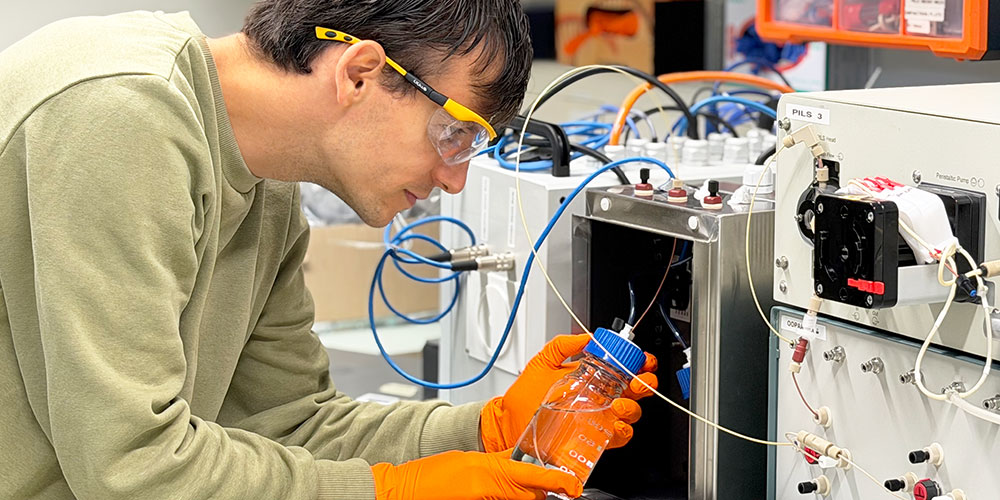
Using a photochemical reactor, the researchers simulated what happens to the particles in the atmosphere over a period of 1 to 12 days. To investigate the oxidative properties of fresh and aged exhaust emissions, they used a measuring instrument developed specifically for this purpose at the University of Basel: the Online Oxidative Potential Ascorbic Acid Instrument (OOPAAI).
The results were remarkable: While the health-related properties of ship engine emissions remained largely stable over time, the oxidative potential of aircraft emissions increased significantly as the particles aged. This was due to changes in the chemical composition of the particles as they reacted with components of the air under sunlight over an extended period.
Fresh exhaust emissions are not the only concern
Dr. Battist Utinger, one of the two first authors of the study from the Department of Environmental Sciences and the Swiss Nanoscience Institute at the University of Basel, explains: “Our study shows that it is important to look beyond freshly emitted exhaust particles. Atmospheric processes can significantly alter the oxidative properties of the particles and thus their potential to harm human health.”
Markus Kalberer adds: “This study clearly shows that current legal frameworks, such as the Swiss Ordinance on Air Pollution Control, do not adequately account for the most toxic sources of fine particulate matter and their properties.”
The World Health Organization WHO estimates that more than 7 million premature deaths occur annually due to exposure to high concentrations of airborne particulate matter – more than twice the number of global deaths from AIDS, malaria and tuberculosis combined.
Original publication
Alexandre Barth, Battist Utinger et al.
Online characterisation of oxidative potential and reactive oxygen species of fresh and aged aircraft turbine and ship engine particulate emissions
Environmental Science: Atmospheres (2026), doi: 10.1039/d5ea00174a