

Putting new fuels to the test.
Text: Angelika Jacobs
Reducing CO2 emissions in the transport sector is essential to achieving carbon neutrality. Commercial vehicles, aircraft and shipping, however, cannot be readily electrified. Alternatives include carbon-neutral or low-carbon fuels such as ammonia, methanol, hydrogen and synthetic kerosene. But are the exhaust gases from these fuels really more climate-friendly? And do their constituents pose no harm to health?
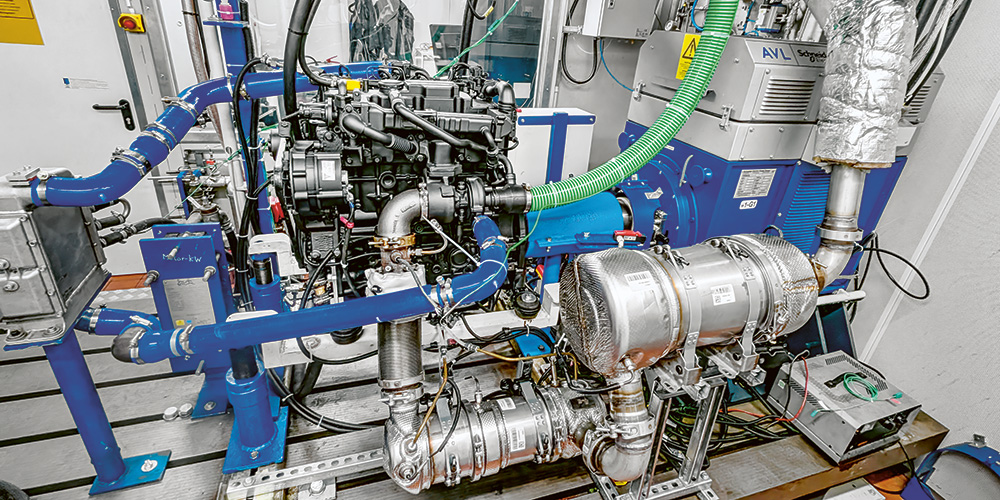
Answering such questions about non-fossil fuels is the task of the European project LowC, in which researchers from the University of Basel are involved. At the University of Rostock in Germany, which leads the project together with the Norwegian Institute of Public Health in Oslo, a team of researchers measures the exhaust gases from various fuels during the operation of different engines. These include a four-cylinder engine for heavy commercial vehicles (see photo). The engines are sometimes operated at high output and sometimes throttled, as in normal operation.
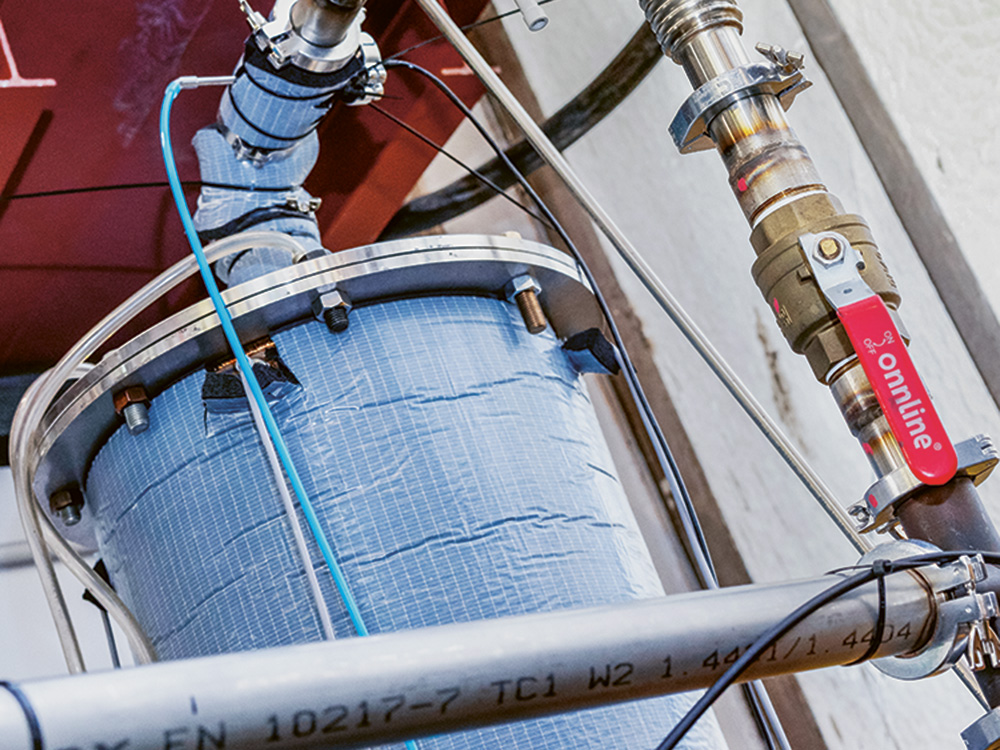
The exhaust gases are either piped directly to the various measuring instruments or are first “aged” in this gray-clad tank. The researchers expose the exhaust gases to UV light inside the tank so that the exhaust gas molecules first react on exposure to sunlight, humidity and other trace gases, such as ozone, as they would in the atmosphere.
The exhaust gas undergoes chemical and toxicological analysis that provides a detailed picture of the properties and potential climate and health impacts.
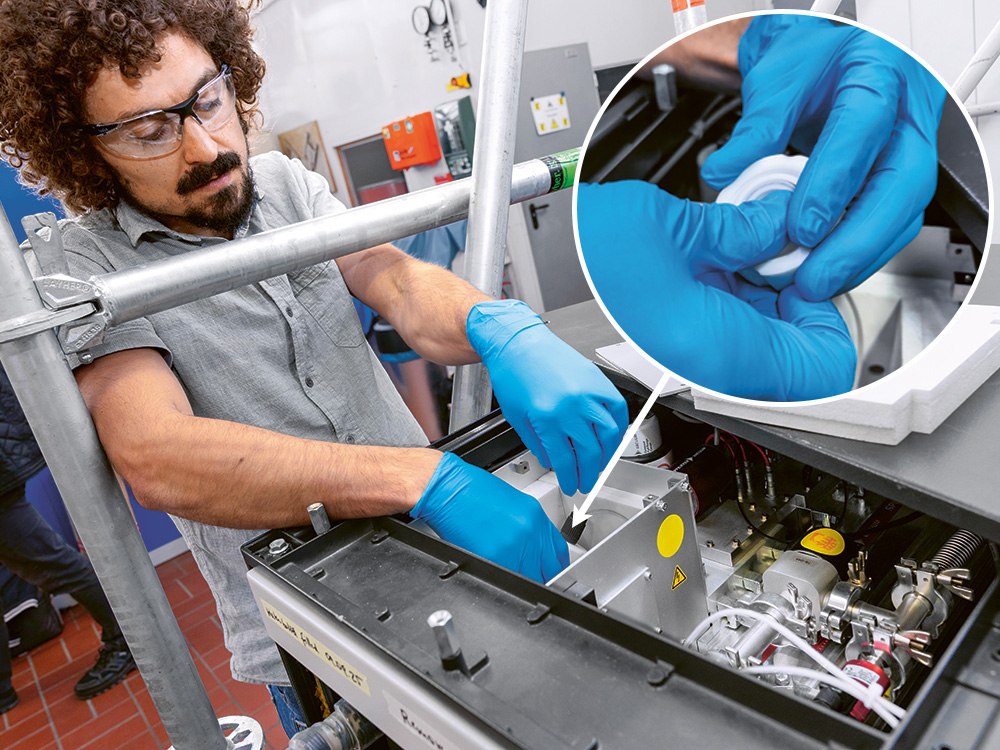
Among other things, the team from the University of Basel focuses on gaseous “volatile organic compounds,” such as benzene, that are found in the exhaust gases. Some of these compounds are harmful to health or climate — or can undergo further reactions in the tank (see image above) to produce harmful compounds. Matthias Harder, a postdoc at the University of Basel, regularly changes the filter of the measuring instrument, a mass spectrometer. As only gases are intended to proceed to the analysis stage, the filter (as seen in the round image section) serves to collect the large quantities of particles such as soot that are produced during combustion in the engine.
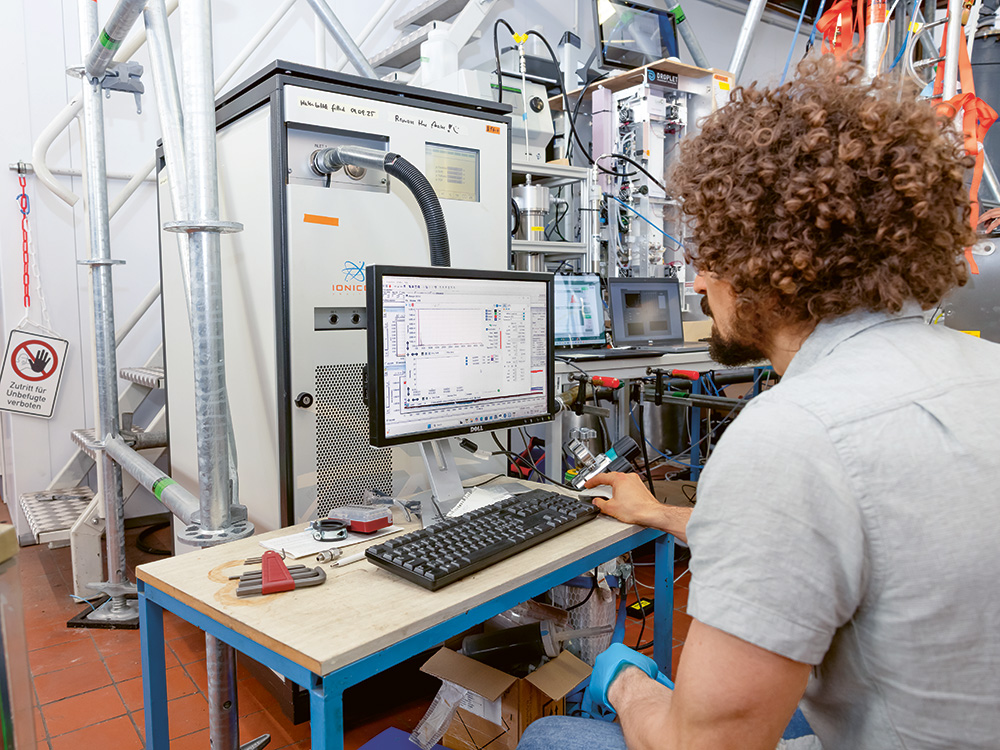
The engine runs continuously and simulates normal operation, including acceleration and braking. In this way, the researchers obtain a high-resolution, real-time profile of the gaseous compounds, either straight from the exhaust or after aging. As well as investigating alternative fuels, such as methane, ammonia, hydrogen and synthetic kerosene, the researchers also measure the exhaust gas profiles of conventional fossil fuels for comparison.
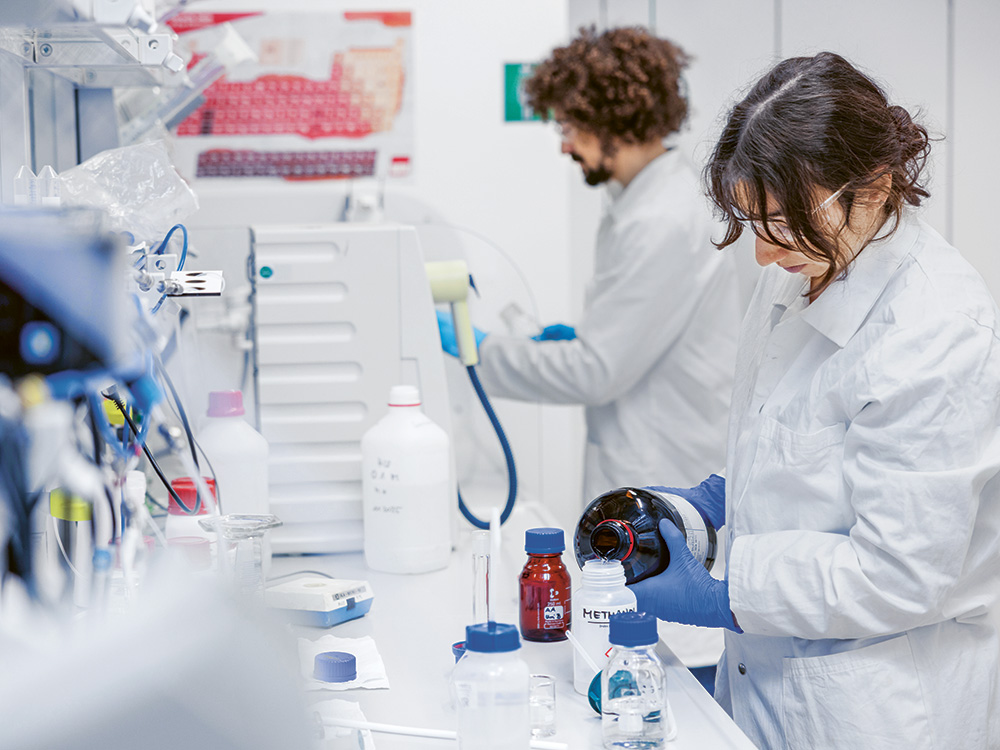
Another analysis by the team from Basel calls for some preparatory work in the laboratory. In this technique, the aim is to measure the extent to which particulate matter from the exhaust gases can trigger oxidative stress in cells. This stress can damage the genetic material and other cellular constituents and is associated with various diseases, such as cancer. Doctoral researcher Elisa Chamot (front) and Matthias Harder prepare the chemicals for their measurements.
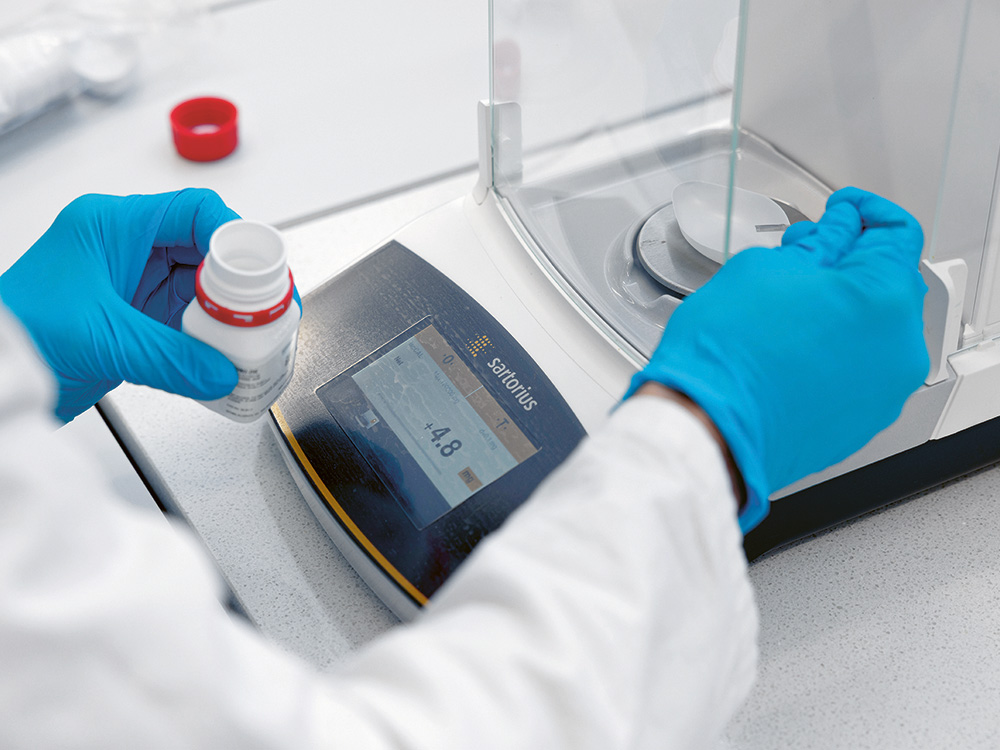
This process revolves around ascorbic acid (vitamin C), a key antioxidant in the lungs.If particulate matter in exhaust gases has a high oxidative potential, it “consumes” and oxidizes ascorbic acid faster than the body can regenerate it or replace it through the diet. The particulate matter can therefore trigger cell damage, oxidative stress and diseases.
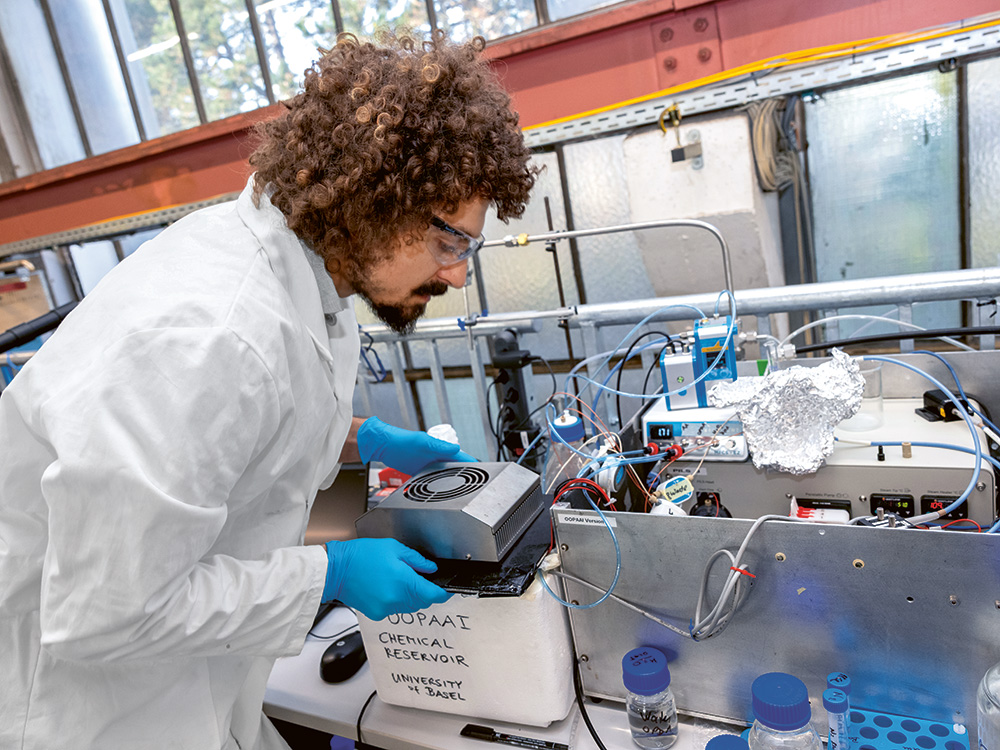
Developed in Basel, the Online Oxidative Potential Ascorbic Acid Instrument (OOPAAI) exposes particulate matter from exhaust directly to ascorbic acid. This allows the OOPAAI to detect even highly reactive, short-lived particle components and measure the oxidative properties of particulate matter, even under rapidly changing conditions such as those in an engine’s exhaust. In previous measurement techniques, too much time elapsed between sampling and measurement — such that the harmfulness of the particle components was often significantly underestimated.
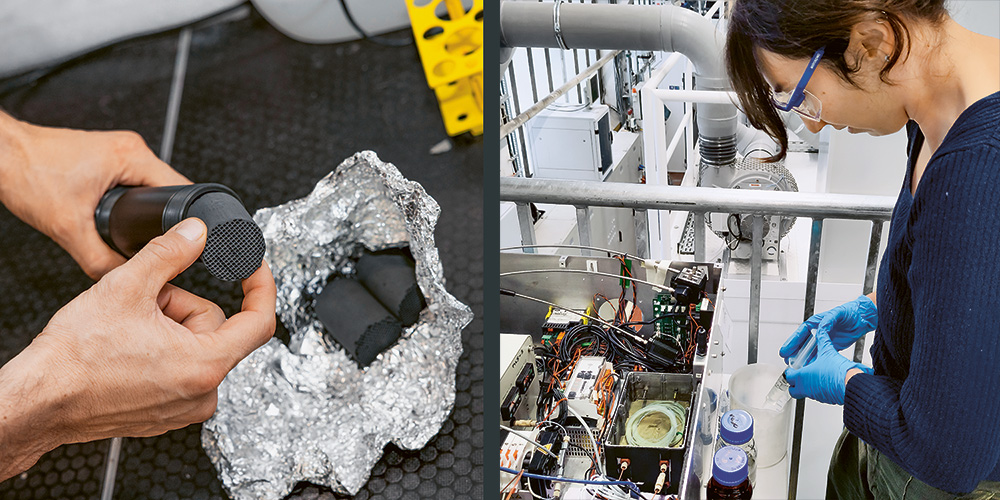
With the help of carbon filters, the gaseous constituents in the engine’s exhaust are removed so that only the particles are analyzed for their oxidative potential (left). A heating bath configured to 37 degrees Celsius simulates the body temperature in the lungs, where the particles would react with ascorbic acid produced naturally in the body. Elisa Chamot regularly replaces the tubes that carry the particles and reagents in the heating bath, as these become contaminated with deposits over time (right).
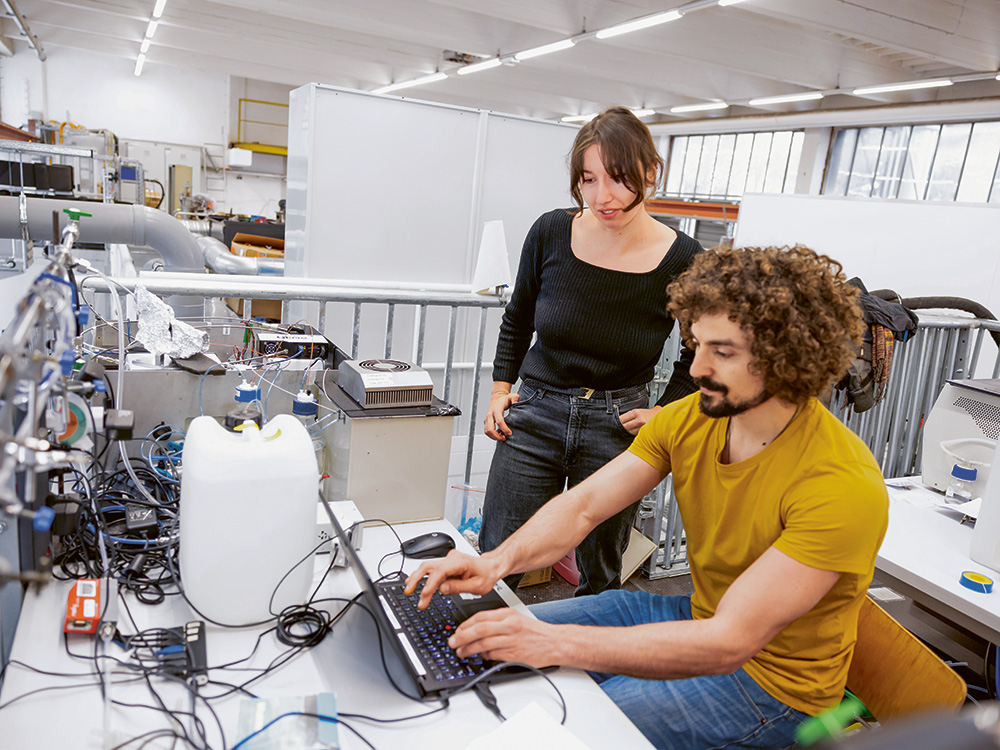
Elisa Chamot and Matthias Harder examine the data that OOPAAI supplies on a continuous basis. Initial results indicate that the most harmful compounds often do not emerge directly from the exhaust. Rather, they are formed during the aging of the exhaust gases, where the particles react with sunlight and other harmful substances in the atmosphere.
Further information on the Horizon 2020 project LowC is available at eulowc.wordpress.com
Matthias Harder is a postdoctoral researcher in the Atmospheric Sciences group at the University of Basel. He works primarily on the toxicity of fine particulate matter.
Elisa Chamot is a doctoral researcher in the group led by Markus Kalberer, Professor of Atmospheric Sciences at the University of Basel. She is developing a new instrument for sampling aerosols.
More articles in this issue of UNI NOVA (May 2026).