Improved tiger mosquito control in Basel-Stadt thanks to a master’s thesis
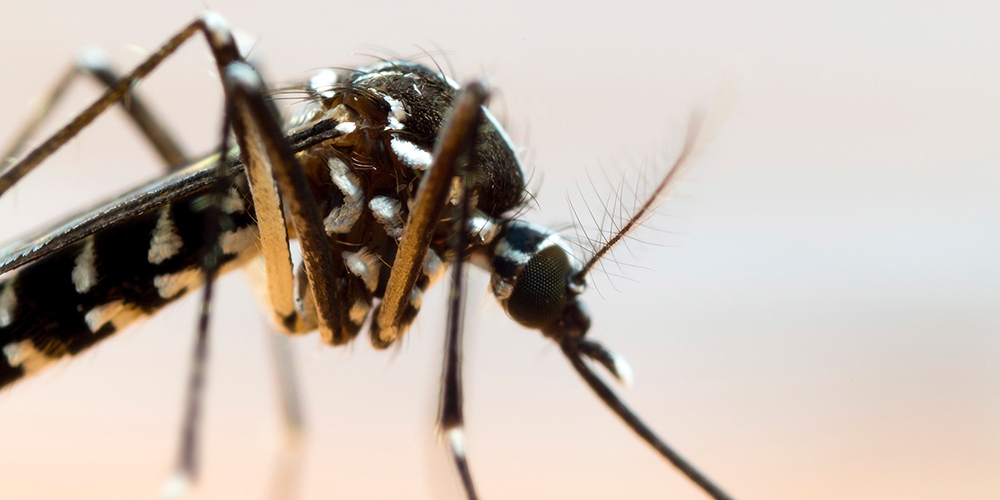
At first, it spread almost unnoticed, but for the past two years the tiger mosquito has been found throughout Basel. In recent years, Aedes albopictus has become a real nuisance, particularly because it is active during the day and can bite several times. Researchers from Swiss TPH and the University of Basel have now investigated how the canton can treat one of the mosquito’s breeding sites particularly effectively.
08 October 2026 | Anna Uebelhart, Catherine Weyer
Tiger mosquitoes need standing water and warm ambient temperatures for their offspring to develop and hatch. So-called catch basins, commonly known as street drains, provide ideal breeding sites. There, the mosquitoes can lay their eggs undisturbed. When temperatures exceed 11 degrees Celsius, the larvae hatch after about a week and find sufficient food in the catch basins. They then pass through further developmental stages before becoming adult mosquitoes, which live for around one week.
For some time, the Civil Engineering Department of Basel-Stadt has been treating these catch basins with the larvicide VectoMax FG. This biological mosquito-control agent significantly reduces the number of larvae that develop into tiger mosquitoes. In his master’s thesis, student Tim Kirrmann investigated which treatment interval achieves the most effective control.
Impact on tiger mosquito control practices
For the study, researchers examined and treated 180 catch basins in Basel’s St. Johann district at intervals ranging from two to ten weeks. The result: “Optimal control is achieved with treatment every four weeks,” says Kirrmann. More frequent applications provide only limited additional benefit, while longer intervals reduce effectiveness. Another finding was that the current dosage harms tiger mosquitoes but does not reduce populations of other insects.
The findings have directly affected practice: the Civil Engineering Department of Basel-Stadt has adjusted its treatment schedule and is now applying the results of Kirrmann’s master’s thesis directly to tiger mosquito control.
Original publication
Tim Kirrmann et al.
Evaluation of VectoMax FG application frequency for the control of Aedes albopictus and Culex species in urban catch basins: evidence from a randomised controlled trial
Parasites & Vectors (2026), doi: 10.1186/s13071-025-07169-0