
AI in cardiology: The path to practical application carries risks
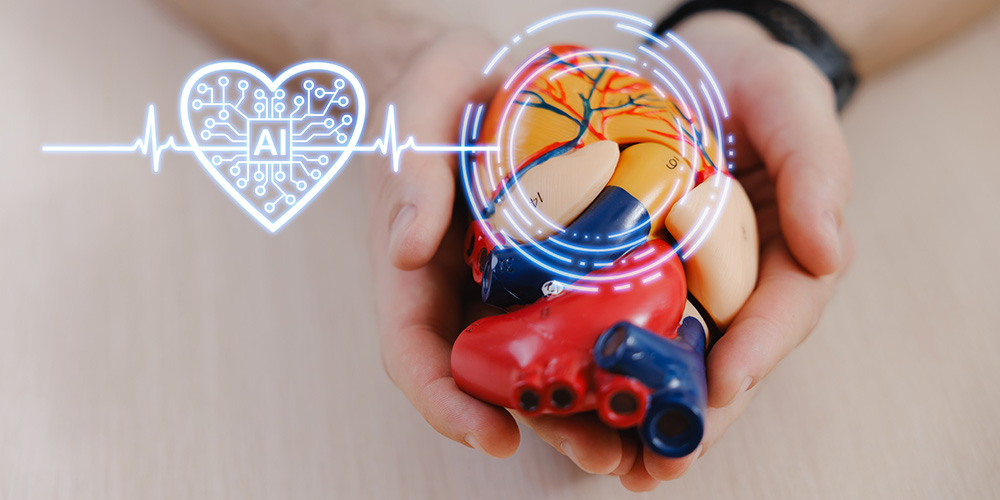
A new EU strategy is placing greater emphasis on artificial intelligence in the management of heart disease. Legal researcher Hannah van Kolfschooten believes this is premature. Among other things, she criticizes the fact that no concrete benefit for patients has yet been demonstrated and that there are gaps in the legislation.
13 August 2026 | Yvonne Vahlensieck
Dr van Kolfschooten, the EU presented its Safe Hearts Plan at the end of last year. It aims to help member states develop new strategies in the fight against cardiovascular disease. What role does artificial intelligence (AI) play here?
AI plays a key role in this plan. It is to be used extensively in all three areas on which the fight against cardiovascular disease is based: prevention, early detection and screening, as well as treatment and care.
In your article recently published in the scientific journal “Lancet Regional Health – Europe”, you criticize this focus on AI. In your view, there is a benefits gap. What do you mean by that?
There is a great deal of research into AI in the field of healthcare. Under controlled conditions in a research environment, AI performs very well in all three areas mentioned above. These are promising approaches.

But a positive study result is by no means a guarantee that things will go just as well in clinical practice and that people’s heart health will actually improve. Technically, AI may work very well, but healthcare systems are complex. Many practical, organisational, and legal barriers can prevent AI from delivering real benefits to patients. I therefore consider comprehensive implementation of AI in the field of cardiovascular disease to be premature.
Could you give an example of such a benefit gap?
An AI model may be able to accurately identify which people are at high risk of heart disease before any symptoms appear. However, a good AI prediction alone is not enough. Because it is not a given that this person will actually receive the appropriate care. Medical professionals also need to know what to do with such a prediction. In order to achieve this, there need to be defined processes in the healthcare system. The proper use of AI needs to become part of medical training. Even if we have a perfect prognosis, that does not mean that it will bring about any change in the health of individuals or in the healthcare system.
You also point out that minorities are not sufficiently represented in AI models. Why is that?
The data used to train AIs comes primarily from patient groups in which minorities are not represented. The gender balance isn’t representative either.
When it comes to cardiovascular disease, there is less data available on women, even though they account for half of those affected. This inequality will continue to grow, as AI systems are expensive to implement. This means that only wealthy hospitals can afford them, and newly collected datasets will come primarily from affluent patients. This leads to a bias.
What risks are there for me as a patient as a result of the increased use of AI systems?
Autonomy is a top priority in our healthcare system. This means that patients should be fully informed before they consent to treatment. However, even doctors do not always understand how AI arrives at a specific recommendation. Consequently, they are unable to properly explain the reason for the planned procedure and the possible risks to the patient.
You also see gaps in the legislation. What problems might AI present us with in this regard?
In fact, everything in the healthcare sector is strictly regulated by law. For example, if a doctor is involved, they bear the responsibility. However, AI gives rise to many gray areas when it comes to patients’ rights.
For example, wearables such as smart watches collect health data and it is often unclear whether this data will be shared with third parties. Some wearables also provide information on a person’s state of health based on AI analyses. But who is liable if someone mistakenly believes they are healthy on the basis of such an analysis and does not go to hospital?
The Safe Hearts Plan is aimed at EU member states. What is the situation in Switzerland?
Switzerland is not required to follow these EU guidelines. However, it’s basically in the same situation when it comes to the use of AI. For example, University Hospital Basel is currently developing a number of AI applications. But even here in Switzerland, the transition from the research phase to real-world implementation is difficult.
But there’s no turning back now. AI will play an increasingly significant role in the field of heart health and other areas of medicine. What should we do?
Legislation always lags behind social development. That is why it is really important that we establish the legal framework for the use of AI now. But this alone is not enough. We also need to invest in medical training so that trainee doctors can acquire the necessary skills. And when it comes to AI applications, we should not only measure their technical performance, but also their clinical benefits. We need to tackle all of this immediately and simultaneously.
About the person
Dr. Hannah van Kolfschooten is a postdoctoral researcher in the Centre for Life Sciences Law at the University of Basel’s Faculty of Law. Her research focuses on the intersection between law, artificial intelligence and health. She is an expert member of AI committees at the World Health Organization and the EU.
Original publication
Hannah van Kolfschooten et al.
Artificial intelligence in the EU Safe Hearts Plan: prediction alone is not enough.
The Lancet Regional Health – Europe (2026), doi: 10.1016/j.lanepe.2026.101784