Six researchers receive an ERC Starting Grant

Six female scientists at the University of Basel have been awarded one of the prestigious ERC Starting Grants. They will receive between 1.5 and 2.3 million euros over five years to establish or expand their own research groups and to carry out their ambitious projects. The successful grantees are members of the Departments of Biomedicine, the Biozentrum, Social Sciences, History, and Biomedical Engineering.
03 September 2026
With 4,807 applications for the ERC Starting Grants, the European Research Council has set a new record. Only 421 applications, 8.8 percent of the total, were awarded funding, including 36 from Switzerland. Among the successful applicants are six female scientists who plan to carry out their projects at the University of Basel.
Two of these ERC Grants mark a premiere: They have been awarded for the first time to researchers at the Faculty of Humanities and Social Sciences.
Immune defense against leukemia
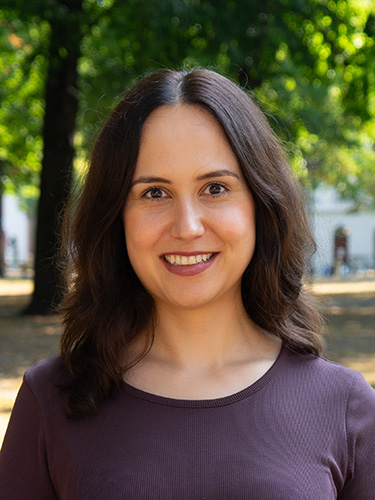
Professor Petya Apostolova and her team in the Department of Biomedicine are investigating why acute myeloid leukemia (AML) can recur even after a stem cell transplant. The focus is on particular fat molecules that play an increased role after chemotherapy and may protect leukemia cells from attacks by the immune system.
In the ERC-funded project, the researchers aim to determine how these protective mechanisms work and whether they can be specifically disabled. This could strengthen the immune system’s defense against leukemia and improve treatment following a stem cell transplant.
How lung tumors alter neurons
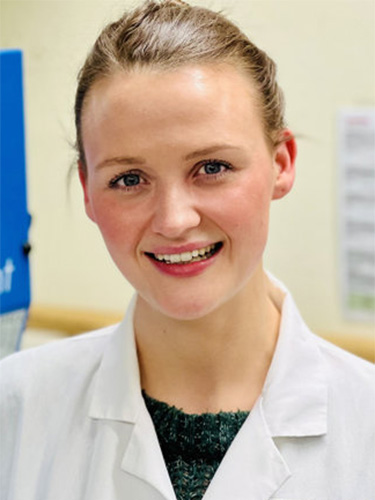
Professor Karen Dixon’s project also falls within the field of cancer research. Together with her team at the Department of Biomedicine, she is investigating how the nervous system influences the immune response to lung cancer. The focus is on specific neurons that detect inflammatory signals in the tissue. Initial results suggest that these neurons communicate with immune cells and can alter their behavior.
In the case of cancer, this interaction may become unbalanced, helping the tumor to evade the immune system. The ERC-funded project focuses on how lung tumors alter these neurons and how this, in turn, affects immune cells within the tumor. In the long term, such findings could open up new avenues for cancer therapies.
Jumbophages versus bacteria
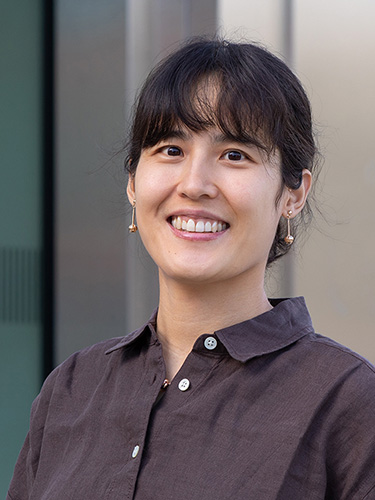
Professor Yuping Li and her team at the Biozentrum are researching so-called jumbophages, particularly large viruses that infect bacteria, and how bacteria protect themselves against them. In the ERC-funded project, the researchers aim to uncover the fundamental mechanisms underlying the arms race between these two adversaries: the bacterial defense system, on one side, and the strategies of the jumbophages on the other.
The phages protect their genetic material within special structures, allowing them to partially evade the bacterial defense system. However, Li has discovered a bacterial defense system that can still detect and stop such infections. Now the team wants to find out exactly how bacteria detect an infection by jumbophages and what role certain phage proteins play in this process.
The material afterlives of architecture
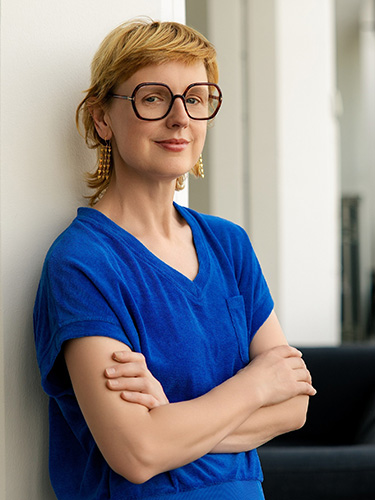
In her research project, Dr. Cathelijne Nuijsink sets out to examine how architectural history changes when it begins not with the making of buildings, but with their unmaking. She investigates what happens to buildings and their materials as they decay, are demolished, reused, or disposed of, while asking why their material afterlives have remained largely invisible in architectural archives and histories. By bringing these neglected afterlives into view, Nuijsink reorients architectural history around what happens beyond the apparent end of the building.
Together with her team, Nuijsink will trace how architectural waste is removed, circulated, repaired, reused, or permanently deposited, and examine the economic, social, and environmental relations these processes produce. The project thereby connects the material afterlives of buildings to broader questions of labor, environmental damage, and uneven exposure. It draws on environmental histories of architecture, discard studies, environmental justice, and critical race studies to develop a new account of architecture through its material endings.
Minorities in the Soviet Union
%20Anna%20Schmidt_375x500.d06078aad92e5da66d041491fd88cdc0.jpg "Olena Palko")
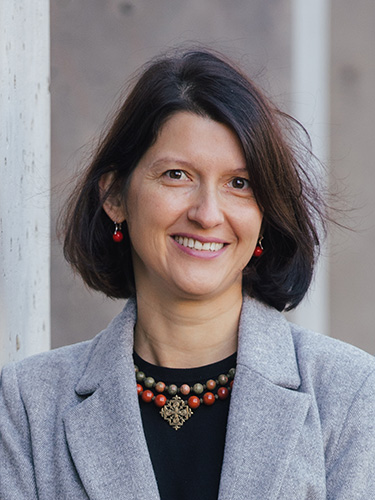
Professor Olena Palko’s research project examines the global dimension of the Soviet nationalities policies. It asks how the Soviet Union managed ethnic and linguistic plurality domestically and how it promoted its policies as a model beyond its borders. Palko connects these questions to a broader analysis of minority protection in the interwar period and examines the international resonance of the Soviet model during the Cold War.
The historian also underscores the contemporary relevance of this historical research by tracing the long-term legacies of Soviet nationalities policies. These legacies continue to shape regional conflicts across the post-Soviet space, such as Russia’s war against Ukraine, or the Nagorno-Karabakh conflict, where majority-minority relations are often politically instrumentalized. More broadly, the project engages with fundamental questions about the protection of minority rights and the erosion of diversity as a core democratic value.
Gut microbiota in child development
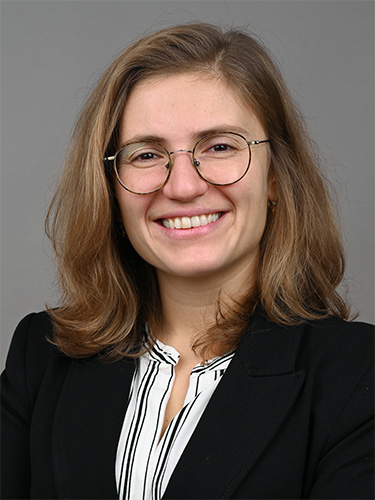
Prof. Dr. Burcu Tepekule and her team in the Department of Biomedical Engineering and the Basel Research Centre for Child Health BRCCH aim to determine why some infants cope well with disruptions to their gut microbiota, while such disruptions can have long-term consequences for others. These disruptions can result, for example, from antibiotics, infections, or changes in diet. The researchers are investigating which stages of early development are particularly sensitive and why children react differently to them.
In this ERC-funded project, Tepekule and her team aim to develop models that integrate data on gut microbiota, the intestinal barrier, and the immune system over an extended period. Their goal is to identify which children experience lasting effects from early disruptions and which factors surrounding birth play a role in this. In the long term, this could help identify risks earlier and implement preventive measures in a more targeted manner.
Support for researchers: Grants Office at the University of Basel
ERC Starting Grants support talented researchers by providing funding for a groundbreaking research project over a five-year period. Researchers wishing to apply to the ERC Starting Grant call for proposals for 2027 with a deadline of 14 October 2026 or who have any questions about this call for proposals are kindly requested to contact the Grants Office: grants@unibas.ch.