Why treelines don’t simply rise with the climate
A global study by the University of Basel reveals a surprising picture: while 42 percent of treelines worldwide are shifting upslope, 25 percent are retreating. This seemingly contradictory trend involves more than just warming. Climate change and human land use are interacting.
09 April 2026
The climate crisis is pushing treelines upward, at least this is the common assumption. But a new global study paints a more complex picture: 42 percent of treelines shifted upslope between 2000 and 2020, a quarter shifted downhill during the same period.
The findings show that temperature alone does not explain these changes. Human interventions in the landscape, such as land-use changes, significantly influence how treelines develop. The results of the study were recently published in the International Journal of Applied Earth Observation and Geoinformation.
The researchers examined shifts in the actual treeline using satellite data and compared this with the potential treeline; that is, where trees could theoretically grow based on climate.
The study sheds light on processes that unfold over decades. “The shift of treelines occurs slowly, it would take a lifetime to fully grasp the changes,” says Dr. Mathieu Gravey of the Institute for Interdisciplinary Mountain Research at the Austrian Academy of Sciences (ÖAW).
Temperature isn’t everything
Treelines are considered a particularly vivid symbol of climate change. But this impression falls short, emphasizes Prof. Dr. Sabine Rumpf from the Department of Environmental Sciences at the University of Basel. “When you talk to people about climate change, there are usually two images that come to mind: glacier retreat and the shifting of treelines. Treelines are often attributed solely to climate change. But it’s not that simple. While climate change is clearly the cause of glacier retreat, the reasons behind treeline positions are complex,” says Rumpf.
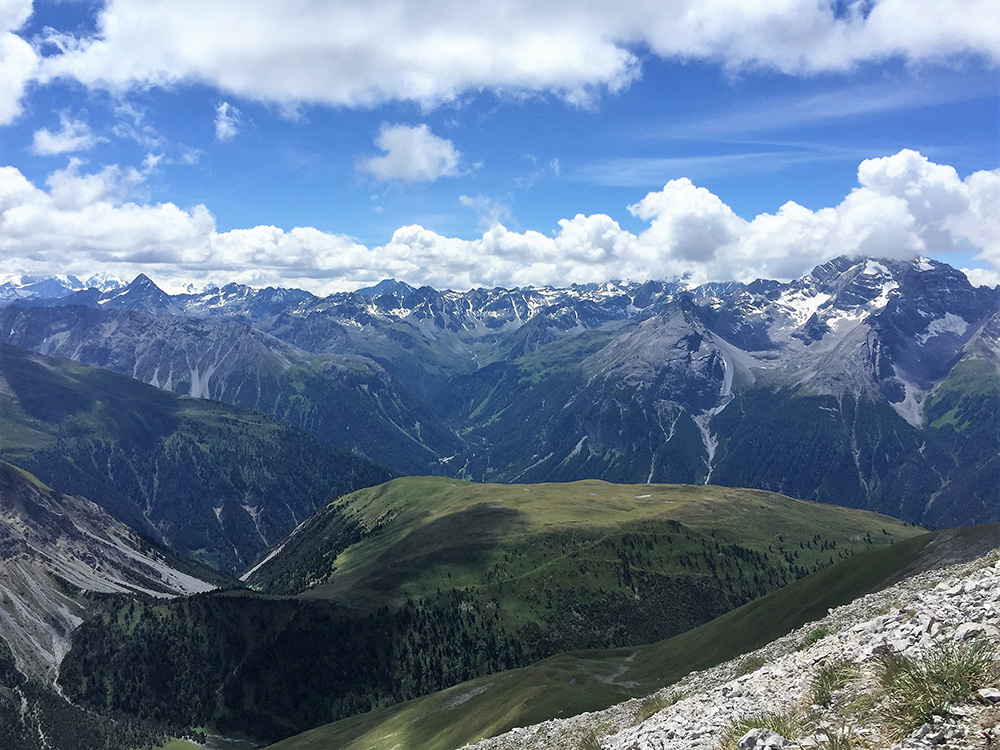
While temperature fundamentally determines where trees can potentially grow, the actual position of treelines, and how it changes, depends heavily on human use.
In the European Alps, for example, pastures at high elevations are increasingly abandoned. Where grazing declines, trees can move in again and the actual treeline shifts upward. “It’s not about whether the alpine region is being used, but how that land use is changing,” explains Rumpf. “The more alpine pastures are abandoned, the more trees grow back in places where they could have been all along.”
The study shows that, globally, the more a region has been used in the past, the greater the influence of land use changes on current treeline dynamics. Temperature and land use often have an equally strong impact.
The study shows that, globally, the more a region has been used in the past, the greater the influence of land use changes on current treeline dynamics. Temperature and land use often have an equally strong impact.
Other disturbances such as fires also play a role. On a global scale, 38 percent of downward shifts of treelines can be linked to fire events. “Fires are an example of natural disturbances,” says the study’s first author, Dr. Tianchen Liang from the University of Basel. “But many wildfires, such as those in North America, can no longer be completely separated from human influences. Climate change and other human activities are increasing their frequency and scale.” This highlights the complexity of these interactions: “It is difficult to distinguish between human and natural influences and triggers.”
A piece of the puzzle in understanding climate change
According to the researchers, the treeline is an important but often misunderstood signal of global change. “The shifting of treelines is one piece of a large puzzle for understanding the impact of climate change,” says Mathieu Gravey.
“But their significance extends beyond science,” says Sabine Rumpf. “Treelines are a striking example of how we, as humans, are changing our environment, directly through land use and indirectly through the consequences of human-induced climate change.”
Many global environmental changes are abstract and difficult to grasp. “Often, the consequences of our actions are very far removed from what we do in our daily lives. We make decisions in our private lives or at the polls, but the consequences aren’t immediately visible,” says Rumpf. “It’s extremely difficult to see the effects of our own decisions.” Treelines are an exception. “They are one of the few changes that are intuitively understandable. In photos from the past and present, you can immediately see how the landscape has changed.”
This is why it is important to interpret treelines correctly. They respond not only to rising temperatures but to a complex interplay of climate change, land use, and natural disturbances such as fire. The study shows that anyone who wants to understand the consequences of global change must take into account both direct human interventions, such as changes in land use, and climatic changes, which are also caused by human activities. Treelines are thus not merely a thermometer of warming, but a visible expression of multifaceted global changes.
This article is based on a press release by the Austrian Academy of Sciences.
Original publication
Tianchen Liang, Feng Tian, Linqing Zou, Mathieu Gravey, Sabine B. Rumpf.
Global elevational shifts and drivers of alpine treelines.
International Journal of Applied Earth Observation and Geoinformation (2026), doi: 10.1016/j.jag.2026.105088