How bacteria resist hostile attacks
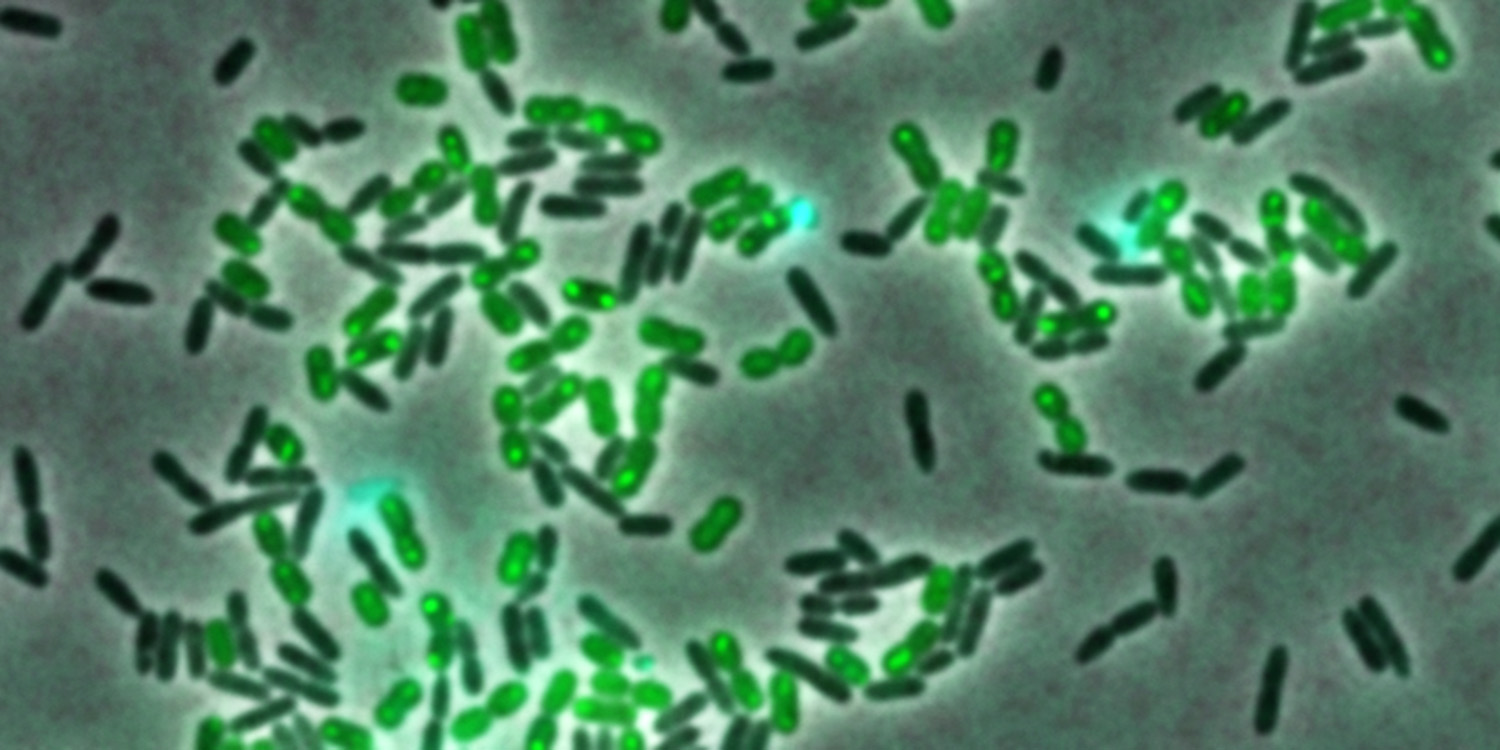
Some bacteria use a kind of molecular “speargun” to eliminate their rivals, injecting them with a lethal cocktail. Researchers at the University of Basel have now discovered that certain bacteria can protect themselves against these toxic attacks. But this defense comes with a surprising downside: it makes them more vulnerable to antibiotics.
08 December 2025 | Katrin Bühler
Countless bacterial species share cramped environments where competition for space and resources is fierce. Some rely on a molecular speargun to outcompete their opponents. One of them is Pseudomonas aeruginosa. It is widespread in nature but also notorious as a difficult-to-treat hospital pathogen.
Pseudomonas can live peacefully in coexistence with other microbes. But when attacked by bacteria from a different species, it rapidly assembles its own nano-speargun – the so-called type VI secretion system (T6SS) – to inject its aggressor with a toxic cocktail.
How can Pseudomonas strike back when it has already been hit by a deadly cocktail itself? The answer has now been uncovered by Professor Marek Basler’s team at the Biozentrum of the University of Basel and published in Nature Communications.
T6SS attack triggers defense program
The deadly cocktail consists of toxic proteins that target different sites in the bacterial cell. Some of these proteins damage or destroy the protective cell membrane, while others degrade the genetic material. “These toxic proteins typically target many vital cellular processes and structures,” explains Alejandro Tejada-Arranz, first author of the study. “We discovered that Pseudomonas can resist certain toxins delivered by the T6SS.” After an attack, Pseudomonas can therefore evade the effects of the toxin and actively launch a counterattack. Bacteria are generally immune to toxins from their close relatives.
When attacked by a different species, Pseudomonas activates a general defense program that quickly initiates a variety of protective measures. “This results in a coordinated response aimed at repairing the damage or potentially trapping toxic proteins,” says Tejada-Arranz. “For example, the bacteria use a certain membrane protein that stabilizes the damaged outer membrane.” This wide range of measures protects Pseudomonas against various types of toxic proteins injected by multiple aggressors. Its ability to assert itself in bacterial communities could possibly also play a role in problematic infections.
Unexpected trade-offs with antibiotic resistance
The ability to resist bacterial T6SS attacks, however, comes at a price. “At first, we thought bacteria that defend themselves so effectively would also be more resistant to antibiotics,” explains Marek Basler. “Surprisingly, it turned out to be the opposite. In fact, defending against T6SS attacks actually makes Pseudomonas more sensitive to antibiotics. Bacteria seem to face trade-offs; they can’t be resistant to everything at once.”
In microbial communities, Pseudomonas bacteria are likely to adopt different strategies: some are better protected against T6SS attacks, while others are more resistant to antibiotics. This ensures that at least some bacteria survive depending on their environment. “Our study revealed that Pseudomonas exhibits a broad spectrum of defense mechanisms,” says Basler. “Whether these strategies also play a role in infections in humans is still unclear. Do they help Pseudomonas survive in mixed bacterial communities? And what does this mean for antibiotic treatments? Those questions remain to be answered.”
The study was conducted as part of the National Centre of Competence in Research (NCCR) “AntiResist”, which aims to develop alternative strategies to combat antibiotic-resistant pathogens.
Original publication
Alejandro Tejada-Arranz, Annika Plack, Minia Antelo-Varela, Andreas Kaczmarczyk, Alexander Klotz, Urs Jenal & Marek Basler.
Mechanisms of Pseudomonas aeruginosa resistance to type VI secretion system attacks.
Nature Communications (2025), doi: 10.1038/s41467-025-65777-x