

-
19 Nov 2026
17:00University of Basel, Department of Chemistry, Large Lecture Hall, St. Johanns-Ring 19, 4056 Basel
Medicine & Health
Overcoming the Undruggable Nature of the Most Common Human Oncogene, K-RasPublic Dreyfus Lecture 2026 by Prof. Dr. Kevan Shokat, University of California, San Francisco, and Howard Hughes Medical Institute
(Bild: zVg) Once considered “undruggable”, the cancer-driving protein KRAS has become a promising target for new therapies. In his lecture, Prof. Kevan Shokat will discuss the scientific breakthroughs that made KRAS-targeting drugs possible, current challenges in drug development, and new approaches to treating cancer.
Since the discovery of the first human oncogene, KRAS, in the early 1980s there has been an explosion in our understanding of cancer. Drugs targeting other oncogenes such as the protein kinase BCR-ABL which causes a type of blood cancer have profoundly affected the lives of cancer patients since the approval of imatinib in 1999.
While the pace of discovery of drugs which target certain classes of oncoproteins (protein kinases in EGFR driven lung cancer and nuclear hormone receptors in breast and prostate cancer) have been remarkable, the cancers driven by the GTPase, KRAS, have been slower to develop because the K-Ras protein lacked obvious drug binding pockets. I will discuss the challenges faced by academic and industry scientists which led to the notion that K-Ras was “undruggable”.
In 2013 our laboratory reported the first drug binding pocket on K-Ras (G12C) which was followed eight years later by the FDA approval of sotorasib and adagrasib. The current challenge of developing drugs for other even more common K-Ras mutants such as K-Ras (G12D) will be discussed including current agents in clinical trials as well as how to leverage the immune system to further attack K-Ras mutant driven lung, colon and pancreatic cancer.
Kevan Shokat is professor at the Department of Cellular and Molecular Pharmacology at the University of California, San Francisco, and a professor of chemistry at the University of California, Berkeley. He has been awarded the Camille & Henry Dreyfus Lectureship for his outstanding achievements in the field of chemical biology. Research in his group is dedicated to the use of chemical genetics to study and target signaling proteins, with the aim of finding new ways to treat human diseases.
Kevan Shokat (born in 1964) received his B.A. from Reed College in 1986, his PhD at UC Berkeley in 1991, and did then a post-doctoral training at Stanford University. In 1994, he began his independent career at Princeton University. He moved to the University of California, San Francisco, in 1999 where he remains today as Professor of Cellular and Molecular PharmacologyProfessor Pharmacology.
In recognition of his achievements Kevan Shokat has received numerous honors and awards, including the Stephenson Global Prize for research in pancreatic cancer, the annual Award for Scientific Discovery from the National Academy of Sciences, the Sjöberg Prize from the Swedish Academy of Sciences, and elections to the National Academy of Sciences and the National Academy of Medicine.
Introduction
- Prof. Dr. Primo Schär (Vice President for Research)
- Prof. Dr. Stefan Willitsch (Head Department of Chemistry)
Camille and Henry Dreyfus Lectures
In memory of the Dreyfus brothers, the Camille and Henry Dreyfus Foundation Inc. has established an annual Lectureship at the University of Basel. The Camille and Henry Dreyfus Lectureship brings a leading chemist from the United States to the Basel campus to deliver a series of talks and to meet with faculty and students in order to enhance the relationship between Swiss and U.S. science.
Organizer:
University of Basel, Department of ChemistryExport events asiCal
-
19 Nov 2026
18:30 - 20:40Departement für Sport, Bewegung und Gesundheit (DSBG), Grosse Allee 6, 4052 Basel, Aula
-
20 Nov 2026
09:00 - 17:00Universität Basel
Interdisciplinary
Infotag BachelorFinde heraus, welches Studium zu dir passt.
Für alle, die sich für ein Bachelorstudium an der Universität Basel interessieren. Noch unsicher, was du studieren möchtest? Am Infotag Bachelor lernst du das Bachelorstudienangebot der Universität Basel kennen, bekommst Einblicke ins Studium und kannst deine Fragen direkt mit Studierenden, Dozierenden und Beratungsstellen klären.
Entdecke dein Studium
Lerne unsere Bachelorstudiengänge & -fächer kennen und finde heraus, welche Möglichkeiten zu deinen Interessen passen.Sprich mit Studierenden und Dozierenden
Wie fühlt es sich wirklich an zu studieren? Komm ins Gespräch mit Menschen, die es aus eigener Erfahrung wissen und stelle deine persönlichen Fragen.Finde Orientierung
Du weisst noch nicht genau, was du studieren möchtest? Nutze den Infotag Bachelor, um verschiedene Studienmöglichkeiten kennenzulernen, zu vergleichen und Neues zu entdecken.Lerne die Uni Basel kennen
Erlebe die Universität vor Ort und erfahre mehr über das Studieren und Leben in Basel.Export events asiCal
-
20 Nov 2026
17:00University of Basel, Department of Chemistry, Large Lecture Hall, St. Johanns-Ring 19, 4056 Basel
Medicine & Health
Development of Next-Generation Chemical Strategies in Drug DiscoveryPublic Dreyfus Lecture 2026 by Prof. Dr. Kevan Shokat, University of California, San Francisco, and Howard Hughes Medical Institute
(Bild: zVg) Mutations in the protein KRAS drive nearly 30% of human cancers, making it a key target for new cancer therapies. In his lecture, Prof. Kevan Shokat will present innovative strategies to target previously difficult-to-treat KRAS mutations, improve drug effectiveness, and overcome treatment resistance.
Somatic mutations in the small GTPase K-Ras drive roughly 30% of human cancers, yet the protein was long considered „undruggable“ until a covalent strategy targeting the G12C mutant revealed a binding pocket in the switch-II region, leading to the approval of sotorasib and adagrasib. These successes have shifted the central challenges in the field: extending covalent and non-covalent strategies to the more prevalent G12D and G12V mutants found in pancreatic and colorectal cancer, deepening single-agent responses, and overcoming the drug resistance that inevitably emerges with any targeted therapy.
In this lecture I will describe our efforts on each front. First, I will show that combining the pan-Ras tri-complex inhibitor daraxonrasib — whose GAP-mimetic activity accelerates GTP hydrolysis — with switch-II pocket inhibitors selective for K-Ras(G12C) or K-Ras(G12D) produces synergistic inhibition, providing a mechanistic rationale for combination regimens. Second, I will present a new covalent chemistry that installs a warhead reactive toward the aspartate of K-Ras(G12D), extending covalent targeting beyond cysteine residues and inhibiting oncogenic signaling in cancer cells.
Finally, I will place this work in the context of two broader chemical biology themes from our lab that inform how such inhibitors are designed and delivered: the discovery that IFITM proteins govern cellular uptake of chemically linked, bivalent compounds, and a binary pharmacology strategy that restricts mTOR inhibition to brain tissue. Together these findings illustrate how mechanistic combination logic, new covalent chemistries, and uptakeand tissue-informed drug design are converging to widen the therapeutic reach for new medicines.
Kevan Shokat is professor at the Department of Cellular and Molecular Pharmacology at the University of California, San Francisco, and a professor of chemistry at the University of California, Berkeley. He has been awarded the Camille & Henry Dreyfus Lectureship for his outstanding achievements in the field of chemical biology. Research in his group is dedicated to the use of chemical genetics to study and target signaling proteins, with the aim of finding new ways to treat human diseases.
Kevan Shokat (born in 1964) received his B.A. from Reed College in 1986, his PhD at UC Berkeley in 1991, and did then a post-doctoral training at Stanford University. In 1994, he began his independent career at Princeton University. He moved to the University of California, San Francisco, in 1999 where he remains today as Professor of Cellular and Molecular PharmacologyProfessor Pharmacology.
In recognition of his achievements Kevan Shokat has received numerous honors and awards, including the Stephenson Global Prize for research in pancreatic cancer, the annual Award for Scientific Discovery from the National Academy of Sciences, the Sjöberg Prize from the Swedish Academy of Sciences, and elections to the National Academy of Sciences and the National Academy of Medicine.
Introduction
- Prof. Dr. Primo Schär (Vice President for Research)
- Prof. Dr. Stefan Willitsch (Head Department of Chemistry)
Camille and Henry Dreyfus Lectures
In memory of the Dreyfus brothers, the Camille and Henry Dreyfus Foundation Inc. has established an annual Lectureship at the University of Basel. The Camille and Henry Dreyfus Lectureship brings a leading chemist from the United States to the Basel campus to deliver a series of talks and to meet with faculty and students in order to enhance the relationship between Swiss and U.S. science.
Organizer:
University of Basel, Department of ChemistryExport events asiCal
-
23 Nov 2026
17:15 - 18:15Universität Basel, Pharmazentrum, Klingelbergstrasse 50, 4056 Basel
Medicine & Health
Psychedelic Science: StudentpresentationÖffentliche Ringvorlesung: Psychedelic Science Fall Semester 2026
Bild: zVg Mandatory attendance for credits
Organizer:
Parab - Psychedelic Awareness & Research Association BaselExport events asiCal
-
23 Nov 2026
18:30Universität Basel, Kollegienhaus, Hörsaal 118, Petersplatz 1, 4051 Basel
Society & Culture
Weltordnung in Scherben. Was nun?Öffentlicher Vortrag von Alt Bundesrat Prof. em. Dr. Joseph Deiss
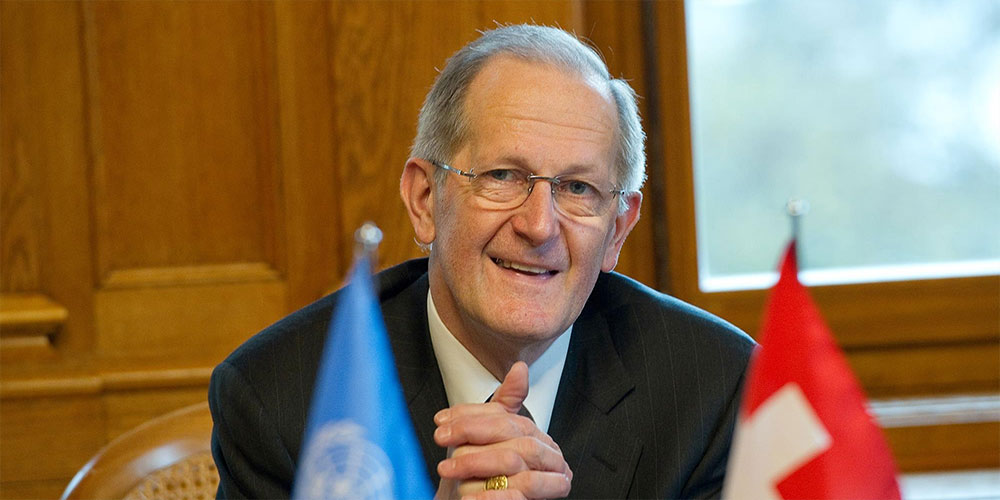
Joseph Deiss, Präsident der 65. Session der UNO-Generalversammlung, nach einer Ansprache vor der schweizerischen Bundesversammlung, am 15. Dezember 2010, in Bern. (Foto: parlament.ch/wikimedia) Die internationale Ordnung befindet sich im Wandel: Machtverschiebungen, geopolitische Spannungen und die zunehmende Infragestellung multilateraler Institutionen stellen bewährte Gewissheiten auf die Probe. Zugleich bleibt die Frage nach verlässlichen Regeln und tragfähiger Zusammenarbeit zwischen den Staaten drängender denn je.
In seinem Vortrag beleuchtet Joseph Deiss den aktuellen Stand der Weltordnung und verbindet dabei die Perspektive des Schweizer Staatsmannes mit den Erfahrungen aus der multilateralen Diplomatie. Im Fokus stehen Fragen wie: Wie belastbar sind die bestehenden internationalen Institutionen? Welche Rolle spielen die Grossmächte und aufstrebende Akteure bei der Gestaltung einer neuen Ordnung? Und welchen Handlungsspielraum und welche Verantwortung hat die Schweiz in einer fragmentierten Welt?
Der Abend bietet Einblicke in die Chancen und Herausforderungen der gegenwärtigen Lage sowie in mögliche Wege, wie internationale Zusammenarbeit auch künftig gelingen kann. Im Anschluss an die Diskussion besteht Gelegenheit, Fragen aus dem Publikum zu stellen
Alt Bundesrat Joseph Deiss war Vorsteher des Eidgenössischen Departements für auswärtige Angelegenheiten (EDA) und des damaligen Eidgenössischen Volkswirtschaftsdepartements (EVD). Zudem war er Präsident der UNO-Generalversammlung.
Anmeldung
Um Anmeldung wird gebeten.
Organizer:
pro swisspeaceExport events asiCal
-
24 Nov 2026
18:15 - 19:45Universität Basel, Kollegienhaus, Petersplatz 1, 4051 Basel, Hörsaal 115
Interdisciplinary
Der Gott, den wir riefen. Sinnsuche und religiöse Zuschreibungen bei künstlicher IntelligenzÖffentliche Ringvorlesung von PD. Dr. Claudia Paganini, Universität Innsbruck, Medien-, Medizin-, Tier- und Umweltethik, im Rahmen der Ringvorlesung "Falsche Götter / False Gods"

Bild: zVg Die öffentliche Ringvorlesung “Falsche Götter” ist in das Rahmenprogramm der Oper „Moses und Aron“ von Arnold Schönberg eingebettet, die an den Theatern Basel und Freiburg i. Br. im Herbst 2026 und im Frühjahr 2027 aufgeführt wird. Inspiriert von der zentralen Bedeutung des Goldenen Kalbes als Ursache kollektiver Exzesse in der Oper, wird der Leitbegriff „Falsche Götter“ aus unterschiedlichen Perspektiven beleuchtet.
Die 13 Vorträge verbinden Beiträge aus Theologie und Religionswissenschaft mit soziologischen, wirtschaftswissenschaftlichen und demokratietheoretischen Ansätzen sowie aktuellen Fragestellungen, etwa zur Rolle künstlicher Intelligenz als Projektionsfläche quasi-religiöser Erwartungen. Die Veranstaltung behandelt Formen und Inhalte von Sakralisierung und deren gesellschaftliche, politische und technologische Konsequenzen im 21. Jahrhundert.
Studierende und Interessierte profitieren von der Möglichkeit, unterschiedliche wissenschaftliche Perspektiven vergleichend zu erschliessen, diese kritisch zu reflektieren und eigenständig zu synthetisieren.
Veranstalter/in: Prof. Dr. Alfred Bodenheimer und Judith Beckschäfer
Diese Ringvorlesung ist Teil von „Auf in die Wüste“, einem umfangreichen Diskurs-, Begegnungs- und Rahmenprogramm, das die Aufführungen der Oper "Moses und Aron" von Arnold Schönberg an den Theatern Basel und Freiburg i. Br. begleitet und ergänzt.Organizer:
Universität Basel, Zentrum für Jüdische StudienExport events asiCal
Report events
The University of Basel calendar lists events offered by the University of Basel, its numerous units, and accredited student organizations and associated institutions. They address a larger audience, are public and open to all. As a rule, admission is free.
You can also have your event listed in the Calendar of Events, provided it meets the above criteria. To do so, send the title, short text, time, place, organizer, link to website and, if available, photo (JPG) and program flyer (PDF) to E-Mail: agenda@unibas.ch