Botond Roska wins world's top award for vision research
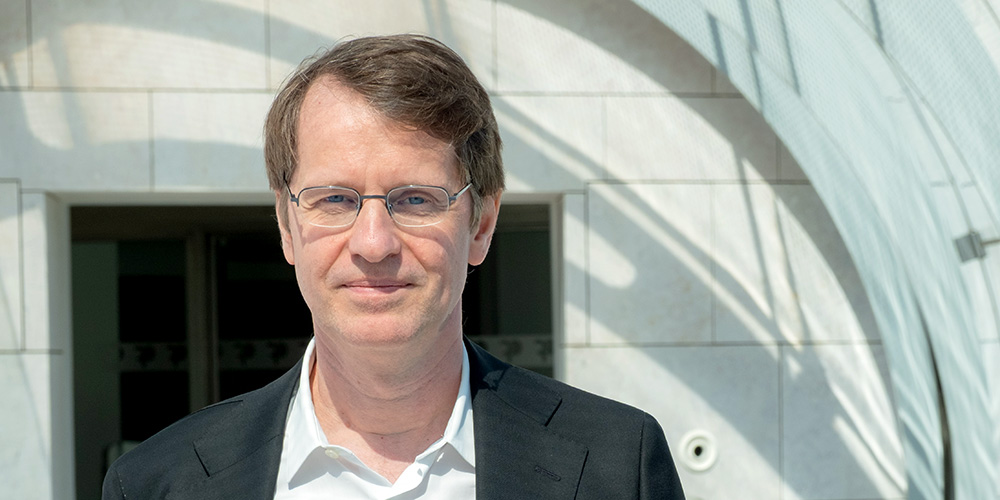
Botond Roska, a professor at the University of Basel and director of science at the Institute of Molecular and Clinical Ophthalmology Basel (IOB), will receive the 2026 António Champalimaud Vision Award together with José-Alain Sahel of the University of Pittsburgh. The prize, worth one million euros, is the world’s largest award in vision research and ophthalmology.
15 September 2026
The award recognizes more than two decades of fundamental, translational and clinical research by Roska and Sahel. It also honors the IOB’s mission to understand the mechanisms of vision and translate these discoveries into new therapies for vision loss.
New approaches to restoring vision
The work of these two researchers has helped establish new approaches to restoring visual function, particularly through optogenetic therapies, which aim to make surviving retinal cells responsive to light when disease has destroyed the eye’s natural photoreceptors.
Neuroscientist Botond Roska is one of the IOB's founding directors. The research institute was established in 2018 by the University of Basel, the University Hospital Basel and Novartis. Roska’s research has deepened our understanding of retinal function and opened new avenues for cell-specific therapies for retinal diseases.
Ophthalmologist José-Alain Sahel is a clinical researcher and chair of the IOB scientific advisory board. He has pioneered therapeutic approaches spanning gene therapy, neuroprotection and vision restoration.
From basic research to therapy
Their long-standing collaboration has helped translate fundamental discoveries about retinal circuits into new therapeutic strategies and clinical research. In 2021, Roska, Sahel and their collaborators reported in Nature Medicine that an optogenetic approach could partially restore visual function in a blind patient with retinitis pigmentosa.
“I am very honored to receive this prestigious award together with José-Alain Sahel,” says Roska. “It is an important recognition of our long-standing collaboration and, above all, a major support for our future research. It gives us the freedom to keep asking bold questions and to pursue new approaches to restoring vision.”
The award funds will support the next phase of Roska and Sahel’s research. With this distinction, Roska and Sahel join a distinguished group of António Champalimaud Vision Award laureates whose work has transformed the understanding, prevention and treatment of blindness and visual impairment.