Public lecture series in the fall semester of 2026
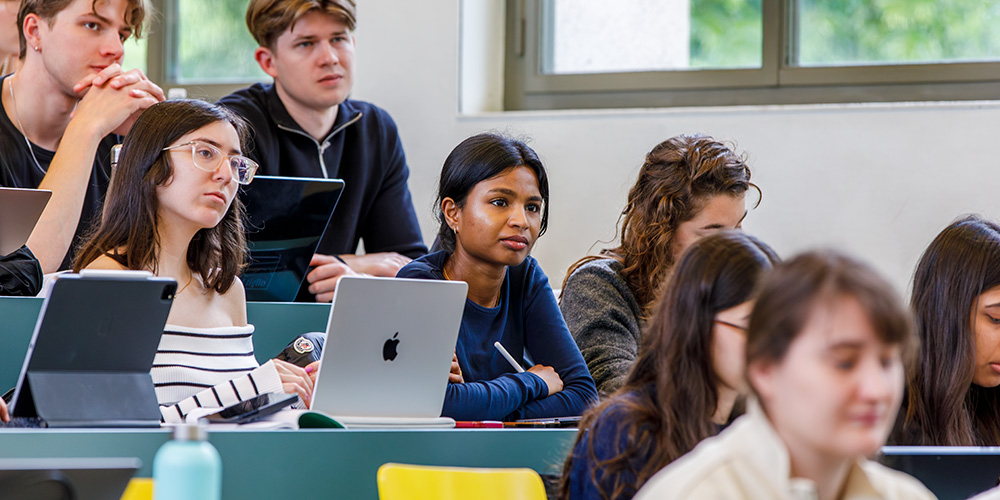
From “America 250” to sustainability and artificial intelligence: the University of Basel’s public lecture series in the fall semester 2026 address current social, cultural and political issues. Everyone is warmly invited to attend.
03 September 2026
The University of Basel’s public lecture series offer an opportunity to explore current issues from a range of academic perspectives. Speakers from different disciplines provide insights into their research and engage with the audience on topics of significance far beyond the University.
250 Years of the United States of America
In 2026, the United States celebrates its 250th anniversary. A lecture series organized by the Institute for European Global Studies and the Democracy Foundation Basel invites participants to reflect on the past, present, and future of the American experiment. Among other things, the lecture series European Global Studies: Focus 250 Years of the United States of America brings together diverse perspectives to assess whether American democracy is under pressure, adapting to new realities or entering a period of transformation. Is the United States at a historic turning point, and what are the global implications of these developments?
Understanding digital society from an interdisciplinary perspective
Digital technologies are fundamentally transforming science, culture, and everyday life. The lecture series The State of Digital Studies presents current approaches in digital studies and demonstrates both how digital methods impact humanistic research and how humanistic methods are being used on digital objects. The interdisciplinary lectures from across the digital humanistic configurations shall feature topics including artificial intelligence, data, digital cultures and histories, and the societal implications of digitization.
Shaping sustainability together
The Basel Sustainability Forum brings together researchers and experts from different fields to discuss sustainability in the 21st century. The lecture series addresses environmental, economic and social challenges and explores how academic research can contribute to sustainable development. Its focus is on interdisciplinary exchange and the search for viable solutions to future challenges.
The diversity of multilingualism in Switzerland
Switzerland sees itself as a multilingual country – but how does this multilingualism manifest itself in everyday life? The lecture series Facetten der Mehrsprachigkeit in der Schweiz (Facets of multilingualism in Switzerland) explores the country’s linguistic diversity from linguistic, historical, political and social perspectives. The lectures address Switzerland’s national languages, minority languages and dialects, as well as the current challenges and opportunities of a multilingual society.
What are the “false” gods of our time?
The lecture series Falsche Götter (False Gods) is part of the accompanying program for Arnold Schoenberg’s opera Moses und Aron, which will be performed in Basel and Freiburg im Breisgau. Taking the Golden Calf as a symbol of collective seduction, the speakers ask which ideologies, values or technologies play a similar role today. The lectures combine perspectives from theology and religious studies with approaches from sociology, economics and democratic theory. They also address current topics, such as artificial intelligence, as a focus of quasi-religious expectations.
Switzerland’s literary diversity
The lecture series Literaturen der Schweiz (Literatures of Switzerland) explores the broad range of literary traditions represented in Switzerland. It examines how authors in Switzerland engage with Europe’s major linguistic regions and how the country’s cultural particularities are reflected in its literature. The lectures offer insights into different literary traditions as well as post-migrant literature, inviting audiences to make discoveries and explore new reading.
Attendance at the public lecture series is free of charge and open to everyone. An overview of all events, including dates and venues, is available in the University of Basel course directory.