

-
19 Nov 2026
17:00University of Basel, Department of Chemistry, Large Lecture Hall, St. Johanns-Ring 19, 4056 Basel
Medicine & Health
Overcoming the Undruggable Nature of the Most Common Human Oncogene, K-RasPublic Dreyfus Lecture 2026 by Prof. Dr. Kevan Shokat, University of California, San Francisco, and Howard Hughes Medical Institute
(Bild: zVg) Once considered “undruggable”, the cancer-driving protein KRAS has become a promising target for new therapies. In his lecture, Prof. Kevan Shokat will discuss the scientific breakthroughs that made KRAS-targeting drugs possible, current challenges in drug development, and new approaches to treating cancer.
Since the discovery of the first human oncogene, KRAS, in the early 1980s there has been an explosion in our understanding of cancer. Drugs targeting other oncogenes such as the protein kinase BCR-ABL which causes a type of blood cancer have profoundly affected the lives of cancer patients since the approval of imatinib in 1999.
While the pace of discovery of drugs which target certain classes of oncoproteins (protein kinases in EGFR driven lung cancer and nuclear hormone receptors in breast and prostate cancer) have been remarkable, the cancers driven by the GTPase, KRAS, have been slower to develop because the K-Ras protein lacked obvious drug binding pockets. I will discuss the challenges faced by academic and industry scientists which led to the notion that K-Ras was “undruggable”.
In 2013 our laboratory reported the first drug binding pocket on K-Ras (G12C) which was followed eight years later by the FDA approval of sotorasib and adagrasib. The current challenge of developing drugs for other even more common K-Ras mutants such as K-Ras (G12D) will be discussed including current agents in clinical trials as well as how to leverage the immune system to further attack K-Ras mutant driven lung, colon and pancreatic cancer.
Kevan Shokat is professor at the Department of Cellular and Molecular Pharmacology at the University of California, San Francisco, and a professor of chemistry at the University of California, Berkeley. He has been awarded the Camille & Henry Dreyfus Lectureship for his outstanding achievements in the field of chemical biology. Research in his group is dedicated to the use of chemical genetics to study and target signaling proteins, with the aim of finding new ways to treat human diseases.
Kevan Shokat (born in 1964) received his B.A. from Reed College in 1986, his PhD at UC Berkeley in 1991, and did then a post-doctoral training at Stanford University. In 1994, he began his independent career at Princeton University. He moved to the University of California, San Francisco, in 1999 where he remains today as Professor of Cellular and Molecular PharmacologyProfessor Pharmacology.
In recognition of his achievements Kevan Shokat has received numerous honors and awards, including the Stephenson Global Prize for research in pancreatic cancer, the annual Award for Scientific Discovery from the National Academy of Sciences, the Sjöberg Prize from the Swedish Academy of Sciences, and elections to the National Academy of Sciences and the National Academy of Medicine.
Introduction
- Prof. Dr. Primo Schär (Vice President for Research)
- Prof. Dr. Stefan Willitsch (Head Department of Chemistry)
Camille and Henry Dreyfus Lectures
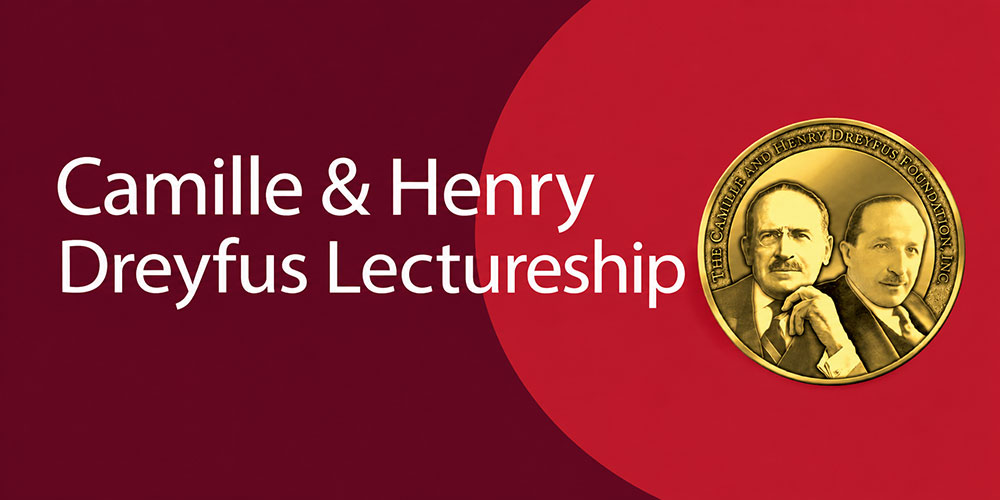
In memory of the Dreyfus brothers, the Camille and Henry Dreyfus Foundation Inc. has established an annual Lectureship at the University of Basel. The Camille and Henry Dreyfus Lectureship brings a leading chemist from the United States to the Basel campus to deliver a series of talks and to meet with faculty and students in order to enhance the relationship between Swiss and U.S. science.
Organizer:
University of Basel, Department of ChemistryExport events asiCal
Report events
The University of Basel calendar lists events offered by the University of Basel, its numerous units, and accredited student organizations and associated institutions. They address a larger audience, are public and open to all. As a rule, admission is free.
You can also have your event listed in the Calendar of Events, provided it meets the above criteria. To do so, send the title, short text, time, place, organizer, link to website and, if available, photo (JPG) and program flyer (PDF) to E-Mail: agenda@unibas.ch