LGBTIQ+
For the appreciation and support of lesbian, gay, bisexual, trans, inter and other queer persons (LGBTIQ+) as well as to protect this Community against discrimination the University of Basel promotes the visibility and recognition of gender and sexual diversity.
We are committed to designing strategies and structures that disclose, eliminate and prevent discrimination. At the University of Basel, all individuals, regardless of their backgrounds of experience and life situations, should find a place where they can learn, teach and work without discrimination.
We perceive the diversity of university members as a great potential for innovation and therefore do not tolerate any discrimination in the context of gender identity and sexual orientation.
Mailing List LGBTIQ+
The LGBTIQ+ mailing list provides the latest news on LGBTIQ+ matters at the university, as well as opportunities to network and share information with one another. Join our mailing list!
News
21
MAI
2026
.2026-04-16-14-37-23.png)
LGBTIQ+ on Campus – from Awareness to Allyship
How inclusive are Swiss universities for LGBTIQ+ students and staff? What experiences do queer members of the university community have in their daily academic and professional lives?
The talk will be given in German spoken language.
Speakers: Dorian Mittner and Lea Graf (both from Bern University of Applied Sciences, BFH)
Location: Kollegienhaus, lecture room 114
16
JUNE
2026
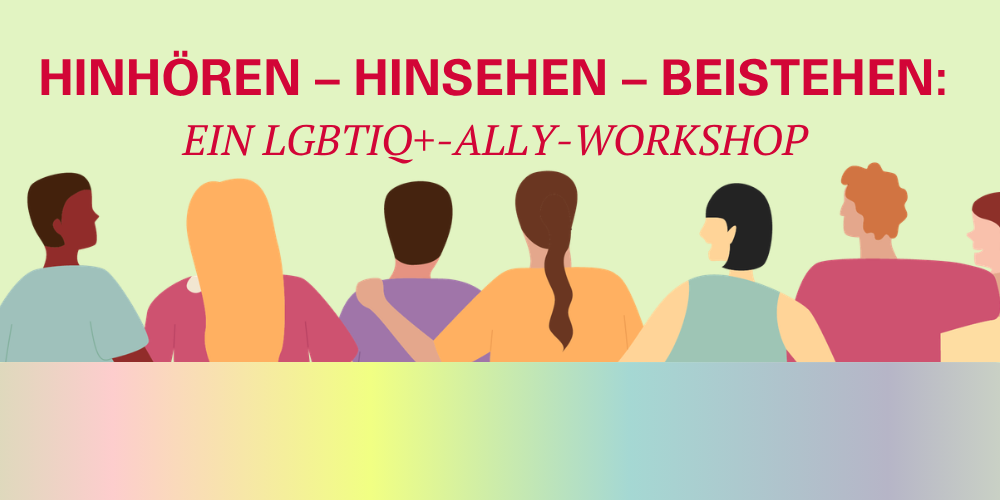
Listening – Looking – Standing By: an LGBTIQ+ Ally Workshop
Have you ever found yourself simply standing by in situations which were uncomfortable for LGBTIQ+ people? Would you have liked to say or do something, but didn’t know what or how? This is what we want to work on together.
Workshop facilitators: Jennifer J* Moos (University of Basel) and Tanja Neve-Seyfarth (University of Zurich)
Location: Kollegienhaus (room tba)
Currently for Pride Month:
Visit our digital exhibition: Queere Personen in Wissenschaft und Forschung
You can also experience the exhibition in full screen here:
Digital Exhibition: Queere Personen in Wissenschaft und Forschung
Sexual Orientation
Sexual orientation is independent of gender indentity and describes which gender someone is sexually attracted to.
Some people are attracted to other genders (heterosexual), others to their own (gay), and for some, multiple genders are attractive (bisexual). This has always been the case - at all times and in all cultures: sexuality is diverse.
Gender Diversity
The topic of gender is multidimensional and it is important to differentiate certain levels.
Physical sex includes external and internal sex organs, gonads, hormones, chromosomes and other secondary sex characteristics. In most cases, sex is assigned at birth based on the primary sex organs, which then becomes a person's official sex (assigned sex).
Gender identity (gender) is a person's sense (inner knowing) of themselves as male or female (or in between):
-
trans
The term trans refers to people whose gender identity does not match, or does not fully match, the gender they were assigned at birth. This includes people who do not want to or are unable to come out or do not seek to transition. The terms transgender or trans identity are also used; the term 'transsexuality' is outdated and is often perceived as discriminatory because it is linked to the pathologization of trans people.
A trans woman was classified as a boy at birth, a trans man as a girl; however, these classifications do not correspond to the inner knowledge of these persons.
Trans people deal with their gender identity very differently. Regardless of how clearly they appear as male or female in their outward appearance, how "masculine" or "feminine" they behave, or whether they have sought medical intervention: Trans people are all those who do not clearly identify with the gender identity assigned to them at birth.
The names and pronouns preferred by trans people should be respected and used by all, even in their absence.
-
 Die Universität Basel unterstützt das Projekt trans welcome. link.zoom
The term trans refers to people whose gender identity does not match, or does not fully match, the gender they were assigned at birth. This includes people who do not want to or are unable to come out or do not seek to transition. The terms transgender or trans identity are also used; the term 'transsexuality' is outdated and is often perceived as discriminatory because it is linked to the pathologization of trans people.
A trans woman was classified as a boy at birth, a trans man as a girl; however, these classifications do not correspond to the inner knowledge of these persons.
Trans people deal with their gender identity very differently. Regardless of how clearly they appear as male or female in their outward appearance, how "masculine" or "feminine" they behave, or whether they have sought medical intervention: Trans people are all those who do not clearly identify with the gender identity assigned to them at birth.
The names and pronouns preferred by trans people should be respected and used by all, even in their absence.
Links & Downloads
-