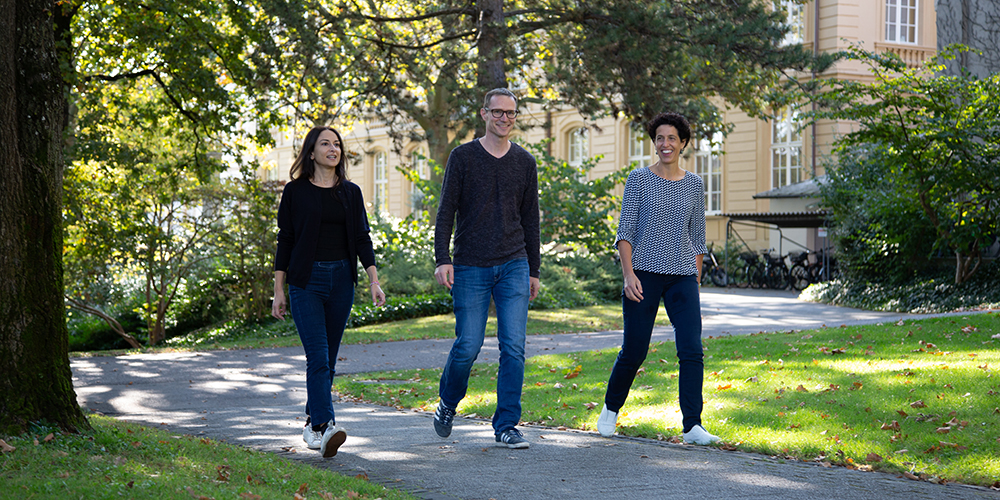
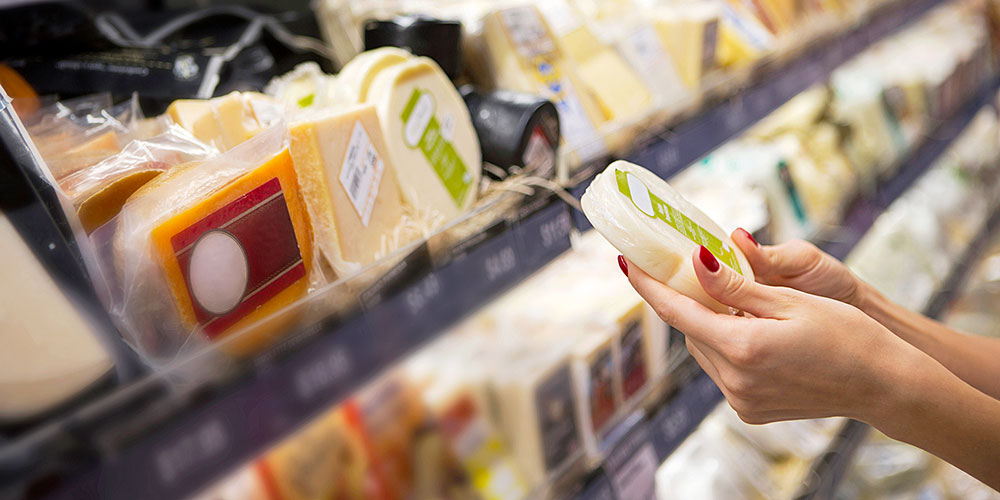
Salad boxes to go, sealed-tray lasagna and apple juice in PET bottles: we encounter packaged food and drink everywhere. A new database shows which packaging contains harmful substances that can be transferred to its contents. It also includes findings from researchers at the University of Basel, who are investigating plastic molecules that were previously unknown or barely known.
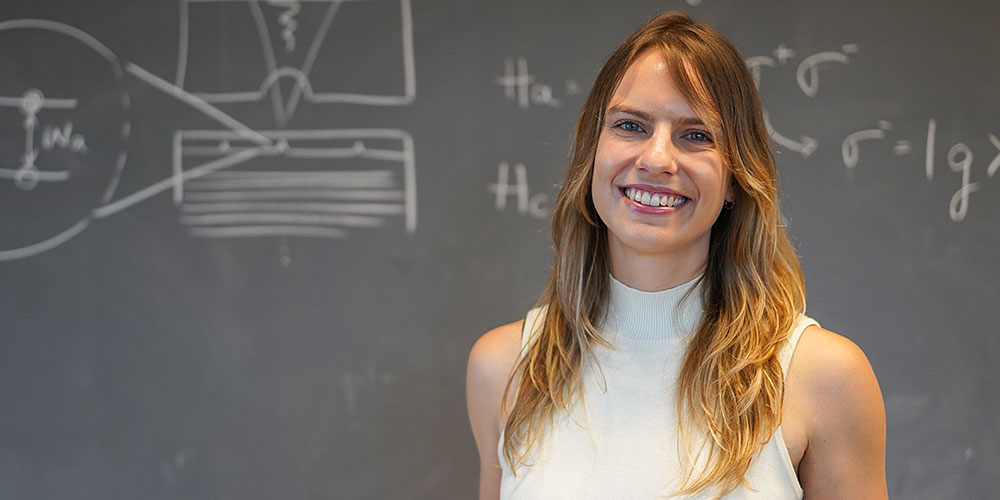
In her dissertation, physicist Dr. Natasha Tomm co-developed a super-efficient source of individual photons. Her research could help make data exchange more tap-proof. The Swiss Academy of Sciences has awarded her the Prix Schläfli 2022 in physics.
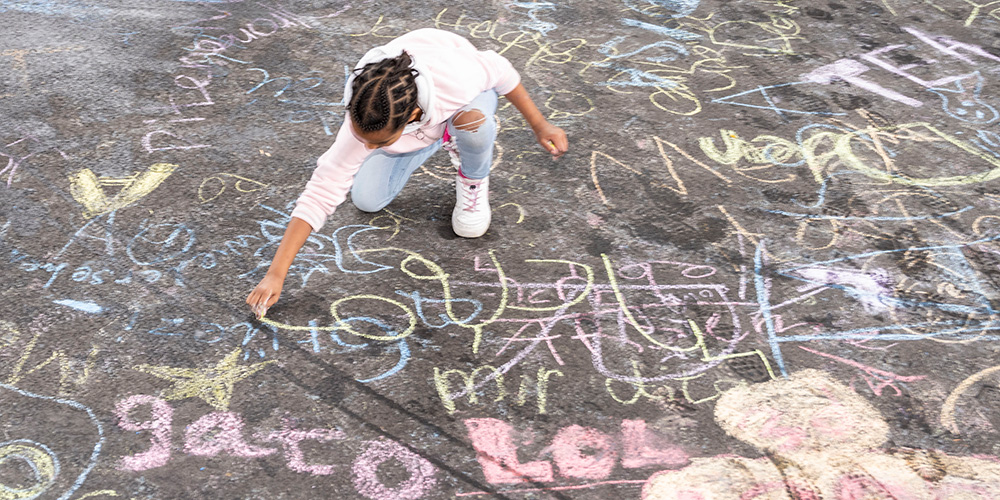
Signs and symbols are intended to provide orientation in public spaces. Once we’ve understood their message, we take note of it and usually think no more of it. It’s worth taking a closer look, however, as these signs influence the way we live together. Edina Krompák and Stephan Meyer of the University of Basel aim to raise awareness of this aspect, especially in an educational context.
Very thin wires made of a topological insulator could enable highly stable qubits, the building blocks of future quantum computers. Scientists see a new result in topological insulator devices as an important step towards realizing the technology’s potential.

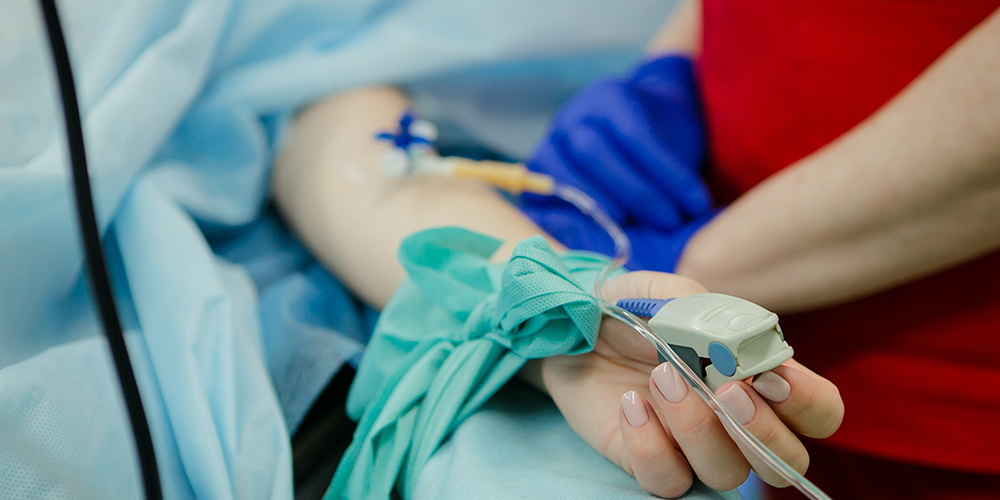
The cerebral cortex is thought to be the seat of conscious processing in the brain. Rather than being inactivated, specific cells in the cortex show higher spontaneous activity during general anesthesia than when awake, and this activity is synchronized across those cortical cells. Improving our understanding of the neuronal mechanisms of general anesthesia could lead to better anesthetic drugs and improved surgical outcomes.

Some breast tumors with certain genetic alterations are difficult to treat using existing therapies. Researchers at the University of Basel have now discovered an approach that involves a toxic combination with a second target gene in order to kill the abnormal cells. The first clinical trials could be starting soon.
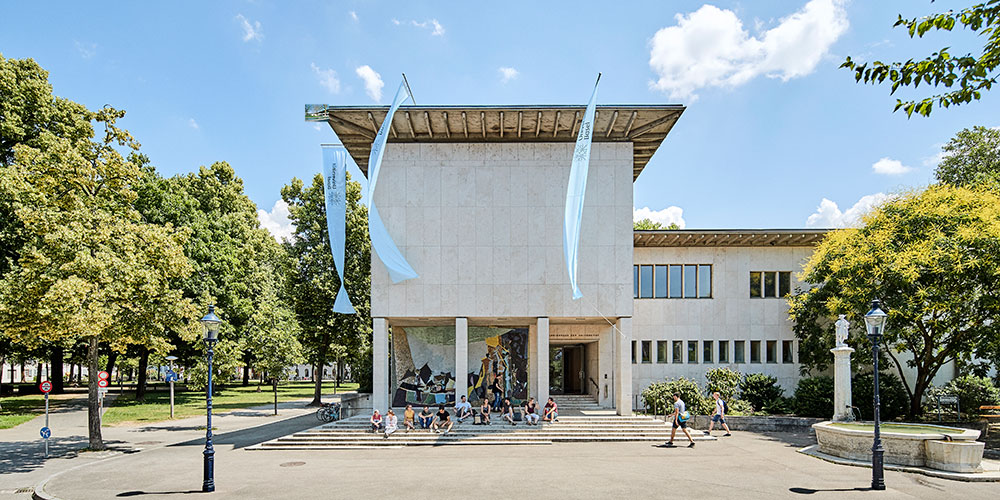
The University Council has elected Prof. Dr. George Paul Meiu as Professor of Ethnology/Anthropology at the Faculty of Humanities and Social Sciences. Furthermore, international law expert Prof. Dr. Anna Petrig has been promoted to associate professor and computational physicist Prof. Dr. Stefan Goedecker to full professor.
Everyone wants to stay fit and healthy as they grow old. But as we age, our body degrades, our muscles shrink and strength declines. Some older people suffer from excessive muscle loss, a condition known as sarcopenia. University of Basel researchers show that a combination therapy could delay the onset of sarcopenia.

Cell therapies are the new hope when it comes to tackling diseases such as leukemia or multiple sclerosis, but they require an intensive and strenuous course of pretreatment. Researchers from the University of Basel and the University Hospital of Basel have developed an approach to make both this preparatory process and the follow-up treatment more gentle and effective. The researchers have founded a start-up with a view to further developing the approach for clinical use.