Culture & Values
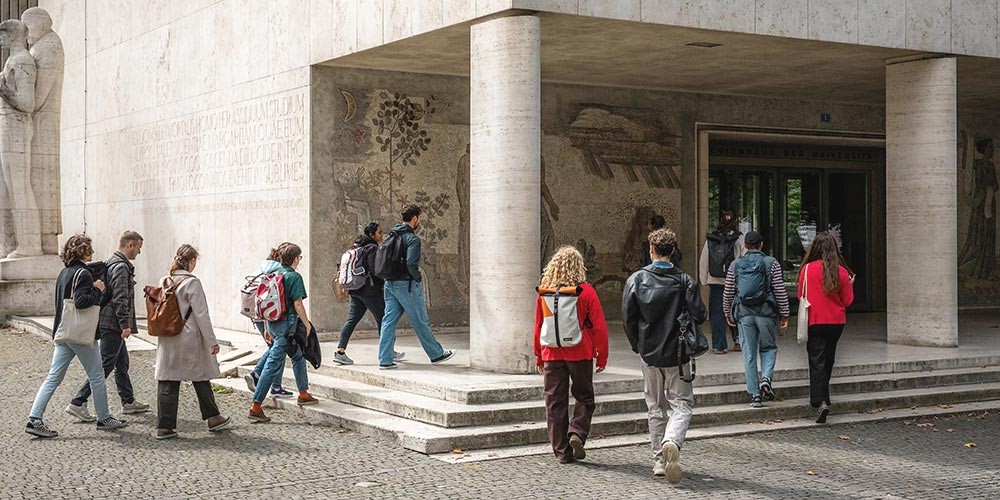
The University of Basel sees itself as an organization that values diversity and fosters the potential of all individuals, regardless of age, origin, religion, gender, identity, language, status, lifestyle, political views, orientation, or disability.
“A Culture of Collaboration”
The University of Basel is committed to a culture of dialogue. Our values are integrity, respect, openness, equality and inclusion. All of us are jointly responsible for living these values in everyday life.
The University's Code of Conduct clarifies the guidelines for studying and working together in a respectful and professional way.
Encouraging diversity and individuality
With approximately 19,000 members from over 100 countries, the university fosters a culture that values diverse perspectives. The university thrives on the knowledge, experiences, and ideas of its members, who are diverse in terms of age, background, gender, lifestyle, and disability.
Co-determination
The University of Basel encourages all of its members to be prepared to take on responsibility. All members have a right to co-determination, which can be exercised through a range of groups.
Representatives from the groups participate in dealing with the university’s affairs as part of various boards and committees. The members of the University of Basel are also represented when the faculties and departments convene.
A university open to all
At the University of Basel, institutions share their knowledge with the general public. The University maintains an active exchange with society, culture, and the economy. Its areas of focus reflect current developments and contribute to the community. As a service to its supporting cantons, the University offers a wide range of services for all knowledge seekers in the region.
Sustainability
Sustainability is a core value of the University of Basel and is firmly embedded in its strategy, mission, research, teaching, and operations. The Sustainability Office initiates and coordinates numerous projects.
International networks
The University of Basel is globally networked, particularly with partner institutions in Europe, Africa, Asia, and North America. Research collaborations, English-language programs, and international exchanges promote academic interaction.
Internationality at the Rhine Knee
Through the Eucor – The European Campus alliance, the University of Basel cooperates with partner universities in France, Germany, and Switzerland. Students, doctoral candidates, postdocs, and staff benefit from joint teaching, research, and mobility opportunities.