

Research at the kitchen table.
Text: Lara UebelhartEveryday occurrences can inspire research and provide an impetus for academic insights. This is illustrated by a research project about how people from diverse backgrounds live together.
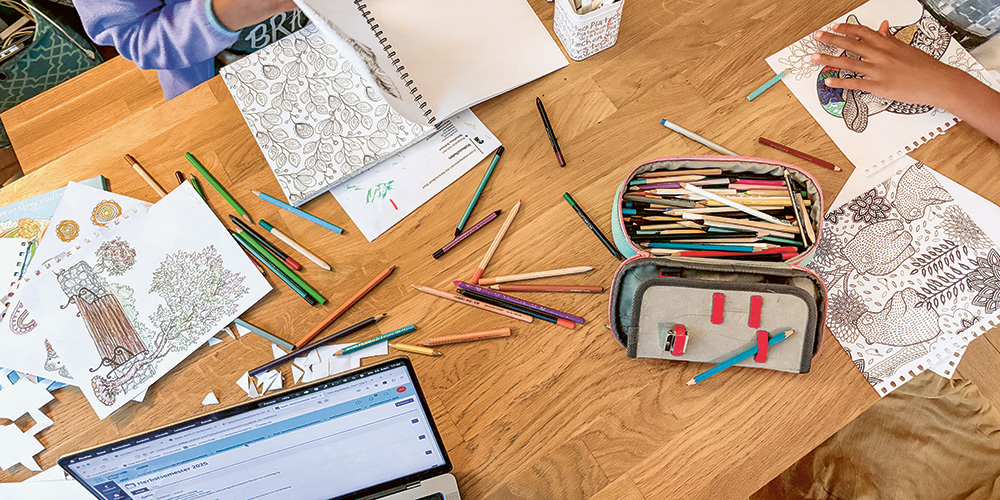
As in many homes, Michelle Engeler’s kitchen table is a hive of activity and a hub of everyday life. “My kids eat their breakfast here, they tell me things, do crafts, argue and laugh,” she says. Engeler is a social anthropologist, and for her, the dining table also provides the basis for field research.
One of Engeler’s two daughters was sitting at the table, having her afternoon snack, when she mentioned an encounter with a woman walking past the house. The woman had asked her to be quiet, saying that “around here, we like to keep the noise down.” This choice of words made it clear that, based on the girl’s appearance, the woman had decided she wasn’t from “around here.” Stories like these might seem incidental, but they become ethnographic moments, relevant data that can feed into Engeler’s research. They reflect children’s experience of belonging to a neighborhood and the sense that where they belong isn’t always obvious.
How daily life becomes research
This incident is just one example of how, when children grow up in a city filled with people from different backgrounds, they come into contact with and become aware of boundaries. Growing up in a post-migrant city can also awaken them to social expectations.
Engeler is exploring this in her current research. For her and her family, the city of Basel is both their home and the hub of their lives. Engeler says that it isn’t unusual for a researcher to focus on the place they live, particularly when they work in the social sciences. “Topics that come up in your private, everyday life can really inspire you to understand how people coexist in this multifaceted city.”
Children’s connections to everyday school and neighborhood life are often very different to those of their parents, whose insights are limited to specific situations such as collecting their child from school, watching a theater performance or attending compulsory parent-teacher conferences. Engeler and her children are no exception. Aged seven and ten, her daughters and their experiences can prove a valuable source of understanding. This is all part of “patchwork ethnography,” an approach to research that also includes everyday life and the home — and isn’t confined to an academic context.
Every answer counts
Patchwork ethnography is used in the interdisciplinary research project “Aufwach(s)en,” which Engeler — together with educational researcher Luca Preite and sociologist Peter Streckeisen — set up and now run. The three researchers combine methods from their fields, including ethnography and statistics, to explore Basel as a post-migrant city. “Post-migrant” describes a society in which migration is no longer the exception, but a natural part of its shared reality.
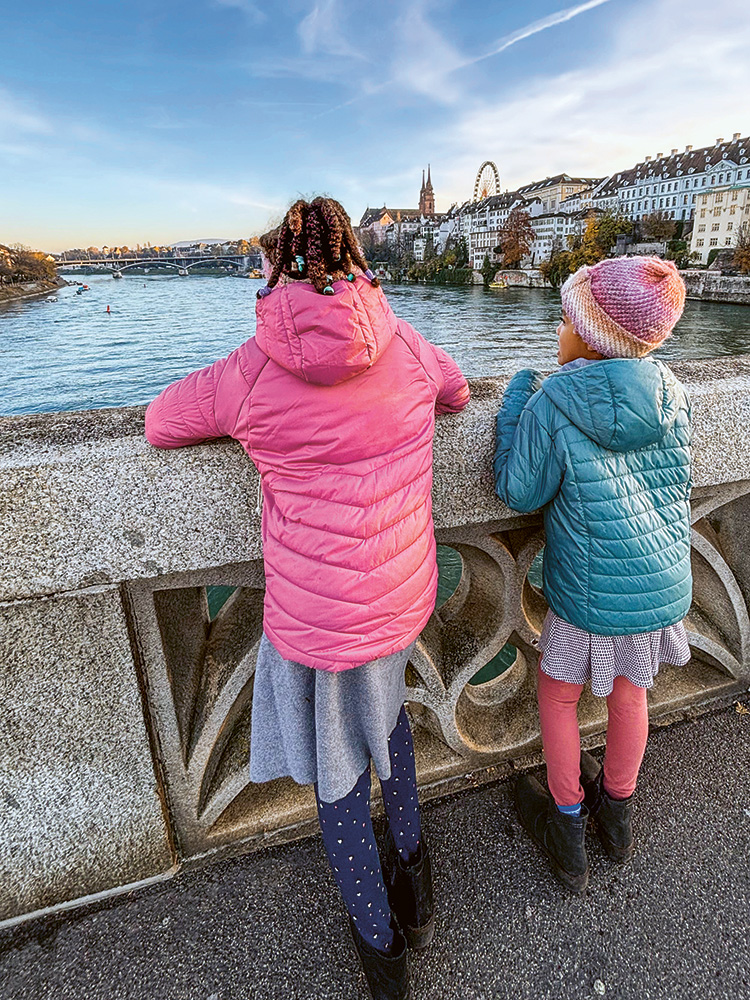
The focus is on how people of different origins coexist and how this diversity permanently shapes culture, politics and everyday life. At its core, the Basel project asks what it’s like to grow up here; how identities, inequalities and a sense of belonging are established and negotiated at school and within a neighborhood.
To obtain meaningful results, the researchers consciously work with a range of people in Basel’s society, who in turn become experts in their environment. This approach is also known as “citizen science.” Alongside family members, sources of information include key individuals in neighborhood and recreational organizations, teachers and city administration employees. The project leaders can also draw on their own experiences: They all live in Basel with their families, although in different areas. This variety, combined with their diverse professional backgrounds, enriches the collection and analysis of the data.
Flexibility as a bonus
For Engeler herself, patchwork ethnography brought a sense of freedom. “As a mother, it felt as if my space for research had shrunk compared to the time with my family,” she explains. This form of research offers greater flexibility and redefines boundaries, prioritizing spontaneity over rigid structures. Fittingly, a publication date hasn’t yet been set for the project. Engeler reveals, however, the plan to publish their findings in a range of formats: “It would be great to have a collected volume of all sorts of voices and contributions.” The researchers will spend this year collecting data, analyzing it together and interpreting the results. “That’s something I can do at my kitchen table, as my daughters do their homework, paint or read”, she says.
More articles in this issue of UNI NOVA (May 2026).