Spring fatigue cannot be empirically proven
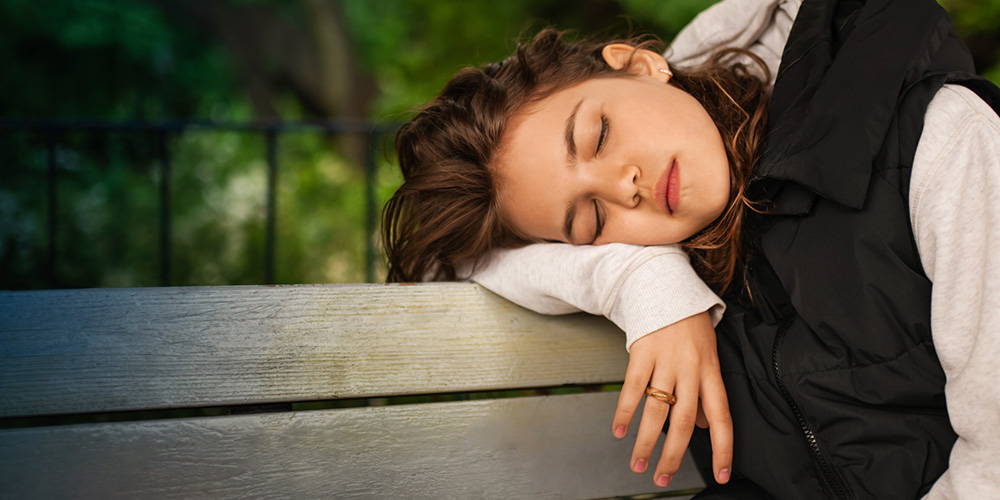
Why do many people say they are so exhausted in the spring? Researchers at the Center for Chronobiology at the University of Basel, the University Psychiatric Clinics Basel (UPK) and the Inselspital in Bern investigated this question. The study reveals that spring fatigue appears to be more of a cultural phenomenon than a measurable biological one.
09 March 2026 | Noëmi Kern
When the days start to get longer again, Dr Christine Blume’s phone rings more often. That’s because journalists want to ask the sleep researcher what spring fatigue is all about.
Until now, she has always replied that there are no studies that have investigated this phenomenon. “But I always found that unsatisfactory,” says Blume, who is a researcher at the Center for Chronobiology of the University Psychiatric Clinics (UPK) and the University of Basel. That’s why she teamed up with sleep researcher Dr Albrecht Vorster from the University of Bern’s Inselspital to conduct a study that investigated whether people are actually more tired in spring than at other times of the year. The results have been published in the Journal of Sleep Research.
“Spring fatigue” is widespread
The study was based on an online survey in which participants were contacted every six weeks for a year starting in April 2024. The researchers evaluated responses from 418 people. In the survey, participants stated how exhausted they had felt over the past four weeks. They were also asked about their sleepiness during the day and the quality of their sleep. The survey was repeated to cover different seasons.
At the start of the study, around half of the participants had stated that they suffered from spring fatigue. “This should also have been evident in the evaluation of the survey data,” says study leader Christine Blume. However, this was not the case.
Less fit than desired
“In spring, the days get longer quickly. If spring fatigue were a genuine biological phenomenon, it should become apparent during this transitional phase, for example because the body has to adapt,” says the sleep researcher. In the data, however, the speed at which the length of the day changed did not play a role in the participants’ exhaustion. Similarly, no differences were found between the individual months or seasons.
The researchers interpret the discrepancy between subjective perception and the measured data as an indication that spring fatigue is more a culturally influenced phenomenon than an actual seasonal syndrome. Because there is an established term for this, many people pay more attention to how tired they feel in spring and interpret symptoms of exhaustion accordingly. So the phenomenon self-perpetuates again and again.
“In spring, we may also feel that we need to be more active and take advantage of the good weather. If we can’t bring ourselves to do so, our expectations and our subjective energy level can be very different,” says the expert. Explaining or even excusing this with spring fatigue comes in handy. “It’s an explanation that is completely accepted in society.”
Daylight influences our body clock
Generally, many people feel more tired and sleep a little more during the darker months of the year. This has been confirmed by chronobiological examinations and is also reflected in the data provided by the study participants. One reason for this could be that the biological night, which is controlled by the body’s internal clock, lasts a little longer in the winter months. “But that also means that we should actually feel fitter when the days get longer again,” says the scientist.
This is particularly evident in summer, as the data analysis highlights: “Many people generally sleep less then: the days are long and you might meet up with friends in the evening and enjoy the summer evenings,” says Christine Blume. Despite getting less sleep, this does not increase exhaustion. This was also confirmed in the study. The psychologist recommends that anyone who feels lethargic in spring should get as much daylight as possible, stay physically active, and ensure sufficient sleep. And when media inquiries about spring fatigue come in this year, she will be able to refer to empirical data for the first time.
Original publication
Blume, Christine und Vorster, Albrecht
No Evidence for Seasonal Variations in Fatigue, Sleepiness, and Insomnia Symptoms: Spring Fatigue is a Cultural Phenomenon rather than a Seasonal Syndrome
Journal of Sleep Research (2026), doi: 10.1101/2025.09.27.678954
Further information
Dr. Christine Blume, Center for Chronobiology, University of Basel and University Psychiatric Clinics Basel, email: christine.blume@unibas.ch; phone: +41 61 325 50 74