Sebastian Hiller elected Member of the Leopoldina National Academy of Sciences
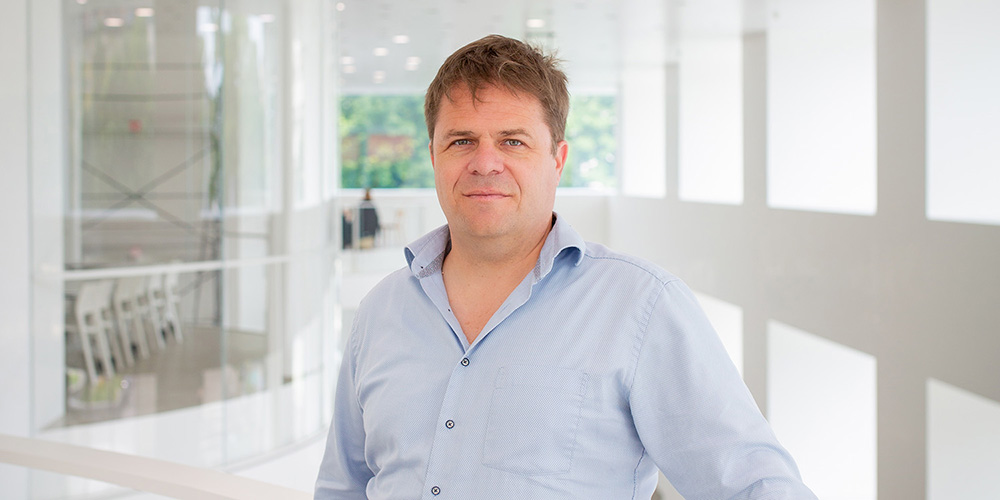
Professor Sebastian Hiller, structural biologist at the Biozentrum of the University of Basel, has been elected as a new member of the German National Academy of Sciences Leopoldina. Election to the academy is regarded as one of the highest scientific honors in Germany.
29 May 2026
This year, the Leopoldina appointed Professor Sebastian Hiller together with 20 other researchers to Class II Life Sciences, recognizing his outstanding contributions to structural biology, in particular his pioneering work on elucidating the structure and function of proteins. Hiller will join the Biochemistry and Biophysics Section of the Leopoldina.
“With the election to the Leopoldina, a dream has come true for me,” says Hiller. “At the same time, this is also a great recognition for my research group, in which a wide variety of talents have carried out outstanding work over many years.”
Sebastian Hiller has been Professor of Structural Biology at the Biozentrum of the University of Basel since 2010. After studying at ETH Zurich, he completed his doctorate in the research group of Nobel Laureate Professor Kurt Wüthrich. He subsequently conducted postdoctoral research at Harvard Medical School in Boston and at ETH Zurich.
Hiller’s research focuses on investigating the structure, dynamics and interactions of complex proteins at atomic resolution using nuclear magnetic resonance (NMR) spectroscopy. His work has contributed substantially to understanding how proteins are integrated into cellular membranes and how chaperones and proteins interact to ensure proper protein folding. More recently, his team has elucidated the mechanisms of action of novel antibiotics. His research provides novel insights into therapeutically relevant proteins, paving the way for the development of innovative drugs.
The German National Academy of Sciences Leopoldina
Founded in 1652, the Leopoldina is one of the oldest and most prestigious national scientific academies in the world. As the German National Academy of Sciences, headquartered in Halle (Saale), The Leopoldina advises politicians and the public on current scientific and science policy issues and contributes to debates of societal importance.
The election to the Leopoldina follows strict criteria of scientific excellence. Since its founding, the academy has elected more than 7,000 outstanding scientists, among them some of the most esteemed scientists in history such as Marie Curie, Charles Darwin, Albert Einstein, Max Planck and Alexander von Humboldt. The academy has currently about 1,700 members from more than 30 countries. With Sebastian Hiller, eight current and former professors of the Biozentrum have been accepted into its ranks.