In Focus: Nuran Haydar Celik explores what should be permissible in the name of beauty
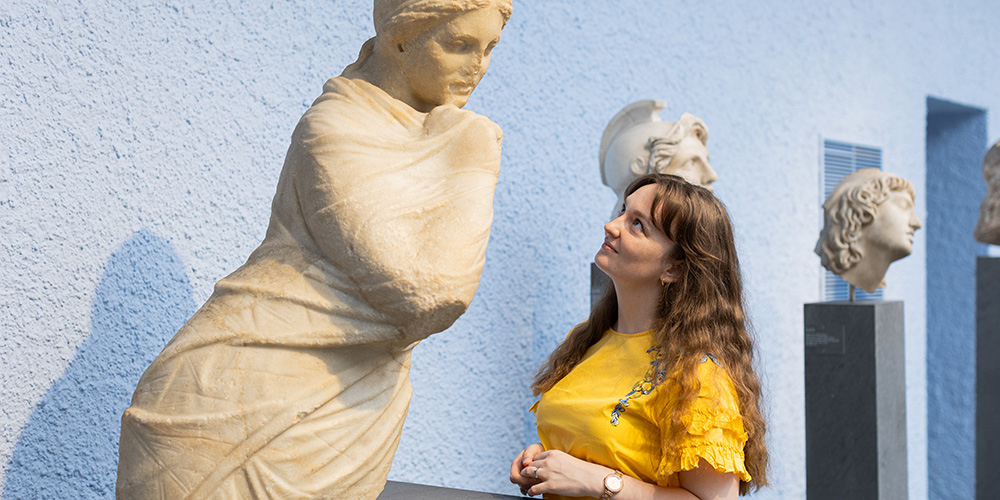
Beauty is in the eye of the beholder. But how far does the freedom to alter one’s own body extend? The legal scholar Nuran Haydar Celik examines the limits the law is allowed to impose on interventions lacking medical indications.
06 August 2026 | Noëmi Kern
Botox for wrinkles, breast augmentation, a hair transplant: anyone who is unhappy with how their body looks can find all sorts of ways to change it in the beauty industry. These services are available to anyone who can afford them and wishes to use them. And they have the right to do so: the right to self-determination, which is also a fundamental right in Switzerland, grants every adult of sound mind the right to decide freely about their own life, body and personal affairs.
The right to self-determination is restricted only in exceptional cases where it affects a public interest or could infringe on the fundamental rights of others. “In accordance with the principle of bodily autonomy, we should be able to do anything we want,” says legal scholar Nuran Haydar Celik. “But what if something that I subjectively perceive as beautiful might actually harm my body and the state, in a sense, wants to protect me from myself?”
When beauty is harmful to health
In other words, would it be legally permissible, for example, to have horns implanted into your head or to have your ears surgically altered to resemble “elf ears”? Or have your ribs broken or removed in a procedure known as rib remodeling in order to achieve a wasp waist? Swiss law does not provide a clear answer to these questions. Nuran Haydar Celik explores this issue in her dissertation in the field of medical criminal law at the University of Basel.
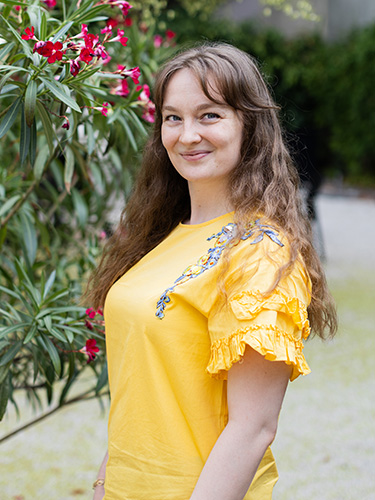
“My work is less about defining what qualifies as beautiful and for whom – the law can’t do that anyway,” says Nuran Haydar Celik. “Rather, I ask how and under what prerequisites the state is permitted to restrict my right to self-determination over my own body.”
Having unusual requests carried out on one’s own body, or even having bones broken or removed without medical necessity, may seem to go too far for most people. The criminal law scholar takes a straightforward view: “In a liberal legal system, it’s not up to the state to decide what makes sense for the individual and what doesn’t.” It is important to her not to pass judgment, but simply to consider the legal aspects, such as: how far does the right to self-determination extend when it comes to treatments that are not medically necessary? Should and can the law draw limits here – and if so, where should they be? Can doctors be punished for carrying out such operations, even though the person concerned has given their express consent? And if so, on what legal basis?
This quickly becomes a matter of negotiating moral values and ethics. “That’s why I’m currently reading texts on the philosophy of law. I’ve had very little exposure to this subject so far, and I find it very enriching to be engaging with it now,” says the 33-year-old.
A child in the courtroom
It was always clear to Nuran Haydar Celik that she wanted to become a lawyer. Her father was a public prosecutor, so she spent part of her childhood in courthouses. She also remembers playing at being a judge. “I would ask my sister to bring me the ‘case files’ – which were just a pile of paper,” she says with a smile.
During her studies, she soon realized that she was particularly interested in criminal law. She also worked as a lawyer in her native Turkey, where she obtained her doctorate at Galatasaray University in Istanbul. While she was still writing her thesis, she and her husband moved to Cologne, where he found a job as an engineer.
As she was looking for a new opportunity for herself, she came across the job advertisement for the doctoral position in Basel and applied. This second doctoral thesis is enabling her to delve into Swiss criminal law. “Starting a career in another country is challenging for lawyers because they are not familiar with the local legal system,” she says. “Language is also very important in this discipline. Terminology plays a key role, and sometimes a comma can substantially alter the meaning,” she says. Fortunately, she had already learned German in high school.
More peace and quiet instead of pressure to perform
The couple have been living in Basel for about a year and a half and feel at home in Switzerland. Nuran Haydar Celik enjoys being outdoors and is impressed by the landscapes and the “crystal-clear waters that make you want to go for a swim.” In contrast to the hustle and bustle of the metropolis of Istanbul, she finds more serenity here. “I’m beginning to realize that it can’t always be about achievement. Sometimes, it’s also fine to just do nothing. I enjoy sitting in a café and watching the world go by.”
She hopes that, after completing her doctorate, she will be able to stay in Switzerland and continue her research as a postdoc. She can also imagine completing her habilitation. Furthermore, she finds the world of research and academia appealing. She is aware that her dissertation will not provide a conclusive answer to her numerous questions. However, she wants her research to contribute to the legal debates about whether and how criminal law is allowed to restrict an individual’s right to self-determination over their own body. “Regardless of how a state applies the law, in every case, there must be a justification for why something is or isn’t prohibited,” emphasizes the legal scholar. She herself believes that the state should exercise restraint.
In Focus: the University of Basel summer series
The In Focus series showcases young researchers who play an important role in advancing the university’s international reputation. Over the course of several weeks, we will profile academics from various fields – a small representative sample of the more than 3,000 doctoral students and postdoctoral researchers at the University of Basel.