You are what you eat: how diet drives evolution
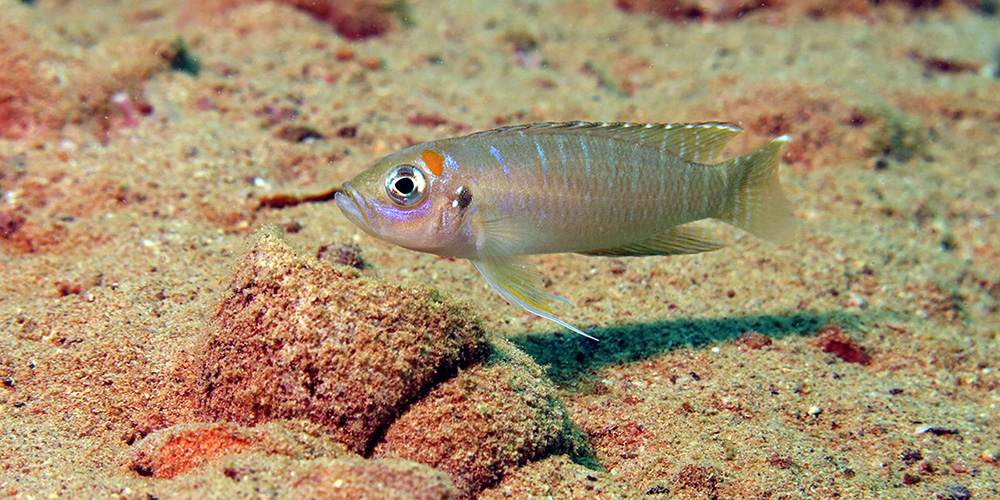
Different beak and jaw shapes are illustrative examples of how animal species have adapted to different food sources. In a new study published in the journal Nature, researchers now show how diet itself shapes the composition of intestinal tissue, using the highly diverse cichlid fishes as an example.
18 May 2026 | Angelika Jacobs
Lake Tanganyika in Africa is home to one of the most impressive examples of rapid evolution. Around 250 species of cichlid fishes have evolved here, each specializing in different ecological niches within the lake’s limited environment. Some feed on algae or plankton, while others are predators that strip scales from other fish or prey on smaller fish.
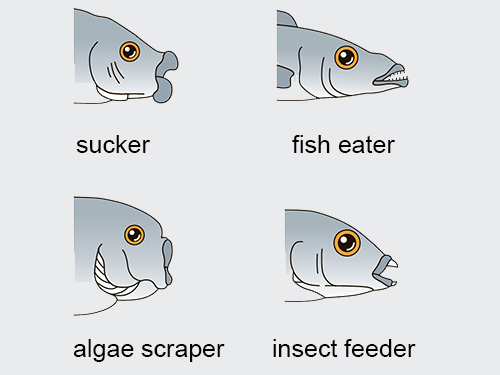
The food sources of cichlids are usually evident from their mouths: their jaws are shaped to suit their respective diets perfectly — for example, to scrape algae off rocks or tear scales from other fish. The relationship between diet and intestinal length has also been documented for many of these species.
A team led by Dr. Antoine Fages, Prof. Dr. Patrick Tschopp, and Prof. Dr. Walter Salzburger from the University of Basel has now identified another level of adaptation to different food sources. “Until now, little was known about how the digestive tract adapts to different diets at the level of cells and cellular processes,” says Antoine Fages, first author of the study, which describes precisely these adaptations in Nature, using cichlids as an example.
From external traits to intestinal cells
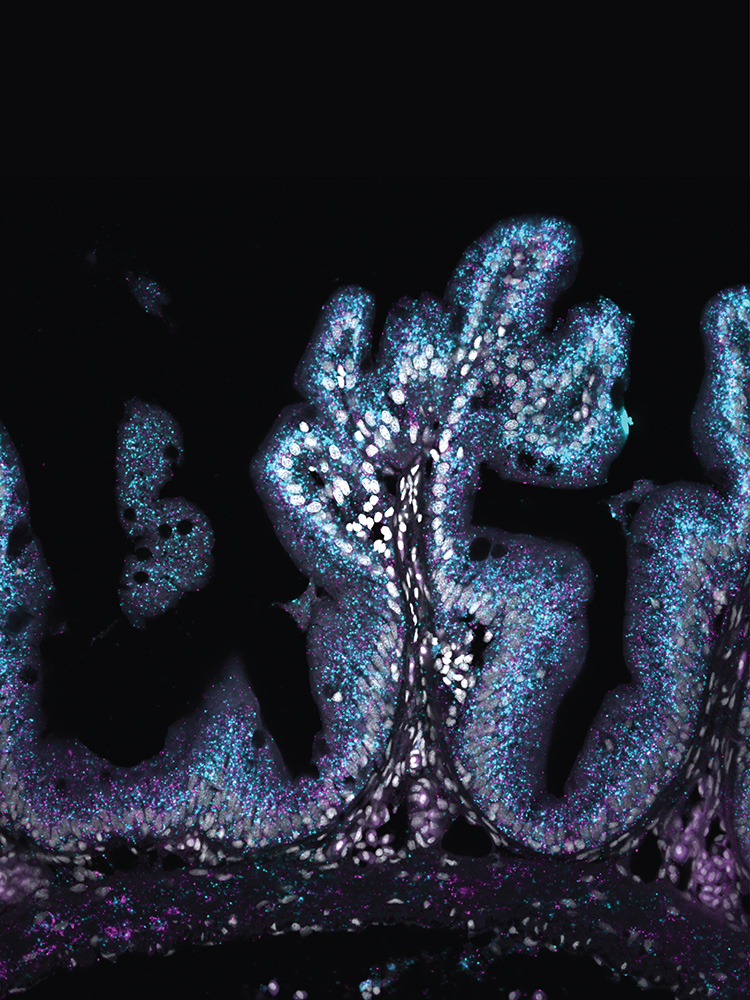
For the first time, the researchers linked the cellular composition of the gut to the anatomical characteristics and ecological niches of the various cichlid species. Using modern single-cell sequencing methods, the team examined gut cells and the genetic programs active within them in 24 cichlid species.
The results show that it is by no means only the animals’ visible traits that have adapted: in the carnivorous cichlids, the intestinal epithelium – that is, the inner lining of the gut – contained more cells specialized in the absorption of fats and nutrients. These cells play an important role in processing energy-rich food.
Room for evolutionary adaptations
“This suggests that the ecological niche here – indirectly – influences cell type specification, and thus the tissue composition in the gut,” explains Patrick Tschopp. In addition, many genes active in these cells appear to have little influence on other processes in the organism. “This offers plenty of room for evolutionary adaptations.”
Walter Salzburger summarizes: “We show at the level of individual cells how adaptations to different diets contribute to evolutionary diversification.”
The project was funded by a Sinergia grant from the Swiss National Science Foundation. In keeping with the spirit of this interdisciplinary funding initiative, the study combines evolutionary biology and ecology with cell and tissue research, ranging from external characteristics and dietary habits to individual cells and molecules in the digestive tract.
Original publication
Antoine Fages et al.
Adaptive cellular evolution in the intestine of hyperdiverse cichlid fishes
Nature (2026), doi: 10.1038/s41586-026-10494-8