“For me, Alzheimer’s is a disease of lost connections.”
For decades, Alzheimer’s was considered incurable. Now, a shift is emerging: clinician and dementia researcher Professor Marc Aurel Busche explains why our understanding of the disease is currently undergoing a fundamental transformation.
03 June 2026 | Angelika Jacobs
Professor Busche, Alzheimer’s was long considered a disease for which nothing could be done. Where are we today?
Marc Aurel Busche: For decades, we have been able to diagnose Alzheimer’s and support those affected, but we have been unable to alter the course of the disease effectively. New therapies have now shown for the first time that disease processes in the brain can be influenced and the progression of early-stage Alzheimer’s disease can be measurably slowed down. It’s not a cure, but it’s an important first step.
Which processes are these?
It has been known since the work of Alois Alzheimer around 120 years ago that characteristic deposits form in the brains of those affected. The central proteins of these deposits were later identified as amyloid beta and tau. Researchers were able to remove amyloid beta from mouse brains as early as the 1990s. However, these approaches failed for a long time in humans.
How has the situation changed now?
With donanemab, Switzerland recently approved its first antibody therapy that removes amyloid beta from the human brain and can slow the progression of early Alzheimer’s disease by around 30 percent. It is crucial to remove amyloid beta as far as possible before downstream processes such as inflammatory reactions, nerve cell damage and the spread of the tau protein continue to advance. It is precisely this early stage that is clinically crucial, as those affected are largely independent. The fact that treatment can prolong this stage is very important to many people.
In addition to your research at the University of Basel, you head the Memory Clinic at the Felix Platter University of Geriatric Medicine, where your work includes diagnosing Alzheimer’s disease. How do you offer reassurance to those affected?
At the Memory Clinic, I experience first-hand what an Alzheimer’s diagnosis means for people affected and their families. It’s always a difficult time. But I can talk about this diagnosis differently today than I could just a few years ago. We can diagnose the disease earlier and more accurately, and there are new treatment options available. As with HIV, multiple sclerosis or certain types of cancer, these first disease-modifying therapies for Alzheimer’s are probably not the end point, but the beginning of a new era in treatment.
Which previous breakthroughs in Alzheimer’s research have particularly impressed you?
What I find particularly important is the realization that Alzheimer’s starts in the brain decades before the first symptoms appear. The brain can compensate for the pathological changes for a long time, until a tipping point is reached and the first memory problems emerge. This creates a window of opportunity in which early diagnosis and, in the future, early treatment will be possible – a major concern for patients. Another major breakthrough was therefore the ability to detect Alzheimer’s in living humans, initially with PET scans and cerebrospinal fluid analyses. Blood tests are now available.
You recently published new findings on the interaction of amyloid beta and tau. What did you find out?
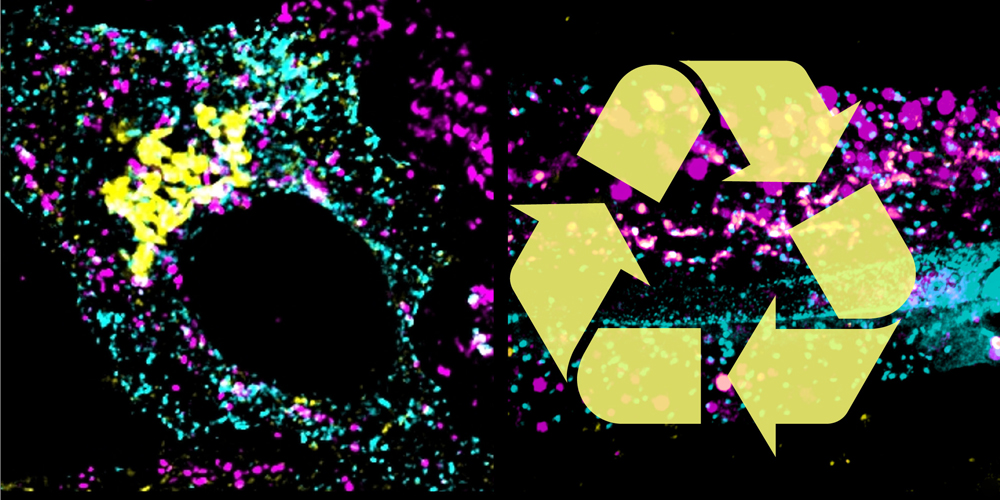
For a long time, people thought of Alzheimer’s as a sort of cascade. First comes amyloid beta, later comes tau, and then nerve cells die. However, our results show that this view is too simplistic and that both proteins interact synergistically with each other. Together, they disrupt communication between nerve cells at their contact point, the synapse. The study also shows that, at least in experiments, impaired networks can be restored if both proteins are removed at the same time. This suggests that combination therapies are a promising approach.
How does this change our perception of Alzheimer’s?
We no longer understand the disease simply as an accumulation of protein deposits, but as a disruption of connections in the brain. Amyloid beta and tau interact directly at the synapses. This is where communication occurs in the brain, and where memory and thinking are impaired. For me, therefore, Alzheimer’s is a disease of lost connections. On a biological level, nerve cells lose contact with each other. For those affected and their families, this also subsequently means a loss of social ties, as shared memories, conversations and relationships become increasingly fragile.
What do the new findings on the interaction between these two proteins mean for the development of further treatments?
Our findings suggest that in future Alzheimer’s disease should not be treated by targeting just a single protein. That’s why, in the long term, we need treatments that slow down several disease mechanisms at the same time.
What would be the next major breakthrough in Alzheimer’s research?
The next major breakthrough for me would be to treat Alzheimer’s so early that symptoms don’t develop in the first place. Studies are already underway to test anti-amyloid therapies in people who do not yet have any symptoms but show early biomarkers of the disease. Therapies that specifically influence tau before it spreads will also be particularly exciting.
Which outstanding questions still need to be addressed?
For me, the big unanswered questions are why certain nerve cells and brain regions are particularly susceptible to Alzheimer’s disease and why others remain resistant for a long time. Similarly, we do not know exactly why some people remain symptom-free for a long time despite pathological changes. If we better understand what makes the brain resistant, we could develop treatments that not only remove deposits, but also stabilize synapses, cells and their networks.
Will we be able to prevent or cure Alzheimer’s in 10 or 20 years?
The decisive step forward will be to detect and treat Alzheimer’s so early that symptoms don’t develop in the first place or appear much later. We are familiar with this principle from many chronic diseases in medicine. At the same time, we will treat Alzheimer’s in a much more targeted and personalized way than we do today.
Original publication
Ellingford et al.
Alzheimer’s disease pathology degrades an NMDA receptor-dependent spontaneous activity pattern in cortico-hippocampal circuits
Neuron(2026), doi: 10.1016/j.neuron.2026.02.027
About Marc Aurel Busche
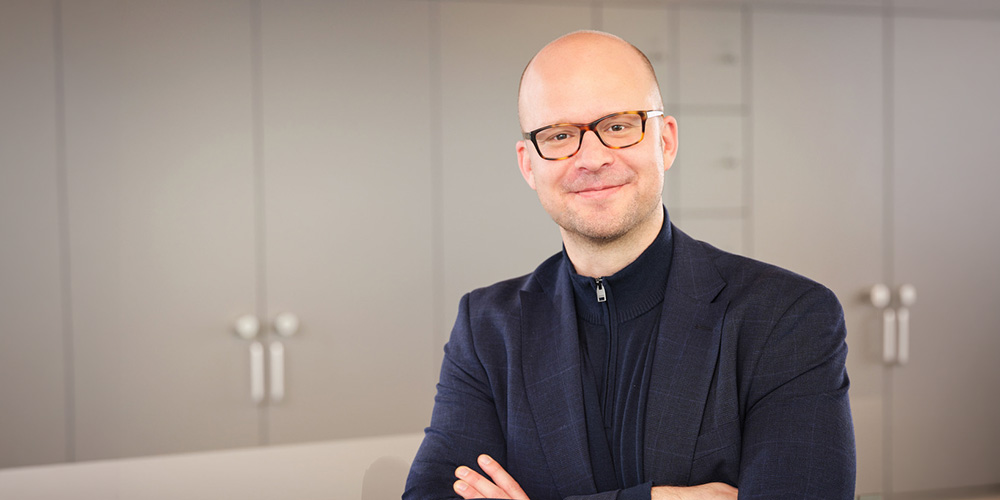
Professor Marc Aurel Busche has been clinical professor of dementia at the University of Basel since 2025. He heads the Memory Clinic and Geriatric Psychiatry at the University Hospital for Geriatric Medicine Felix Platter. He previously worked in clinical and research roles at University College London from 2018, where he looked after patients at the Memory Clinic at the Queen Square National Hospital for Neurology and Neurosurgery and led a research group on Alzheimer’s disease and other neurodegenerative diseases at the UK Dementia Research Institute.