Between Risk and Research
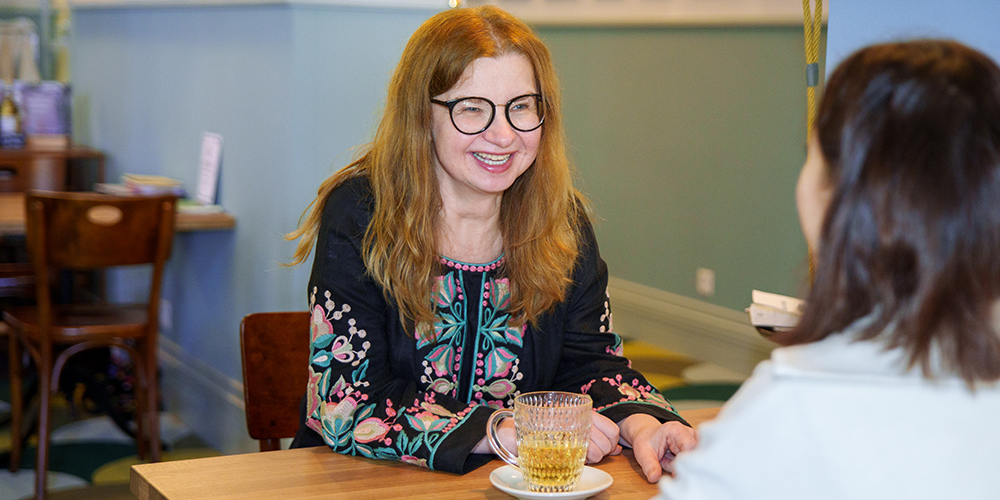
Dr. Halyna Tsyhanenko fled Ukraine for Switzerland in 2022, and settling in was challenging. With support from the international network «Scholars at Risk» (SAR), she joined the University of Basel, where she was able to continue her social psychology research for two years. In this interview, she shares her experience.
10 February 2026 | Lara Uebelhart
Halyna Tsyhanenko, you were very engaged in Ukraine, academically and socially, until you had to leave almost four years ago. Can you tell us more about the situation that caused you to flee?
Until 24 February 2022 our small family lived in Kyiv. When Russia launched its full scale war, our city was and still is t the main target for Russian occupation. From the outset it was clear that this was quite a dangerous and scary situation for a child and that we had to leave. My backpack was ready because at that time my students and I had a feeling about this invasion happening soon. When it started, we spent a couple days at a shelter of our church, before my daughter’s godfather helped us move to the west Ukraine. On 4 March 2022 we finally left the country – with my 14-year-old cat in one hand and my four-year-old daughter in the other, carrying only a small backpack with some medication and food.
What then brought you to Switzerland and where could you initially find shelter?
First, we crossed the border to Poland. We spent three days in Warsaw before I decided to accept an offer from one of my previous colleagues from volunteer work who had found a host family for us in Basel. For two and a half months they gave us part of their home. When I had found work and our own accommodations, we moved out, but we still are grateful for all the help they gave us.
What did your life look like, freshly arrived in Basel?
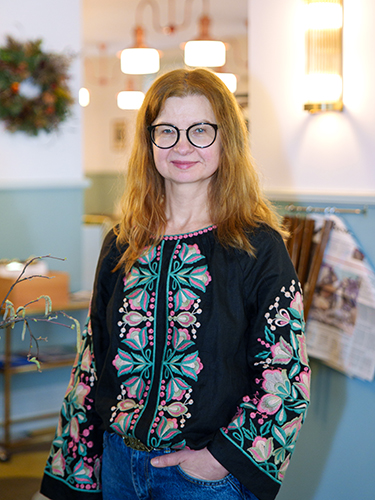
I joined the Ukrainian Society of Switzerland . There Ukrainians meet each other in groups and share information about clothes and food as well as educational opportunities. Via the mailing list from the Ukrainian Society of Switzerland, I got to know about the Scholars at Risk program, which I decided to apply for. But for the first two years here, I was also still lecturing online as a professor for the university in Kryvyi Rih. One week after my arrival I also started a weekly self-support group for Ukrainian refugees in Basel. This was important not only for the people from Ukraine but for me as well. I had felt guilty for leaving my country. The support group helped to restore my identity as a psychologist, psychotherapist and researcher.
What happened when you applied for «Scholars at Risk»?
It was a great opportunity to apply for a project and receive a grant through this network. Scholars at Risk gave me the opportunity to continue my work as a researcher, which was just a very lucky situation. Prof. Hedwig J. Kaiser and Prof. Rainer Greifeneder, both from the University of Basel, trusted me and offered me a position for one year, which was later extended for another ten months, so I was able to do a project about Ukrainian refugees in Switzerland.
Tell us more about this project; what were you able to bring into it with your background and as a researcher with a lot of experience already?
Working with Professor Greifeneder, our research focused on the social exclusion of Ukrainian refugees here in Switzerland. I was the only person in the research group who was able to understand the Ukrainian language and the study was with Ukrainian people. So, we – Professor Greifeneder’s team and I – created a new questionnaire about social exclusion and institutional trust for Ukrainian refugees in Switzerland in their own language. Initially, I was curious why Professor Greifeneder even wanted to do a study about social exclusion, because this problem felt so far away. Personally, when I arrived here, I only experienced support and positive interaction. Everyone was friendly and gave me a lot of attention. But I soon understood it to be a common phenomenon that local people struggle with accepting strangers. But for the «strangers» it’s not easy to integrate either and to understand the new culture and its rules, which are often not written down anywhere.
What were your main findings with your research?
Ukrainian people here feel social exclusion mainly because of the language barrier, their temporary status and the uncertain situation with the war. And they struggle to find work. By law you may have access to the job market, but in reality, not many employers want to offer a job to someone with a temporary permit. But I also found that some people feel welcome and there are in fact some opportunities to find a job. The trend in my study showed that the people who weren’t just looking for information, empathy or social support but who started actively doing something and overcoming challenges instead turned out to be more resilient. Many of them found a job.
The project with «Scholars at Risk» ended a while ago. What are your plans now?
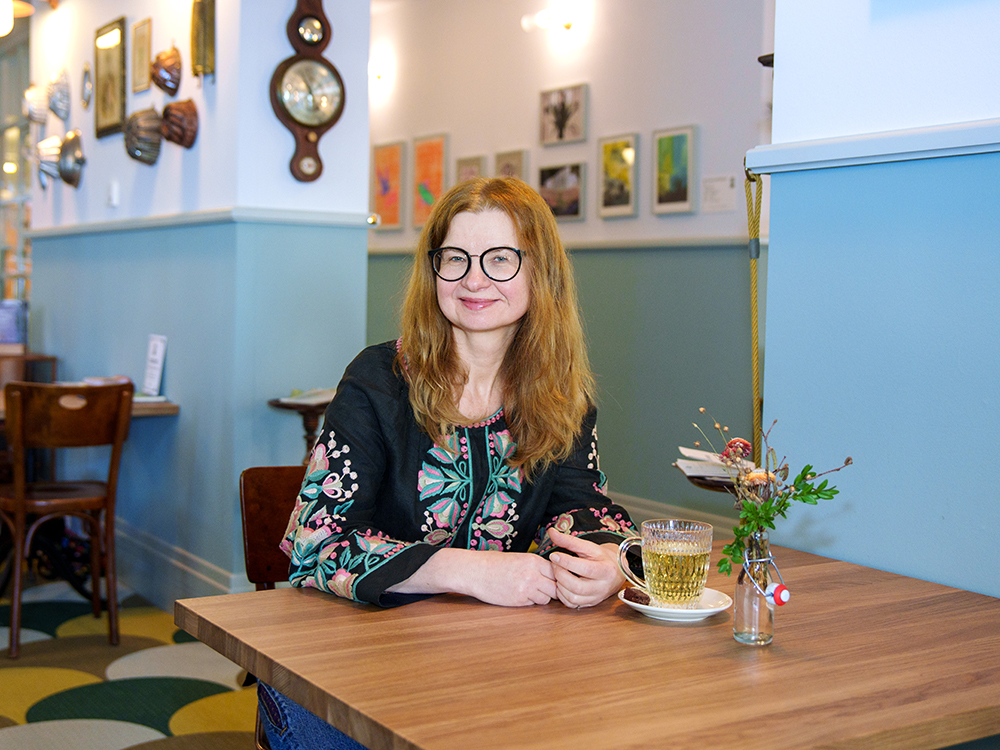
After completing the SAR program, thanks to support from the RAV, I started learning German while looking for a new job as an assistant psychologist or intern, and I had my psychology degree recognized in Switzerland. I am also currently working on analyzing and preparing publications of my research. This year I will participate in the General Meeting of the «European Association of Social Psychology» in Strasbourg and a conference in Barcelona to present the results of the study. I still have a connection with Professor Greifeneder, which is nice. It would be great to return to the Faculty of Psychology or another department of the University of Basel.
Finally, what experiences or approaches have helped you, personally, in building a new life and identity?
Having your own boundaries is very important, because it gives you some form. But know that you are also still part of a bigger human community as a global citizen. For example, I lead a Ukrainian Pfadi group here in Basel and once, when we were in our Ukrainian Pfadi uniform, somebody asked us why we didn’t just join the Swiss Pfadi organization instead of doing our own group. I answered «Because I’m Ukrainian». Our culture runs deep. But that doesn’t mean that I cannot accept Swiss culture. For example, I’m learning German. But I respect my culture and, because of that, I respect other people and their culture as well. It’s essential that we understand diversity within a community and cooperate.
25 Years of Scholars at Risk
For 25 years, the international network Scholars at Risk has been supporting researchers who find themselves in situations of political conflict where their academic work, freedom of expression and human rights are at risk. Among its 40 partner institutions is the University of Basel, which enables affected researchers to continue their academic work.