Andreas Papassotiropoulos elected to the Leopoldina Academy of Sciences
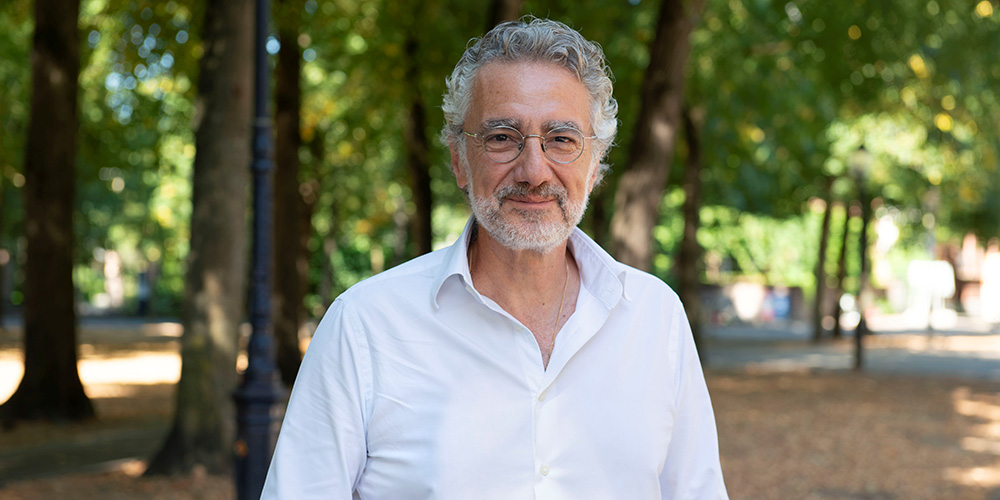
Neuroscientist and psychiatrist Professor Andreas Papassotiropoulos from the Department of Biomedicine and the University Psychiatric Clinics Basel has been elected to the German National Academy of Sciences Leopoldina. The election recognizes his research into the genetic and molecular foundations of learning, forgetting and memory.
13 July 2026
Professor Andreas Papassotiropoulos, Professor of Molecular Neuroscience at the University of Basel, has been elected to the German National Academy of Sciences Leopoldina, Section Neurosciences. The Leopoldina is the world’s oldest continuously existing academy of sciences.
With his election, the Academy honors Papassotiropoulos’ pioneering research at the interface of psychiatry, human genetics, neuroscience and molecular biology. At the heart of his work is the question of which genetic and molecular mechanisms govern human memory in health and disease. His research has made a substantial contribution to identifying genes, gene networks and regulatory mechanisms that influence learning, forgetting and memory processes.
“I am extraordinarily pleased about my election to the Leopoldina,” says Andreas Papassotiropoulos. “This distinction is a great honor and also a recognition of the research cluster Molecular and Cognitive Neurosciences, which my colleague Professor Dominique de Quervain and I have had the privilege of building since 2010.”
Career and research
Papassotiropoulos was born in Athens and studied medicine at the University of Bonn, where he also completed his clinical training as a specialist in psychiatry and psychotherapy. This was followed by research positions in Zurich and in the United States. In 2003, he was awarded an SNSF professorship, and in 2007 he was appointed Professor of Molecular Neuroscience at the University of Basel. Since 2010, he has led the research cluster Molecular and Cognitive Neurosciences together with Professor Dominique de Quervain.
His work combines genetic analyses in large human cohorts with functional imaging and studies in model organisms. It has a strong translational focus: the aim is to use genetic and molecular findings to derive new approaches for treating memory disorders. Among other things, his work has contributed to the development of genome-guided strategies for drug discovery and the repurposing of existing medicines.
Papassotiropoulos has received several awards for his scientific achievements, including the Robert Bing Prize, the Zurich Weizmann Lecture and the Cloëtta Prize. He is also an elected member of the Senate of the Swiss Academy of Medical Sciences.
Leopoldina – German National Academy of Sciences
Founded in 1652, the German Academy of Sciences Leopoldina is the world’s oldest continuously existing academy of sciences. From its headquarters in Halle (Saale), it advises policymakers and the public on scientific and science-policy issues. Election to the Leopoldina is based on strict criteria of scientific excellence and is regarded as one of the most prestigious distinctions in the German-speaking world. Today, the Academy has around 1,700 members from more than 30 countries.