

What puts hormones under stress.
Text: Angelika JacobsElectrolyte and water balance, blood pressure and much more: Hormones keep numerous processes in the body in a delicate equilibrium. This can be disrupted by substances from the environment, such as those in plastics.
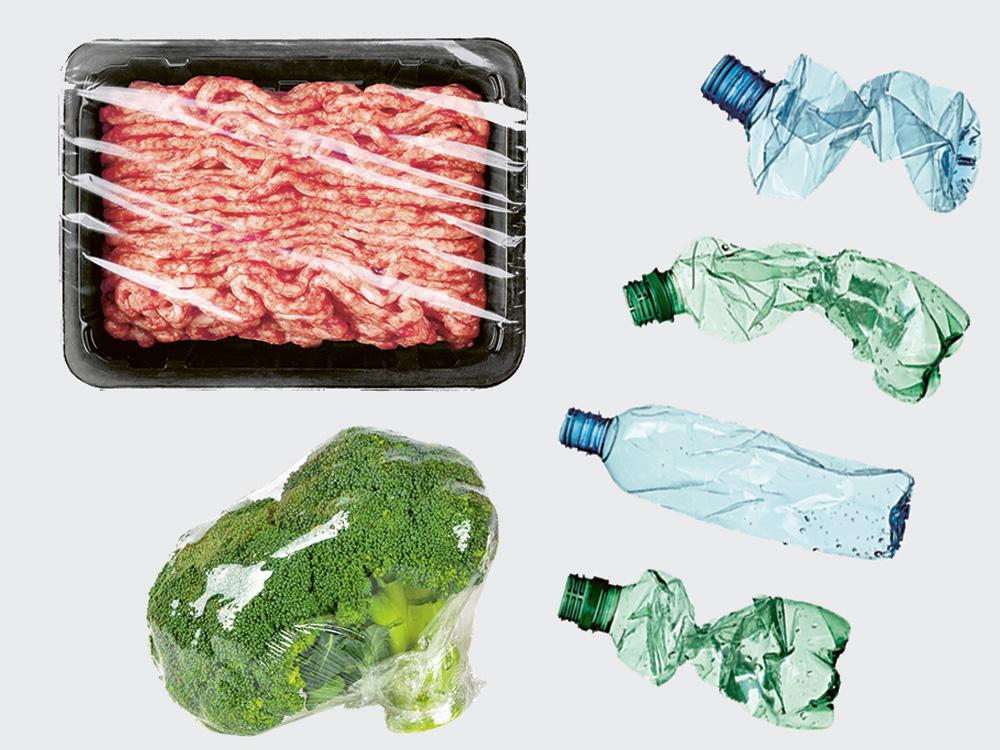
Unless you shop exclusively at zero-waste stores, there’s no getting away from plastic packaging. This is intended to protect food and extend its shelf life. Drinks in PET bottles, cheese and meat in plastic packaging, and salad in plastic bags are part and parcel of everyday life. In many cases, the things we eat and drink have been in contact with these materials for a long time.
Substances from plastics can enter the food and therefore our body. For example, there has been long-standing criticism of the plasticizers found in these materials because they act like hormones in the body and can promote the development of diseases. The plasticizer bisphenol A has therefore been banned from baby products, which can be identified by the “BPA-free” label. There are also many other substances in plastics that can migrate into foods.
It is almost impossible to prevent these substances from entering the body. Whether they actually have a biological effect once they get there is another question. This is the subject of research by toxicologist Alex Odermatt and his team at the Department of Pharmaceutical Sciences.
Odermatt’s group explores whether substances from the environment, such as those from plastic packaging, disrupt the body’s hormonal system. “There are already numerous studies into whether these substances can block or activate hormone receptors,” explains Odermatt. “Our focus, by contrast, is on the effects on enzymes that regulate hormones. So far, there’s been relatively little research in this area.”
Odermatt’s specialist field encompasses steroid hormones, including the stress hormone cortisol. Specialized enzymes control the equilibrium between inactive hormone precursors and active forms. For example, a specific enzyme converts inactive cortisone into active cortisol. This enzyme is called HSD11B1, but we refer to it simply as “enzyme 1.” Another enzyme, HSD11B2 — or “enzyme 2” — deactivates cortisol by converting it into cortisone.
To find out whether a substance disrupts the work of enzymes such as these, Odermatt and his team generate “steroid profiles.” For these, they use special analysis procedures to determine the relative quantities of the inactive and active forms of dozens of steroids in blood and urine samples. In our example, if enzyme 2 is inhibited, this is reflected in an increased ratio of cortisol to cortisone. Among other things, this also interferes with the water balance and can lead to high blood pressure.
An overdose of licorice
Plastics aren’t the only source of factors that interfere with these enzymes. This is demonstrated by a striking case from Bern, in which a patient was on the waiting list for a kidney transplant due to very poor kidney function.
“During a consultation, alarm bells rang for my former boss at the Nephrology Department, Felix Frey, when the patient mentioned that he consumed large quantities of licorice on a daily basis,” recalls Odermatt. Licorice contains a substance that inhibits cortisol deactivation by enzyme 2. “The patient had to give up licorice, and his cortisol level — and therefore his water balance and blood pressure — went back to normal. His kidneys were able to recover.”
Successful research in recent years demonstrates the usefulness of the steroid profiling developed by Odermatt’s team. In collaboration with the American University UC Davis, the group has been investigating substances known as “azole antifungals.” These drugs are intended to prevent fungal infections that affect the entire body, but they can also cause high blood pressure as one of their potential side effects. Steroid profiling showed that, above a certain concentration in the blood, two frequently used azole antifungals inhibit enzyme 2 and therefore cortisol deactivation, resulting in a disrupted water balance and high blood pressure. “Armed with this knowledge, it’s possible to optimize the dose of the medication or switch to a different active ingredient,” says Odermatt.
A harmful substitute
Whether from licorice or medications, these unwanted side effects demonstrate the sensitivity of the hormone balance. “Chronic disruption of this balance by environmental influences causes the body to become unwell,” says Odermatt.
The effects of environmental substances to which we are constantly exposed are one key focus of his research. Here, constituents of plastic products also come into play. Indeed, with its analysis procedures, the research group was able to show that a substitute for bisphenol A can actually have a greater influence on the hormone balance than the original plasticizer. Although this substitute is not authorized in Switzerland for products that come into contact with food, the rules are sometimes less strict in other countries that can then supply plastic products to Switzerland.
Does that mean it’s better to keep all plastics away from our food in the future? Odermatt doesn’t take such a dramatic view: “If food is stored cold or contains barely any fat, very few substances migrate into it from the plastic.” If, on the other hand, you bake cakes in a silicon cake mold or microwave your lunch in a plastic container, it’s possible for trace compounds and substances to dissolve and enter the food. “But that doesn’t necessarily mean they’ll have an effect in the body,” reassures Odermatt. Some of these substances are quickly broken down, while others are simply excreted. Research such as that carried out by Odermatt’s team provides clarity as to which plastic constituents actually affect the body’s hormonal system and how. Until these questions have been answered in full, he recommends using glass, ceramics or metal — at least when heating foods.
More articles in this issue of UNI NOVA (May 2026).