How to store water in the landscape
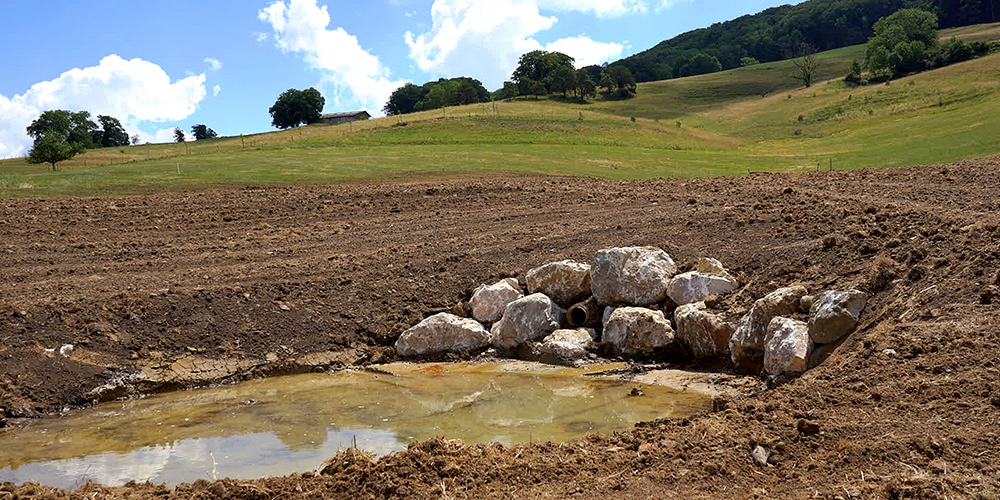
Climate change is bringing longer dry periods and heavier rainfall to Switzerland. In the “Slow Water” project, researchers of the University of Basel are investigating how water can be stored in the landscape to help mitigate dry spells.
09 July 2026 | Anna Uebelhart, Catherine Weyer
Cracked earth, withered grass, dry streams: July 2026 has only just begun, and nature is already struggling with the drought. “Water is very scarce at the moment,” confirms hydrogeologist Oliver Schilling.
Yet the total amount of precipitation over the course of a year is not necessarily changing. “The seasonal distribution has become more extreme,” says Schilling. This means that both dry periods and heavy rainfalls are increasing.
Keeping water available for longer
This is exactly where the University of Basel’s “Slow Water” project comes in. Researchers Oliver Schilling, Paul Southard, and Ruth Delzeit are investigating small-scale, nature-based measures to capture water more effectively and store it in the landscape. This keeps water available longer, rather than allowing it to run off quickly during heavy rainfall.
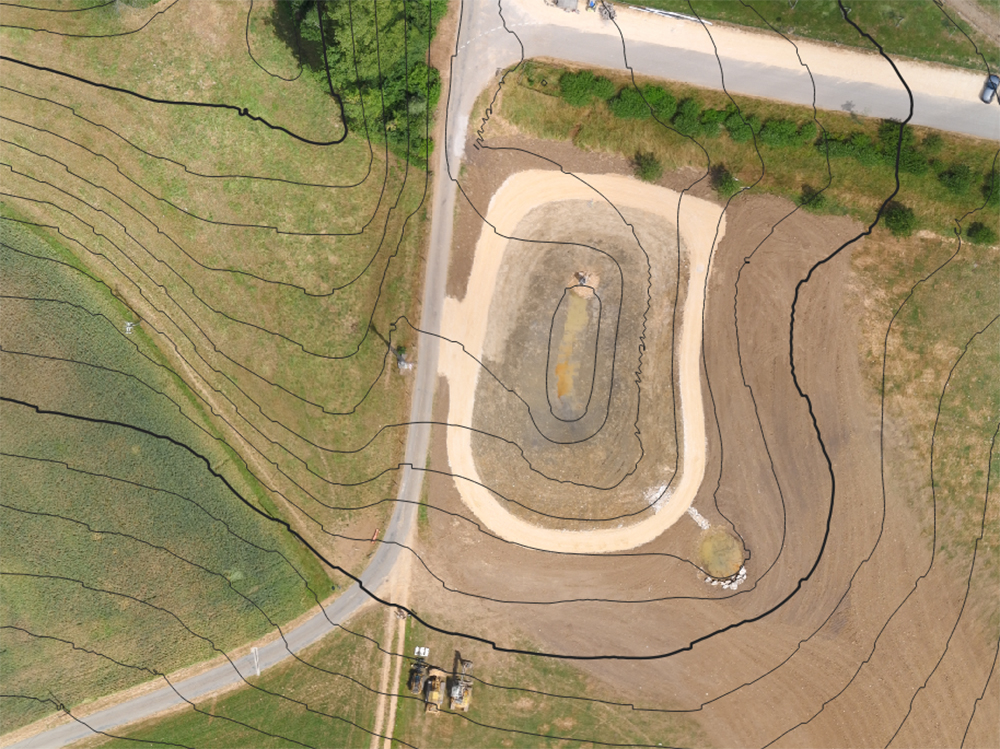
The measures range from small retention basins and ditches to infiltration channels and keylines along hillsides. Agricultural practices can also enhance water retention. If soil is managed carefully and its humus content is increased, it can store more water. However, such effects do not appear immediately. “That can take years,” says Schilling. Using drone imagery and sensors, the researchers directly measure the impact of these measures in the field.
Benefits for agriculture and local communities
More than 110 farms are already taking part in the agricultural innovation project, which is co-financed by the Federal Office for Agriculture and the cantons of Basel-Landschaft and Lucerne. This shows the strong interest in better water management. “Nature and agriculture depend on water. At the same time, municipalities also suffer when water flows into villages during extreme rainfall events,” says Schilling.
When water stays in the landscape for longer, it is not only agriculture that benefits. The wider population also benefits when water is slowed down and flows across fields in a controlled manner rather than, in extreme cases, flooding cellars and gardens. And because the retention measures in the “Slow Water” project are generally nature-based and multifunctional, they also promote biodiversity and ecosystem resilience.