
How the immune system battles lifelong viral infections acquired at birth
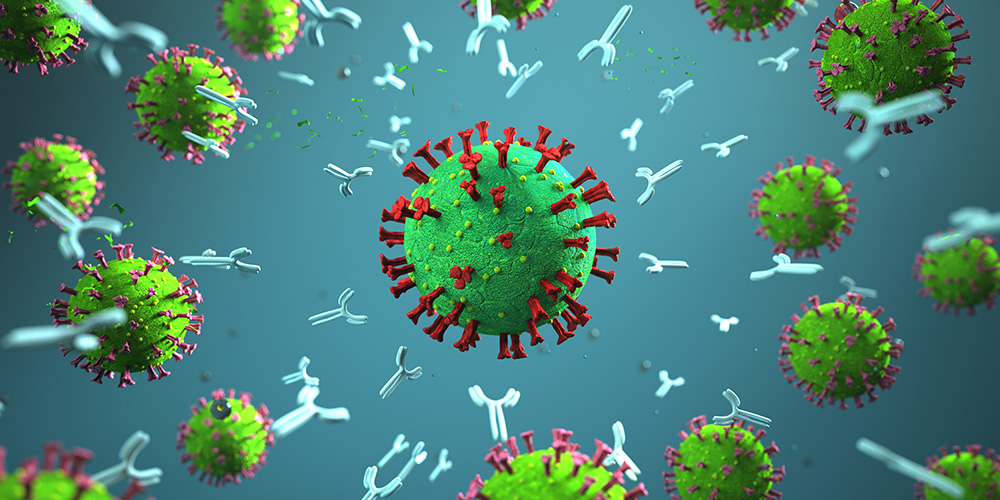
Millions of people worldwide carry viral infections they acquired at birth, often for life. For a long time it was assumed that the immune system hardly fights these pathogens. Researchers from the University of Basel show now that the body’s defenses do indeed act against the virus. This could be a useful starting point for future therapies.
28 April 2026 | Martina Konantz
Modern medicine can often prevent viruses from being passed from mother to child during birth, for example in the case of the hepatitis B virus (HBV). However, once the infection is established, it still cannot be cured. More than 250 million people worldwide live with a chronic HBV infection, almost all of them since birth.
Until now, it was assumed that the immune system tolerates such infections and hardly defends itself against them. A new study by researchers at the Department of Biomedicine at the University of Basel provides evidence that the immune system fights these infections more effectively than previously thought.
“Our study changes the way we think about chronic infections that begin early in life,” says Dr. Katrin Martin, co-first author of the study published in Immunity. “We found that the immune system continues to fight the virus in adulthood with partial success, although it is, in a sense, operating with the brakes on.”
How the body responds to the virus
Using a mouse model that replicates key aspects of an infection acquired at birth, the research team examined the immune response over an extended period. The results showed that the body gradually produces antibodies that help to reduce the amount of virus. This response is supported by specialized immune cells known as T helper cells, which enable other immune cells to produce more effective antibodies.
These T helper cells are indeed active and effective in adulthood. “However, they are less frequent and less diverse than those seen in infections encountered later in life,” explains co-first author Dr. Peter Reuther. As a result, the immune response remains limited and is unable to completely eliminate the virus.
Strengthening the immune response in a targeted way
In a next step, the researchers investigated whether this limited immune response could be enhanced. In their experiments they were able to improve the antibody response by administering additional T helper cells to the mice. This suggests that the reduced availability of T helper cells is an important limitation of the immune response to infections acquired early in life.
The researchers suspect that this is because the viral infection occurs during a sensitive phase of the immune system’s development. As a result, the formation of specific T cells remains limited, and the organism develops partial tolerance to the virus, allowing the latter to persist in the body indefinitely.
“The fact that the immune response can be enhanced by adding T helper cells is promising for the development of new therapeutic approaches,” says study leader Professor Daniel Pinschewer. “Building on existing and partly effective defense mechanisms is more promising than trying to induce an immune response that is completely lacking.”
Original publication
Katrin Martin, Peter Reuther et al.
Perinatal infection elicits clonally restricted T follicular helper cell responses that drive antibody-mediated viral control
Immunity (2026), doi: 10.1016/j.immuni.2026.03.004