Smart facade for Basel’s new biomedicine building
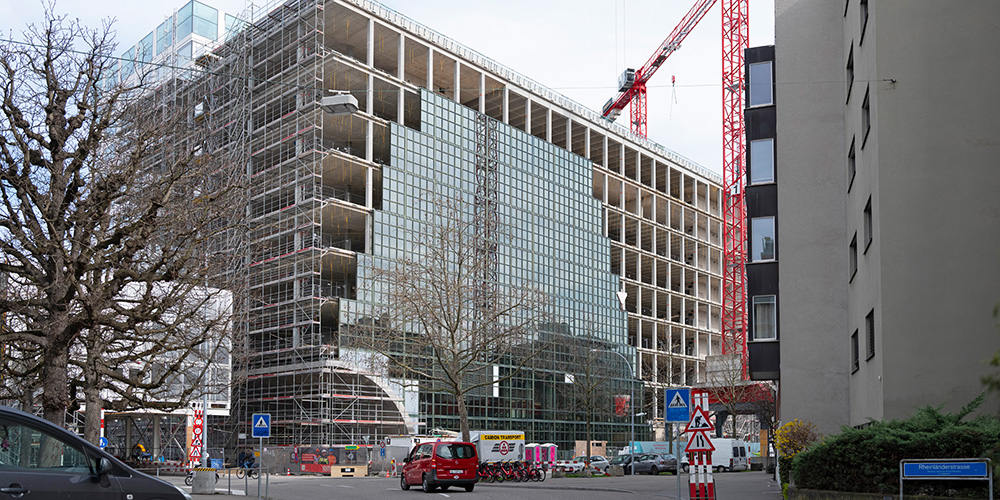
With the arrival of spring, facade installation has begun on the new building of the Department of Biomedicine (DBM) at the University of Basel. The envelope is more than just a barrier; it symbolizes the advanced research, innovation and technical progress that will characterize the work conducted within.
19 March 2026 | Xiomara Banholzer
A key feature of the facade is its 2,039 electrochromic glass panes. This smart glass darkens automatically in several stages when exposed to sunlight, helping to regulate daylight while maintaining a comfortable indoor climate. The project team deliberately chose this solution to ensure that building users can enjoy unobstructed views outside, even on bright, sunny days.
Before selecting the final product, project stakeholders and future users jointly tested the technology. They focused on color fidelity and visual comfort, especially the legibility of screen content and accuracy of color, both vital in laboratory and research settings.
Transparency in the urban context
Unlike conventional shading systems, such as fabric blinds, which block views, electrochromic glass preserves outward views. Simultaneously, the laboratory does not appear as a sealed structure within the cityscape; rather, its transparency and openness evoke a “lantern,” as the architects express.
-
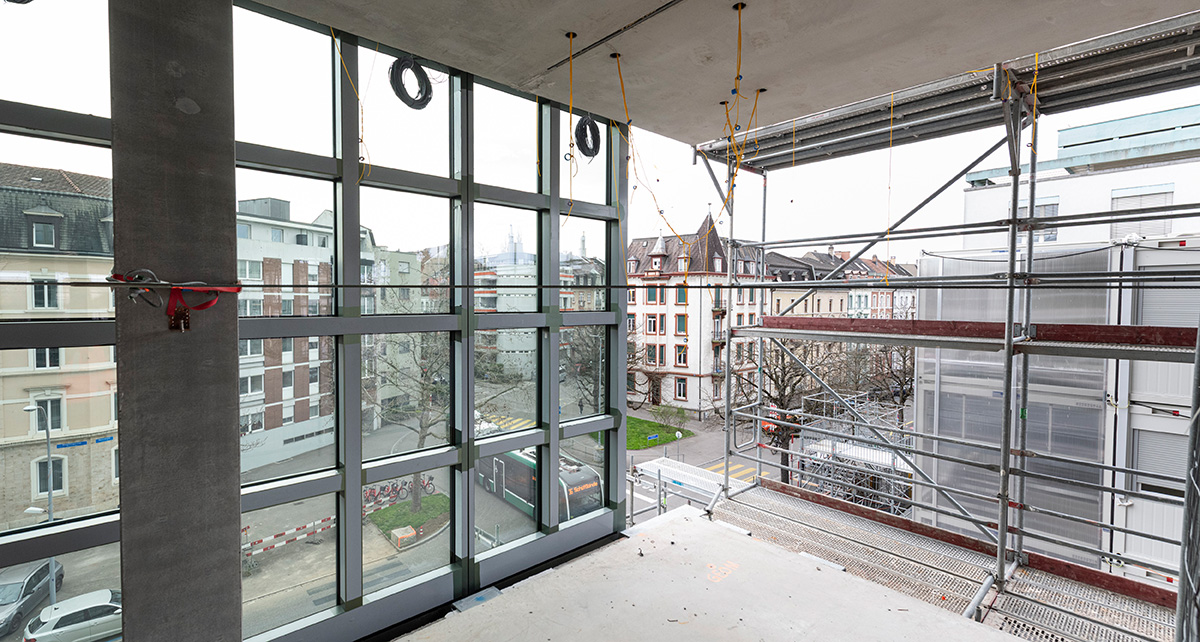 The electrochromic glass automatically adjusts the amount of light it transmits without impairing visibility. (Photo: University of Basel, Christian Flierl)link.zoom
 -
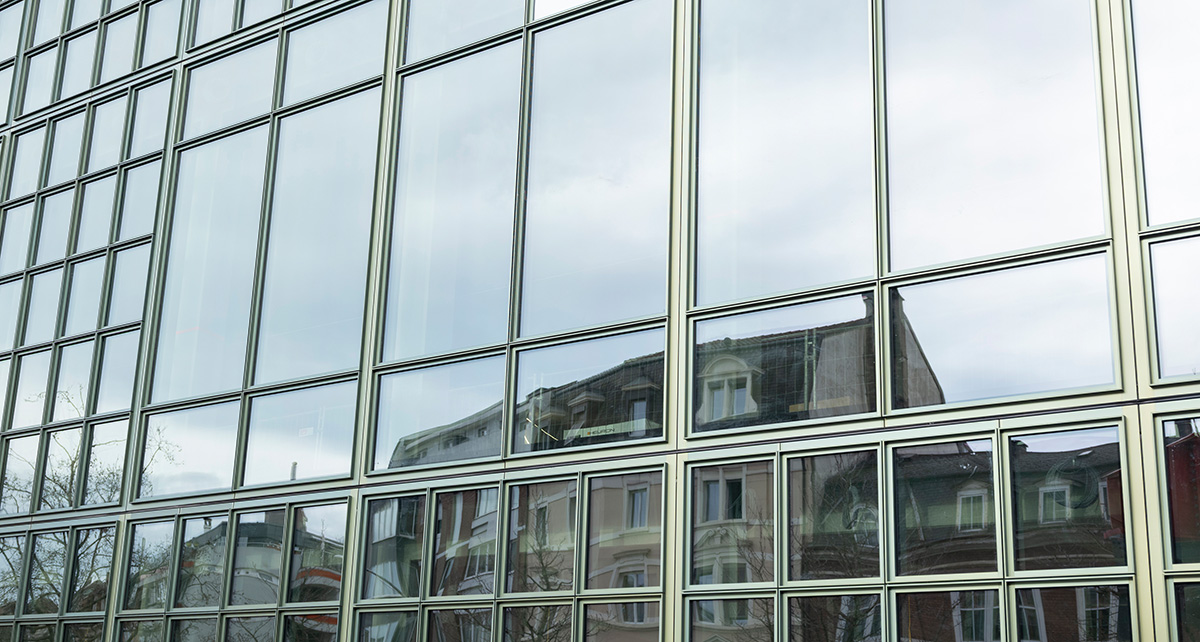 The facade is punctuated in several places by windows of varying sizes. (Photo: University of Basel, Christian Flierl)link.zoom
 -
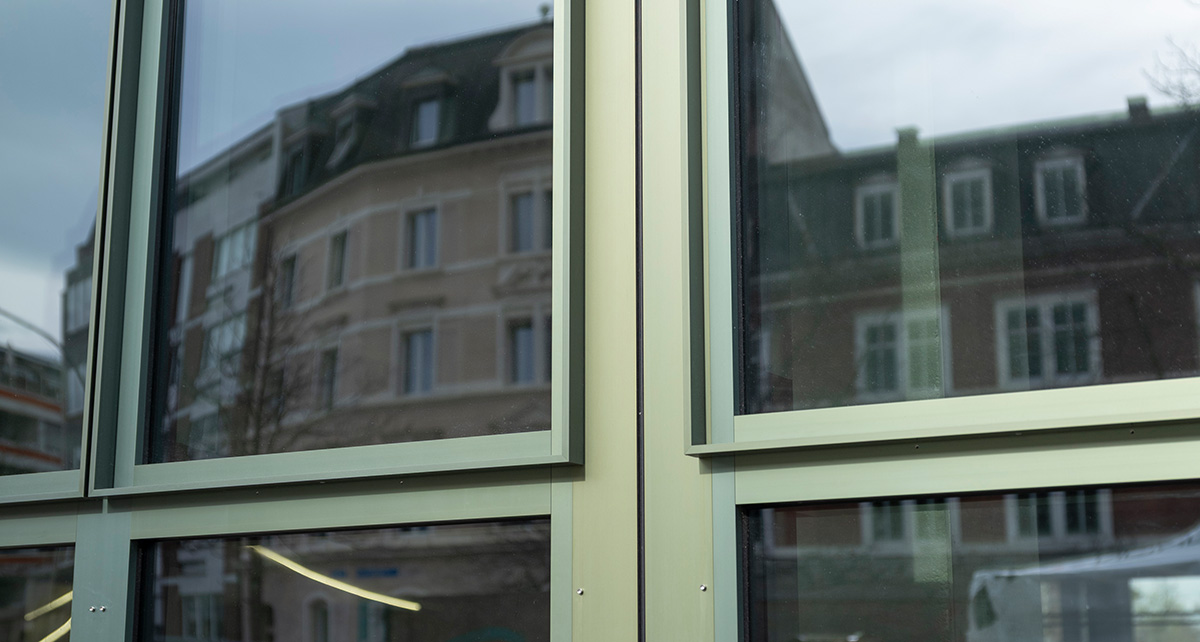 The window frames are painted in a striking shade of green. (Photo: University of Basel, Christian Flierl)link.zoom
In design terms, the distinctive facade reflects the new building’s purpose. The innovative glass technology points to the research and scientific progress pursued at the Department of Biomedicine. The panes are framed by an anodized aluminum structure in a vivid shade of green. The overall appearance is reminiscent of industrial and technical architecture, emphasizing the building’s technical complexity and engineering focus.
As facade work progresses, the new DBM building reveals not only its appearance but also its purpose: cutting-edge biomedical research.
Construction status
With the structural shell complete, facade work on the DBM building is progressing and will continue through autumn 2026. Simultaneously, building systems, electrical infrastructure, and interior construction are advancing rapidly. The model laboratory is on track for completion in September 2026. Up to 100 workers are presently on site daily.