

-
12 Nov 2026
14:00 - 18:00Universitätsspital Basel, Hörsaal 1, Spitalstrasse 21, 4031 Basel
Medicine & Health
EVIDENZ. EXISTENZ. CARE. – Spiritual Care & Pflegewissenschaft im DialogJahrestagung des Weiterbildungsstudiengangs MAS Spiritual Care
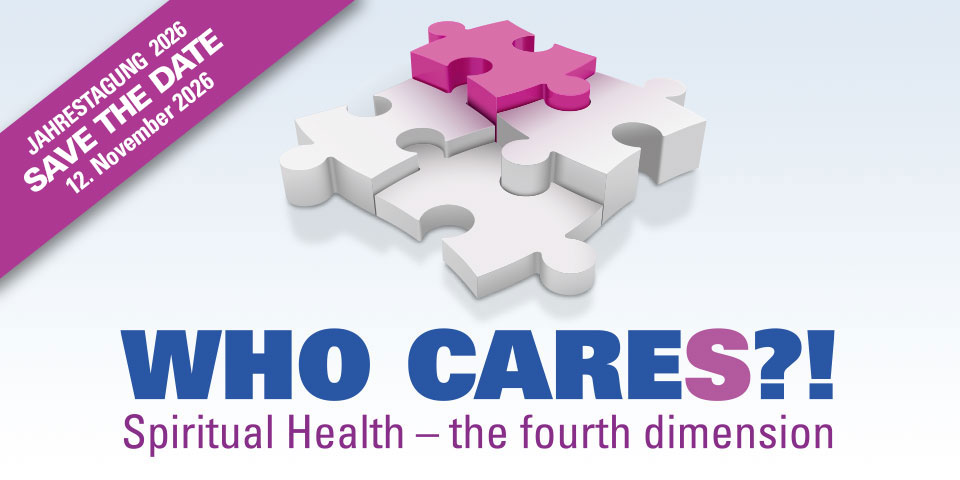
(Bild: zvg) Pflege ist mehr als die Versorgung eines Körpers. In Situationen von Krankheit, Verletzlichkeit und Abhängigkeit treten häufig Fragen hervor, die über das unmittelbar Medizinische hinausweisen: Fragen nach Sinn, Hoffnung, Schuld, Trost oder nach der Deutung des eigenen Lebens angesichts von Leid und Endlichkeit. Solche existenziellen Fragen begleiten viele pflegerische Begegnungen – manchmal ausgesprochen, oft jedoch nur indirekt spürbar.
Genau an dieser Stelle setzt Spiritual Care an. Als interdisziplinäres Arbeits- und Forschungsfeld richtet sie den Blick auf die spirituelle Dimension menschlicher Erfahrung und fragt danach, welche Rolle sie in Prozessen von Sorge, Begleitung und Heilung spielt. Im Dialog mit der Pflegewissenschaft eröffnet sich damit ein gemeinsamer Reflexionsraum: wie können spirituelle Bedürfnisse wahrgenommen und in Konzepte professioneller Pflege integriert werden?
Die Jahrestagung «WHOcares?!» tritt am 12. November 2026 in diesen Dialog ein. Sie richtet sich an Mitarbeitende im Gesundheitswesen, Führungskräfte, Studierende und alle Interessierten, die den Wert von Spiritualität in der ganzheitlichen Sorge um den Menschen im Spital entdecken und unterstützen möchten.
Referent:innen
- Prof. Dr. Edouard Battegay
- Dr. Astrid Giebel
- Lea Kissling
- Anja Orschulko & Dr. Sebastian Ritzi
- Prof. Dr. Traugott Roser
Anmeldung
Die Anmeldung erfolgt über die Veranstaltungs-Website.
Organizer:
MAS Spiritual CareExport events asiCal
-
16 Nov 2026
17:15 - 18:15Universität Basel, Pharmazentrum, Klingelbergstrasse 50, 4056 Basel
Medicine & Health
Psychedelic Science: Title to be announcedÖffentliche Ringvorlesung: Psychedelic Science Fall Semester 2026
Bild: zVg Mit PhD. cand. Moritz Spangermacher
Organizer:
Parab - Psychedelic Awareness & Research Association BaselExport events asiCal
-
16 Nov 2026
18:15Allgemeine Lesegesellschaft, Münsterplatz 8, 4051 Basel
-
17 Nov 2026
18:15 - 19:45Universität Basel, Kollegienhaus, Petersplatz 1, 4051 Basel, Hörsaal 115
Interdisciplinary
Der Gott der Abweichung: Maradona in Argentinien und NeapelÖffentliche Ringvorlesung von Prof. Dr. Felix Kühnle, Universität Darmstadt, Sportsoziologie, im Rahmen der Ringvorlesung "Falsche Götter / False Gods"

Bild: zVg Die öffentliche Ringvorlesung “Falsche Götter” ist in das Rahmenprogramm der Oper „Moses und Aron“ von Arnold Schönberg eingebettet, die an den Theatern Basel und Freiburg i. Br. im Herbst 2026 und im Frühjahr 2027 aufgeführt wird. Inspiriert von der zentralen Bedeutung des Goldenen Kalbes als Ursache kollektiver Exzesse in der Oper, wird der Leitbegriff „Falsche Götter“ aus unterschiedlichen Perspektiven beleuchtet.
Die 13 Vorträge verbinden Beiträge aus Theologie und Religionswissenschaft mit soziologischen, wirtschaftswissenschaftlichen und demokratietheoretischen Ansätzen sowie aktuellen Fragestellungen, etwa zur Rolle künstlicher Intelligenz als Projektionsfläche quasi-religiöser Erwartungen. Die Veranstaltung behandelt Formen und Inhalte von Sakralisierung und deren gesellschaftliche, politische und technologische Konsequenzen im 21. Jahrhundert.
Studierende und Interessierte profitieren von der Möglichkeit, unterschiedliche wissenschaftliche Perspektiven vergleichend zu erschliessen, diese kritisch zu reflektieren und eigenständig zu synthetisieren.
Veranstalter/in: Prof. Dr. Alfred Bodenheimer und Judith Beckschäfer
Diese Ringvorlesung ist Teil von „Auf in die Wüste“, einem umfangreichen Diskurs-, Begegnungs- und Rahmenprogramm, das die Aufführungen der Oper "Moses und Aron" von Arnold Schönberg an den Theatern Basel und Freiburg i. Br. begleitet und ergänzt.Organizer:
Universität Basel, Zentrum für Jüdische StudienExport events asiCal
Report events
The University of Basel calendar lists events offered by the University of Basel, its numerous units, and accredited student organizations and associated institutions. They address a larger audience, are public and open to all. As a rule, admission is free.
You can also have your event listed in the Calendar of Events, provided it meets the above criteria. To do so, send the title, short text, time, place, organizer, link to website and, if available, photo (JPG) and program flyer (PDF) to E-Mail: agenda@unibas.ch