
When ovarian cancer alters the abdominal cavity
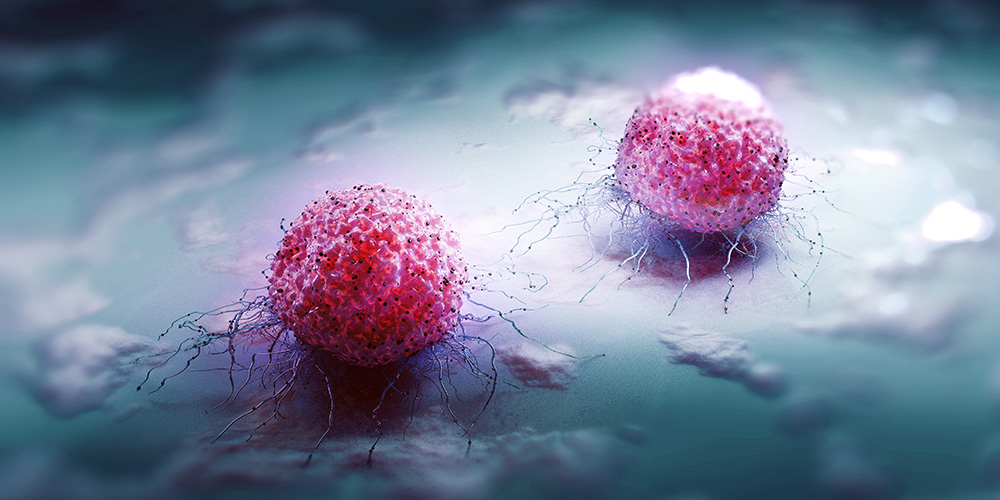
Ovarian cancer often forms secondary tumors, especially in a certain tissue in the abdominal cavity known as the omentum. Researchers from the University of Basel and University Hospital Basel have investigated what happens when the cancer “hijacks” this organ. It is hoped their findings will lead to more successful treatments.
05 January 2026 | Angelika Jacobs
Ovarian cancer often goes undetected for a long time. In seven out of 10 patients, the tumor has already formed secondary tumors in the abdominal cavity at the time of diagnosis. These metastases are particularly common in a tissue called the omentum, also known as the peritoneal apron. This organ is located in front of the intestine, performs protective and immune functions, and harbors fat cells.
“In advanced ovarian cancer, the question arises as to whether, in addition to the visible tumors and metastases, the omentum should also be completely removed as a preventive measure in order to reduce the recurrence of tumors,” explains Dr. Francis Jacob from the Department of Biomedicine at the University of Basel and the University Hospital Basel.
Cell atlas of healthy and diseased states
To answer this question, the team led by Jacob and Professor Viola Heinzelmann-Schwarz analyzed 36 tissue samples from 15 patients, taken from different parts of the omentum. Some of the samples came from ovarian cancer patients who already had secondary tumors in this organ, while some of the samples came from patients whose omentum was cancer-free but were suffering from other types of cancer. The researchers analyzed precisely which cells were present in the samples and created a cell atlas of the omentum in a diseased and a healthy state.
The results indicated that the healthy omentum has a balanced cell composition, which means that the same cells are present in equal quantities at all the examined sites. These primarily include surface cells, mesenchymal stem cells and immune memory cells.
Restructuring of the entire organ
In the case of ovarian cancer patients, however, it was found that the cancer transforms the omentum into an environment that favors the spread of tumors: more immune cells were present in the tissue samples, including in particular the cell types that dampen the immune system’s ability to attack tumor cells and thus help the cancer.
There were also fewer surface and stem cells present in these omentum samples. It is possible that these transform into other cell types that also create a favorable environment for metastases.
“A key finding is that even tissue far from the tumor undergoes changes in its composition and already contains individual tumor cells. When cancer cells migrate into the omentum, they hijack the entire organ,” explains Jacob. This results in the loss of the normal tissue structure and regenerative capacity of the omentum.
Based on these findings, it may be more beneficial to remove more of the omentum during surgery to remove the tumors, rather than just the visibly diseased part. This could potentially reduce the number of times the cancer returns. However, Jacob emphasizes that whether this approach actually leads to a better prognosis must be verified in a follow-up clinical study.
Original publication
Ulrike Lischetti et al.
Ovarian cancer metastasis to the human omentum disrupts organ homeostasis and induces fundamental tissue reprogramming
Nature Communications (2025), doi: 10.1038/s41467-025-67557-z