Mini-tumors reveal new drug combinations for liver cancer
Liver cancer is difficult to treat because tumors vary greatly from patient to patient. Researchers at the University of Basel have captured this diversity by creating a collection of mini-tumors, which they use to systematically search for new treatment options. They tested more than 1,600 compounds using these organoids and used the results to develop promising drug combinations.
02 September 2026 | Martina Konantz
Although immunotherapies have greatly improved the treatment of liver cancer, they are not effective for all patients. The problem is that liver tumors can differ substantially in their biology depending on factors such as the cause of the disease and genetic changes in the cancer cells. Consequently, they can respond very differently to drugs.
A research team led by Professor Markus Heim and Dr. Sandro Nuciforo at the University of Basel now reports on new uses for approved drugs and new drug combinations. Their results are published in Cell Reports. One of these combinations proved promising in an animal model.
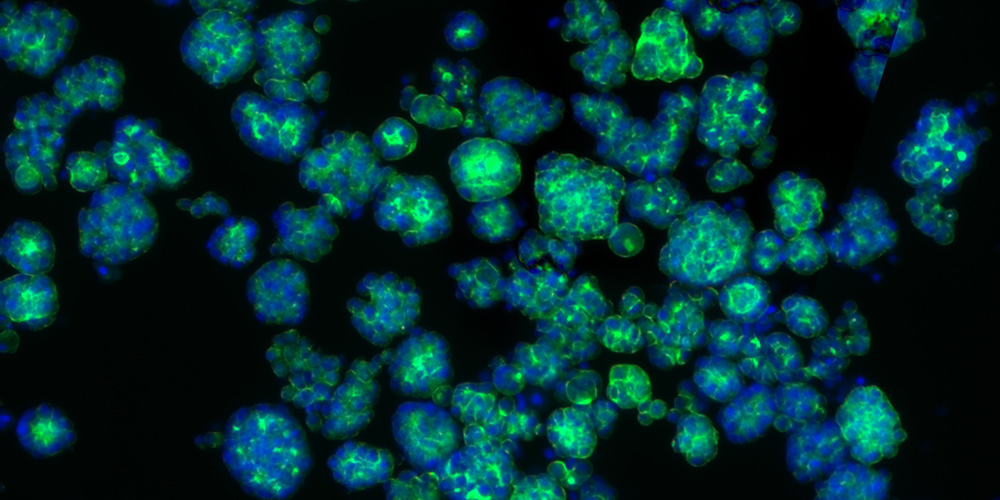
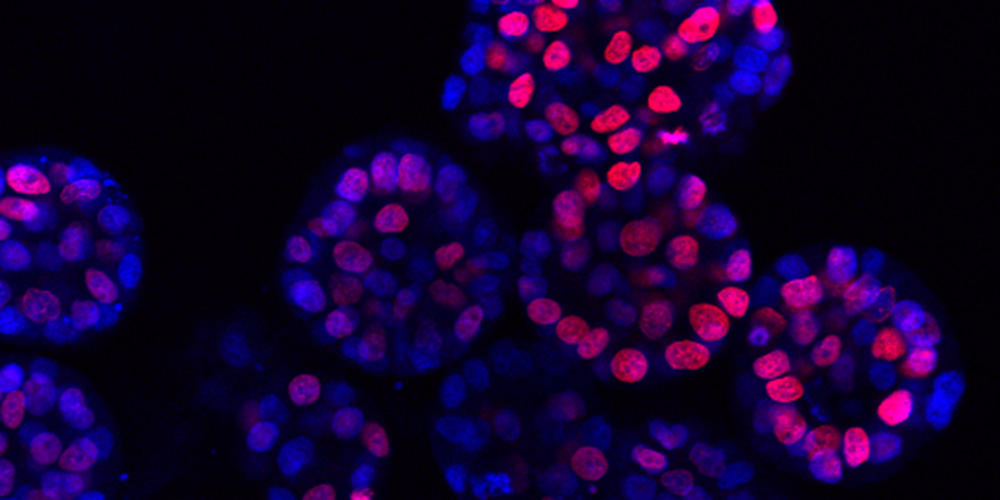
For their study, the researchers established a collection of 35 organoid lines from the most common form of liver cancer, hepatocellular carcinoma. These three-dimensional structures are made up of living cancer cells and retain key characteristics of the original tumor. Such organoid collections are already used to search for new drugs. What sets the Basel collection apart, however, is that many of these mini-tumors were grown from small tissue samples obtained during diagnostic needle biopsies. This means the collection includes advanced tumors, which were underrepresented in previous organoid collections.
"Our collection reflects different stages of the disease, as well as liver tumors with various causes," explains Sandro Nuciforo, the study's first author. This allows us to test which drugs are effective despite the significant biological differences between the tumors.
More than 1,600 compounds screened
In an initial automated screening, the team tested 1,642 compounds on four carefully selected liver cancer organoids. These included cancer drugs, experimental compounds, and drugs that had been approved for other diseases. The researchers then tested the most promising compounds on a larger selection of organoids. Several drugs demonstrated a potent anti-tumor effect and could be considered for use in treating liver cancer.
The researchers then searched specifically for combinations of drugs with different mechanisms of action. "Rather than focusing on a single vulnerability of the tumor, we combine drugs with different mechanisms of action," says Markus Heim. "This could allow the treatment to remain effective even when the vulnerabilities differ from tumor to tumor."
Some two- and three-drug combinations were more effective against different tumor organoids than individual drugs were. However, for some three-drug combinations, the effect was markedly weaker on non-tumor liver organoids than on cancer models, suggesting that tumor cells may be targeted more selectively.
Tests in an animal model
The researchers then examined a particularly promising combination of regorafenib, selinexor, and ixazomib more closely. In mice with tumors derived from patient organoids, the triple therapy slowed tumor growth more effectively than regorafenib alone and did not exhibit significant additional toxicity in the studied model.
Further studies are needed before it can be used in patients. For example, organoids only incompletely capture blood vessels, immune cells, and other components of a tumor’s microenvironment. This study demonstrates how a diverse collection of organoids derived from patient samples can be used to systematically test drugs and develop combination therapies that are effective despite major differences between tumors.
Original publication
Sandro Nuciforo et al.
Hepatocellular carcinoma organoids enable drug discovery and combination therapy across heterogeneous tumors
Cell Reports (2026), doi: 10.1016/j.celrep.2026.117895