“AI poses a challenge for research ethics”
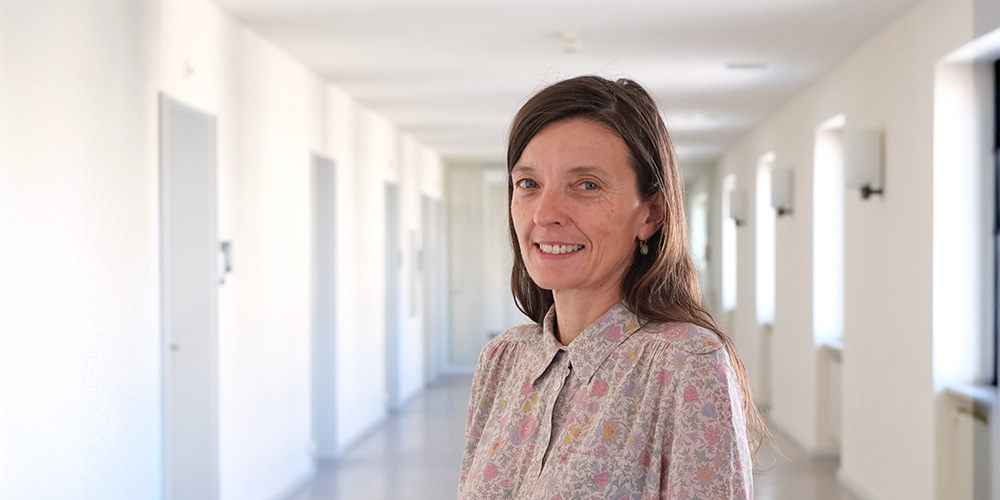
From studies involving schoolchildren to AI-based methods: research raises ethical questions. Dr. Isabelle Wienand has headed the University of Basel's Research Ethics Committee since its inception. She explains why universities need their own ethics board – and what matters most for responsible research.
04 February 2026 | Angelika Jacobs
Ms. Wienand, cantonal and national ethics committees review research projects. Why do universities need their own as well?
To answer that, I'll give a little background: In 2014, the Human Research Act brought the cantonal ethics committees into force. They review medical research projects that involve human subjects. At the national level, a separate committee advises the federal government: the National Ethics Commission. It does not consider individual projects, but rather the overall situation in Switzerland – for example, whether the Human Research Act needs to be amended. Here, too, the focus is exclusively on medical research. Universities need their own ethics committees because non-medical research involving humans also raises research ethics questions.
Do you have any examples?
This applies, for example, to studies involving vulnerable individuals, such as children, elderly people, or individuals who are unable to give informed consent. The type of data collected – and the setting in which the research takes place – also play a role. If studies are conducted in conflict zones, for instance, researchers must weigh the potential benefits of the results against the security risks for all parties involved.
You have headed the Ethics Committee at the University of Basel since its inception in 2020. What are the most common questions you are asked?
Most often, researchers ask whether their projects need to be reviewed. We have developed a short questionnaire for this purpose. It helps scientists determine whether their project needs to be submitted to the Research Ethics Committee (“Kommission für Forschungsethik”, KFE). For example, if you are planning interviews with schoolchildren or surveys in which you collect sensitive personal data – such as sexual orientation or political views – you will need to have your project reviewed by the KFE.
What criteria does the commission use to evaluate applications?
The members of the committee base their decisions on globally recognized principles of research ethics, discipline-specific guidelines, and data protection laws. It is essential that all participants give their informed consent. Researchers must ensure that participants understand the research question of the project, its purpose, and what will happen to their data. That is why those responsible for the studies must write the participant information sheets in a way that even laypeople can understand.
Transparency is therefore a key issue. Are there any others?
Another principle is that research must avoid harm and show care for all those involved and for the environment. This includes not only the participants, but also the researchers themselves and any third parties who may be directly or indirectly affected.
What about cases where research could also be misused to harm people?
You mean what is known as “dual-use research of concern.” This refers to research whose results could have serious consequences if misused. For such and similarly high-risk research – such as projects with military connections – researchers need approval from the President’s Board of the University of Basel.
What happens if a research project raises ethical questions but the researchers have not submitted it to the KFE before starting?
That would constitute scientific misconduct. In practice, however, this hardly ever happens. Even when reviewing applications for research funding, reviewers pay attention to this and note if a project could be sensitive in terms of research ethics and should involve an ethics committee. However, we recommend contacting the KFE during the planning phase and definitely before starting to collect data!
Have any projects been rejected for research ethics reasons?
This has only happened once in the past six years. As a rule, the committee imposes revisions that are accepted and implemented by the researchers. The KFE aims to promote responsible research. Specifically, it supports researchers – for example, in writing age-appropriate information sheets or in obtaining valid consent for social media research. In addition, the KFE, together with other networks at our university, regularly offers training courses in research ethics.
What do you see as the biggest challenges in research ethics at the moment?
In recent years, artificial intelligence (AI) has been used increasingly in many research projects. AI poses a challenge for research ethics, especially when it comes to transparency and data protection. Researchers must already address these issues in their participant information sheets: Is AI being used? For what purpose? Where is the data stored – and what happens to it?
It sounds like a major hurdle to communicate the processing of data by AI in a way that everyone can understand.
That's right! AI tools are often a black box: no one fully understands how they work in detail – not even the researchers. The pressure on researchers to process personal data responsibly has therefore grown enormously in the last two to three years. We have just published guidelines on AI in research to support scientists in selecting and using AI tools responsibly and in compliance with data protection regulations. In doing so, the KFE works closely with other contact points and AI experts at our university.
Technological developments in particular seem to have been rapid in recent years, while ethical debates seem almost too slow. How can the ethical debate on new developments in research become more agile?
Dialogue with society is extremely important! We see it as our duty to inform society about research ethics and to take people’s questions seriously. It is true that technological developments are rapid, especially in the field of AI. Research ethics is constantly evolving and must respond to new challenges. However, the basic principles on which research ethics is based remain valid: respect for the autonomy of the individual, avoidance of harm, and benevolence towards people and the environment. New technological developments – and their use in research – also offer an opportunity to reflect on these principles and reinterpret them in a changing environment.
Commission for Research Ethics
The Committee for Research Ethics is an independent body of the Senate consisting of representatives from all faculties and experts in research ethics. The KFE checks the research ethics conformity of projects and approves them, with revisions if necessary. In addition, it advises and supports researchers and the President’s Board on research ethics issues. Isabelle Wienand has coordinated the KFE since its inception in 2020. She is a co-founder of the Swiss Network for Research Ethics. From March 2026, she will continue her work at swissethics. At the University of Basel, Sarah Diezig will take over her position.