
Individual genetic differences render some therapies ineffective
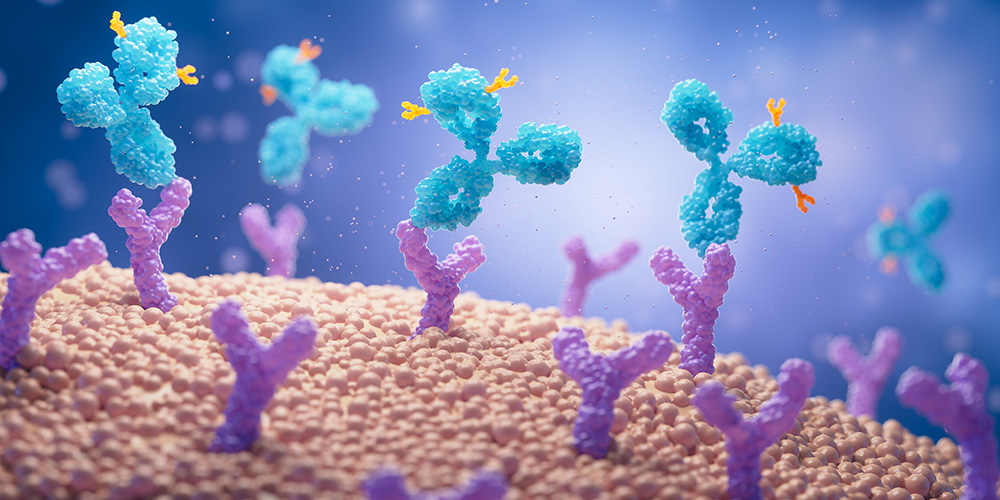
The genome differs from person to person in thousands of positions. In some cases, this means that proteins have a different building block in certain regions, rendering some antibody-based therapies ineffective, report researchers from the University of Basel.
17 December 2025 | Angelika Jacobs
Antibody-based therapies are used to treat numerous diseases, from cancer to rheumatic disorders and multiple sclerosis. Antibodies recognize and bind to very specific structures. This allows them to direct active substances to exactly the right target structure in the body, for example.
Researchers from the University of Basel’s Departments of Biomedicine and Biozentrum now report in Science Translational Medicine that individual genetic differences can prevent antibody-based therapies from being effective in some people.
Variations are more common than previously thought
The research team led by Dr. Rosalba Lepore and Professor Lukas Jeker used computer-assisted methods to analyze the genetic sequences of thousands of people from previously published studies. The DNA sequence contained in the genome determines the sequence of amino acid building blocks in proteins. This means that genetic variations can also lead to an altered amino acid sequence. The researchers focused on amino acids at the docking sites of established antibody therapies. Experts call the docking sites of antibodies epitopes.
A single changed amino acid in the epitope may mean that the antibody can no longer dock on it. The team investigated the binding sites of a total of 87 therapeutic antibodies whose uses include cancer therapies and the treatment of autoimmune diseases.
The team came across an astonishingly large number of naturally occurring variations in the amino acid sequence in epitopes. “These variants do not contribute to the disease themselves,” explains Rosalba Lepore. “The majority of them do not even impair the function of the protein in question, but they can render the treatment ineffective.”
Switching to other antibodies
Using computer modeling, the researchers predicted which variants might interfere with antibody binding. Then they tested these predictions on four medically important target proteins and their corresponding therapeutic antibodies. For each of the analyzed proteins, several therapeutic antibodies were assessed. Laboratory experiments showed that often while one antibody could no longer bind, another antibody against the same protein but binding to a different region could still bind successfully.
In fact, the proportion of patients in whom such a variant occurs and hinders the effectiveness of the treatment is relatively small. For the majority of variants, less than one person in a hundred is affected. Nevertheless, Jeker is convinced that “it is important for doctors to consider this aspect if a treatment is not working.”
In addition, many antibody-based therapies, including, for example, CAR T-cells, which are used against certain cancers, are very expensive. “A genetic test to determine whether the treatment can actually work would be a small cost in comparison,” says co-first author Dr. Romina Marone. This would also be relevant for new therapies, adds Rosalba Lepore: “For clinical studies, testing the binding site of the antibody therapy in the study participants first could be worthwhile.”
The frequency of a variant depends on the region
Another finding from the analyses is that certain variants in target proteins are in fact very rare in Europe, for example. However, in another region of the world, they may occur more frequently and thus become clinically relevant.
“There is still much less genetic sequence data available for some regions of the world than there is for Europe or North America,” explains bioinformatician Rosalba Lepore. “As a result, we may be missing clusters of such treatment-relevant variants in certain population groups.” There is a lot of catching up to do in this regard, she notes.
Original publication
Romina Marone, Erblin Asllanaj, Giuseppina Capoferri, Torsten Schwede, Lukas T. Jeker, & Rosalba Lepore.
Single-amino acid variants in target epitopes can confer resistance to antibody-based therapies
Science Translational Medicine (2025), doi: 10.1126/scitranslmed.ady4877