Panettone: skill with a side of science
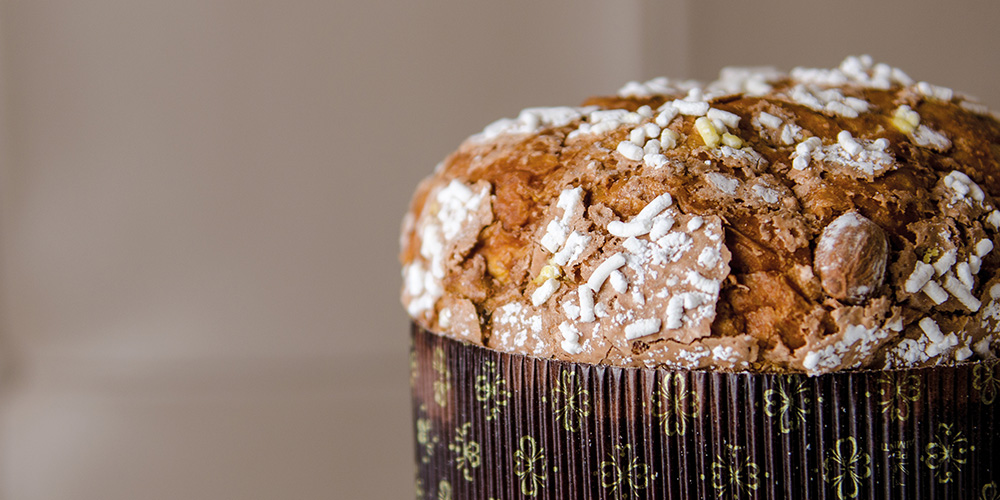
As Christmas nears, grocery stores and delicatessens everywhere fill with boxes packed with panettone. There’s a version for everyone, from mass-produced products to genuine artisanal creations. A truly delicious panettone requires time and skill – but the result is a scientific treat.
22 December 2025 | Michael Podvinec
Few know that panettone is a sourdough pastry, so it has more in common with a bread than with a cake. And a good panettone takes time, a lot of time. It takes three days to go from refreshing the sourdough starter to finishing the panettone.
A little detour into microbiology: sourdough starter is a mixed culture of different yeasts (e.g. Maudiozyma humilis) and lactic acid bacteria (e.g. Fructilactobacillus sanfranciscensis). This starter is fundamental for panettone, but could just as well be the basis for a great sourdough bread.
For it to become a fluffy Christmas specialty, it has to be prepared: with the right ratio of flour and water and a few tightly staggered refresh phases, the starter is trained for peak performance over several days before baking even starts. It should end up mild in taste but energetic.
Wheat gluten for fluffiness
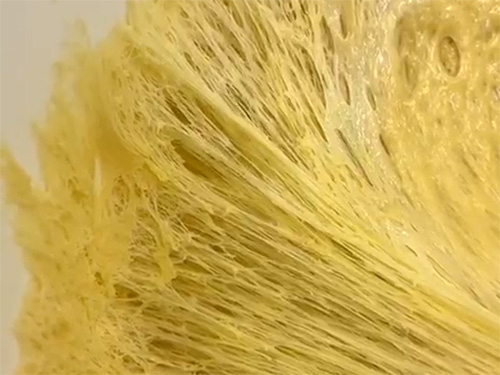
To ensure the panettone reaches peak fluff at the end, there’s one thing you need above all: gluten. By adding especially protein-rich Manitoba wheat flour and kneading for a very long time, the dough develops a strong structure: the proteins in the wheat flour, gliadin and glutenin, combine during kneading to form an elastic gluten network. This allows the dough to hold the carbon dioxide emitted by the yeast in bubbles and develop a good rise. It’s important to note that fat hinders the formation of the gluten structure, which is why egg yolk, sugar and butter flavored with vanilla and citrus zest are only added in the next step.
This produces the first dough (primo impasto), which has to proof and triple in size overnight. Its relatively high sugar content of around 14 percent inhibits acid formation by lactic acid bacteria, while the microbial community of the sourdough produces long sugar chains, known as polysaccharides, during this rest period. These bind water in the dough and keep it fresh for longer.
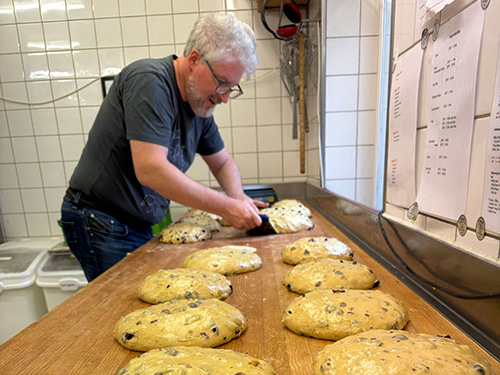
The next day, more flour, more butter, more egg yolks and dried fruit are added. The finished dough is finally put into the characteristic paper molds and has to proof again.
Chemistry in the oven
During baking, a chemical reaction takes place between the sugars and proteins – or more precisely, their building blocks, the amino acids – on the surface of the panettone. This Maillard reaction produces beautiful browning, roasted aromas and other complex flavors.
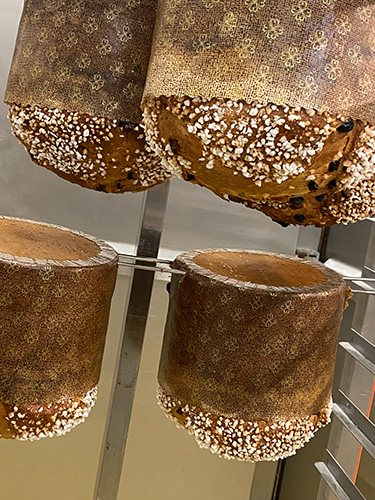
Finally, a dusting of physics: when the fully baked panettone comes out of the oven, the dough structure is not yet set. If just left to cool down on its own, it would collapse. Arrivederci fluffiness! That’s why panettone is cooled upside-down, so that gravitational forces work in our favor.
From home project to professional baking
As a self-confessed food nerd, I’ve been fascinated by this time-consuming process with a good side of science for several years now. It really got going at Christmas 2020, during the pandemic, when I sent my friends and relatives panettone by mail. I had cut my teeth on making more than 30 panettone in my home kitchen that year, refining the technique bit by bit.
This year, I leveled up and went to a real working bakery with a professional baker friend of mine to put the finishing touches on the homemade panettone. Baking with professional equipment makes some parts of the process easier, though it still does remain time-consuming and tedious. But, for a mouth-watering panettone made from the very best ingredients, it’s definitely worth it.
Dr. Michael Podvinecis a molecular biologist and heads the Core Facility Research IT team at the Biozentrum. For more than a decade, he has also been fascinated by the connections between science and food. He shares photos and videos of his latest baking project on @panettone_project. His book recommendation on the subject of panettone: Thomas Teffri-Chambelland (2020) - “Sourdough Panettone and Viennoiserie, Bread Editions.”